Category: Events

  • Visual storytelling for health

    Visual storytelling for health

    Do you work for health? Your are invited to a visual storytelling workshop with health care workers from 44 countries. The Geneva Learning Foundation’s first Fellow of Photography, Chris de Bode, will lead this workshop.

    544 health care workers from 44 countries have already confirmed their participation. 80% of participants are sub-national staff working in fragile contexts. Most work for their country’s ministry of health.

    Chris deBode spent decades on assignments, traveling around the globe for various NGOs, magazines, and newspapers.

    Now, he has partnered with the Geneva Learning Foundation (TGLF) to share his experience with health practitioners who are there every day, as they learn to tell their own visual stories about immunization, the impacts of climate change on health, and other issues that matter for the communities they serve.

    “Technical knowledge is not decisive in making your picture”, says Chris. “The person behind the camera makes the difference. You are the source of your image.”

    The workshop is reserved for health professionals who contributed photos to the 2022 and 2023 Immunization Agenda 2030 (IA2030) Movement’s International Photo Exhibitions for World Immunization Week. However, it will also be livestreamed for everyone who has not previously been able to participate.

    In 2022 and 2023, over 2,000 photos were shared by immunization staff from all over the world.

    On 18 March 2024, health professionals from the following countries will be participating: Afghanistan, Angola, Bangladesh, Belgium, Benin, Burkina Faso, Burundi, Cameroon, Canada, Central African Republic, Chad, Comoros, Congo, Costa Rica, Côte d’Ivoire, Democratic Republic of the Congo, Ethiopia, France, Gabon, Gambia, Germany, Ghana, Guinea, Guinea-Bissau, Haiti, India, Indonesia, Kenya, Lebanon, Lesotho, Liberia, Madagascar, Malawi, Mali, Mauritania, Morocco, Niger, Nigeria, Pakistan, Saudi Arabia, Senegal, Sierra Leone, Somalia, South Africa, South Sudan, Sri Lanka, Sudan, Tanzania, Togo, Tunisia, Turkey, Uganda, United States, Zambia, Zimbabwe.

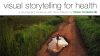
    Photo by Chris deBode: Eleven-year-old Wilberforce runs along an unpaved road near his home in Gulu, Northen Uganda where he lives with his parents and 6 siblings. He says: “I want to be the fastest. I want my parents, my school and country to be proud of me. Every day I run. I dream of coming home with the biggest trophy.”

    Watch the inauguration of the First International Photography Exhibition for Immunization Agenda 2030

    Watch the Special Event: World Immunization Week 2023

    Watch the Special Event: World Immunization Week 2022

  • Become a Teach to Reach 10 Partner: Help amplify frontline voices at the world’s largest health peer learning event

    Become a Teach to Reach 10 Partner: Help amplify frontline voices at the world’s largest health peer learning event

    The Geneva Learning Foundation is pleased to announce the tenth edition of Teach to Reach, to be held 20-21 June 2024.

    Teach to Reach is a massive, open peer learning event where health professionals network, and learn with colleagues from all over the world. Request your invitation

    Teach to Reach 10 continues a tradition of groundbreaking peer learning started in 2020, when over 3,000 health workers from 80 countries came together to improve immunization training.

    17,662 health professionals – over 80% from districts and facilities, half working for government – participated in Teach to Reach 9 in October 2023. Participants shared 940 experiences ahead of the event. See what we learned at Teach to Reach 9 or view Insights Live with Dr Orin Levine.

    Teach to Reach is a platform, community, and network to amplify voices from lower-resource settings bearing the greatest burden of disease.

    Teach to Reach 10 will focus on the impacts of climate change on health, following the publication of a ground-breaking report sharing insights of over 1,200 health workers.

    In the video below, learn from the experiences of 4,700 participants in our Special Event: From community to planet: Health professionals on the frontlines of climate change.

    Poor connectivity? You will find the videos on this page in the low-bandwidth, audio-only Teach to Reach podcast on Apple, Spotify, Google, or Amazon Podcasts.

    Alongside this theme, other critical health challenges selected by participants for this tenth edition include the Movement for Immunization Agenda 2030 (IA2030), neglected tropical diseases (NTDs), and neglected needs of women’s health.

    In this video of a Teach to Reach session, learn about local action led by community-based health workers to tackle Female Genital Schistosomiasis (FGS), a neglected tropical disease that affects an estimated 56 million women and girls.

    In the run-up to Teach to Reach 10, participants will share their real-world experience. Every success, lessons learned, and challenge will be shared back with the community and brought to the attention of partners.

    The Manifesto for investment in health workers, a visionary statement elaborated by over 1,300 health workers, will be launched at Teach to Reach 10.

    A diverse range of over 50 global organizations have partnered with Teach to Reach since 2020, including Gavi the Vaccine Alliance, the Wellcome Trust, and UNICEF.

    The next video is a session with UNICEF on reaching zero-dose children in urban settings.

    Alongside global partners and ministries of health, local community-based organizations will also be invited to become Teach to Reach partners.

    Partners are invited to join the first Partner Briefing on Monday 4 March 2024, bringing together global health organizations with a commitment to listening and learning from health workers and the communities they serve.

    Illustration: The Geneva Learning Foundation © 2024

  • Climate change is a threat to the health of the communities we serve: health workers speak out at COP28

    Climate change is a threat to the health of the communities we serve: health workers speak out at COP28

    The Geneva Learning Foundation’s Charlotte Mbuh spoke today at the COP28 Health Pavilion in Dubai, United Arab Emirates (UAE). Watch the speech at COP28

    Good afternoon. I am Charlotte Mbuh. I have worked for the health of children and families in Cameroon for over 15 years.

    I am one of more than 5,500 health workers from 68 countries who have connected to share our observations of how climate is affecting the health of those we serve. 

    “Going back home to the community where I grew up as a child, I was shocked to see that most of the rivers we used to swim and fish in have all dried up, and those that are still there have become very shallow so that you can easily walk through a river you required a boat to cross in years past.”

    These are the words of Samuel Chukwuemeka Obasi, a health worker from Nigeria.

    Dr Kumbha Gopi, a health worker from India said: “The use of motor vehicles has led to an increase in air pollution and we see respiratory problems and skin diseases”.

    Climate change is hurting the health of those we serve. And it is getting worse.

    Few here would deny that health workers are an essential voice to listen to in order to understand climate impacts on health.

    Yet, a man named Jacob on social media snapped: “Since when are health workers the authority on air pollution?”

    Here are the words of Bie Lilian Mbando, a health worker from my country: “Where I live in Buea, the flood from Mount Cameroon took away all belongings of people in my neighborhood and killed a secondary school student who was playing football with his friends.”

    Climate change is killing communities.

    Cecilia Nabwirwa, a nurse in Nairobi, Kenya: “I remember my grand-son getting sick after eating vegetables grown along areas flooded by sewage. Since then I resolved to growing my own vegetables to ensure healthy eating.”

    And yet, another man on social media, Robert, found this “ridiculous. As if my friend who sells fish at his fish stall comes as an expert on water quality.”

    I wondered: why such brutal responses?

    Well, unlike scientists or global agencies, we cannot be dismissed as “experts from on-high”.

    What we know, we know because we are here every day.

    We are part of the community.

    And we know that climate change is a threat to the health of the communities we serve.

    We are already having to manage the impacts of climate change on health.

    We are doing the best that we can.

    But we need your support.

    The global community is investing in building a new scientific field around climate and health.

    Massive investments are also being made in policy.

    Are we making a commensurate investment in people and communities?

    That should mean investing in health workers.

    What will happen if this investment is neglected?

    What if big global donors say: “it’s important, but it’s not part of our strategy?”

    Well, in 5, 10, or 15 years, we will certainly have much improved science and, hopefully, policy.

    Yet, some communities might reject better science and policy.

    Will the global community then wonder: “Why don’t they know what’s good for them?” 

    I am an immunization worker. For over 15 years, I have worked for my country’s ministry of health.

    Like my colleagues from all over the world, I know more than a little about what it takes to establish and maintain trust.

    Trust in vaccination, trust in public health.

    Trust that by standing together in the face of critical threats to our societies, we all stand to do better.

    Local communities in the poorest countries are already bearing the brunt of climate change effects on health.

    Local solutions are needed.

    Health workers are trusted advisors to the communities we serve.

    With every challenge, there is an opportunity.

    On 28 July 2023, 4,700 health workers began learning from each other through the Geneva Learning Foundation’s platform, community, and network.

    Thousands more are connecting with each other, because they choose to.

    And because they want to take action.

    It is our duty to support them.

    In March 2024, we will hold the tenth Teach to Reach conference.

    The last edition reached over 17,000 health workers from more than 80 countries.

    This time, our focus will be on climate and health.

    We invite global partners to join, to listen and to learn.

    We invite you to consider how you, your organization, your government might support action by health workers on the frontline.

    Because we will rise.

    As health workers, with or without your support, we will continue to stand up with courage, compassion and commitment, working to lift up our communities.

    Our perseverance calls us all to press forward towards climate justice and health equity.

    I wish to challenge us, as a global community, to rise together, so that  the voices of those on the frontline of climate change will be at the next Conference of Parties.

    By standing together, we all stand to do better.

    Thank you.

  • Before, during, and after COP28: Climate crisis and health, through the eyes of health workers from Africa, Asia, and Latin America 

    Before, during, and after COP28: Climate crisis and health, through the eyes of health workers from Africa, Asia, and Latin America 

    Samuel Chukwuemeka Obasi, a health professional from Nigeria:

    “Going back home to the community where I grew up as a child, I was shocked to see that most of the rivers we used to swim and fish in have all dried up, and those that are still there have become very shallow so that you can easily walk through a river you required a boat to cross in years past.”

    In July 2023, more than 1200 health workers from 68 countries shared their experiences of changes in climate and health, at a unique event designed to shed light on the realities of climate impacts on the health of the communities they serve.

    Before, during and after COP28, we are sharing health workers’ observations and insights.

    Follow The Geneva Learning Foundation to learn how climate change is affecting health in multiple ways:

    • How extreme weather events can lead to tragic loss of life.
    • How changing weather patterns are leading to crop failures and malnutrition, and forcing people to abandon their homes.
    • How infectious diseases are surging as mosquitoes proliferate and water sources are contaminated.
    • How climate stresses are particularly problematic for those with existing health conditions, like cardiovascular disease and diabetes.
    • How climate impacts are having a devastating effect on mental health as people’s ways of life are destroyed.
    • How climate change is changing the very fabric of society, driving displacement and social hardship that undermines health and wellbeing.
    • How a volatile climate is disrupting the delivery of essential health services and people’s ability to access them.
    • We will finish the series with  inspiring stories of how health workers are already responding to such challenges, working with communities to counter the effects of a changing climate.

    On 1 December 2023, TGLF will be publishing a compendium and analysis of these 1200 contributions – On the frontline of climate change and health: A health worker eyewitness report. Get the report

    This landmark report – a global first – kickstarts our campaign to ensure that health workers in the Global South are recognized as:

    • The people already having to manage the impacts of climate change on health.
    • An essential voice to listen to in order to understand climate impacts on health.
    • A potentially critical group to work with to protect the health of communities in the face of a changing climate.

    Before, during, and after COP28, we are advocating for the recognition and support of health workers as trusted advisers to communities bearing the brunt of climate change effects on health.

    Watch the Special Event: From community to planet: Health professionals on the frontlines of climate change

  • What learning science underpins peer learning for Global Health?

    What learning science underpins peer learning for Global Health?

    Watch Reda Sadki’s presentation about peer learning for global health at the Annual Meeting of the American Society for Tropical Medicine and Hygiene (ASTMH) Symposium on 19 October 2023

    Most significant learning that contributes to improved performance takes place outside of formal training.

    It occurs through informal and incidental forms of learning between peers.

    This is called peer learning or peer-to-peer learning.

    Effective use of peer learning requires realizing how much we can learn from each other (peer learning), experiencing the power of defying distance to solve problems together (remote learning), and feeling a growing sense of belonging to a community (social learning), emergent across country borders and health system levels (networked learning).

    At the ASTMH annual meeting Symposium organized by Julie Jacobson, two TGLF Alumnae, María Monzón from Argentina and Ruth Allotey from Ghana, will be sharing their analyses and reflections of how they turned peer learning into action, results, and impact.

    In his presentation, Reda Sadki, president of The Geneva Learning Foundation (TGLF), will explore:

    1. What do we need to understand about digital learning?
    2. Networked learning: rethinking learning architecture in the Digital Age
    3. Social learning: peer learning is about making human connections
    4. Practical examples of TGLF peer learning systems for WHO, Wellcome, UNICEF, and Bridges to Development that connect learning to change, results, and impact.
    5. Emergent peer learning systems driven by local practitioner and community needs and priorities.

    Join this #TropMed23 Peer Learning symposium on Day 2 of the Annual Meeting of the American Society for Tropical Medicine and Hygiene (ASTMH).

  • Don’t cancel or postpone your conference, workshop, or training – go digital

    Don’t cancel or postpone your conference, workshop, or training – go digital

    How we respond to the threat of a disaster is critical.

    Organizations planning physical-world events have a choice:

    • You can cancel or postpone your event OR
    • You can go digital.

    Why not go digital?

    • You think it cannot be done.
    • You do not know how to do it.
    • You believe the experience will be inferior.

    It can be done. You can learn. You are likely to be surprised by how much you can achieve.

    The Geneva Learning Foundation is inviting conference and other event organizers to a Special Event in which we will share how you can rapidly move or ‘pivot’ your events online.

    What is The Geneva Learning Foundation?

    The Geneva Learning Foundation is a Swiss non-profit with the mission to develop trial, and scale up new ways to lead change to tackle the challenges that threaten our societies.

    We are purely digital. This means all of our operations and activities take place online.

    • Nearly every day, we organize and facilitate one or more digital events that convene hundreds or thousands of participants from all over the world.
    • We want to help other organizations by sharing our experience and know-how.

    Why are we doing this?

    • We believe that the digital transformation can strengthen the resilience of our societies.
    • Cancelling or postponing a conference weakens ongoing work that may be significant or important.

    Why attend this Special Event?

    If you are planning a conference:

    • During this Special Event, we will share the critical success factors for digital events. You are likely to be surprised by what we have found makes the greatest difference.
    • Attendees will receive an invitation to join our #DigitalConference short course, in which you actually build a practical plan you can use to go digital.

    If you are an event organizer, we know you may be already facing severe consequences.

    • If you have experience in providing services to design and run digital events, we invite you to share your services with participants.
    • If you have been primarily focused on physical-world events, we invite you to share how you are adapting.

    Here is a case study.

    We just organized a conference that was attended by more than 1,700 participants from 95 countries, including those hardest hit by COVID-19.

    • This conference ran in English 3-13 March and in French 16-30 March.
    • World-class presenters shared their expertise with practitioners.
    • Dialogue was constant – 24 hours a day, given participants spread across time zones.

    We were awed by the number and diversity of participants and the quality of their contributions in this Pre-Course Conference.

    How do we compare digital and physical? It is comparable?

    In the past, our partner had organized three successive face-to-face events in Barcelona and Dar Es Salaam.

    • Each event was attended by around 80 people.
    • Each event was well-planned and executed.
    • Each time, 80 people went back to their countries with new knowledge and relationships.

    After the third time, our partner was ready to go digital.

    Previous conferences were limited to around 80 participants.

    • They required everyone to stop their work in order to travel.
    • This is the hidden opportunity cost of face-to-face conferences.
    • It often adds up to far more than the actual expenditure on the event itself.

    What about the intangible serendipity of a conference?

    We know the real value of a physical event resides in the impromptu meetings of minds and bodies on the conference floor.

    • Sharing a drink or a meal provides the occasion to establish or strengthen informal relationships.
    • Yes, there are dozens of digital tools that can match individuals and organizations, schedule ad hoc meets, and stir idea generation and serendipity.
    • Yet, it is undeniable that some aspects – and the ones that matter – are difficult to replicate.

    Conversely, you may discover new ways of doing new things in a digital conference that can accelerate and multiply serendipity.

    If you cancel or postpone, you will get nothing.

    Is it expensive?

    • No. You can make an awesome event digital using only free tools.
    • You can also hire people and providers with the right combination of tools, talent, and vision.
    • The secret sauce is in the know-how required: not to use the tools, but to figure out how to both replicate and augment the experience you wish to create.

    This is where organizations and service providers with experience can help.

    Is it difficult or time-consuming?

    No. If you already have an event scheduled, there is a simple method to:

    • Identify what is the value and significance provided by the event – including the intangible, serendipitous bits
    • Think through how to recreate and augment this value
    • Convert everything you planned into a digital format

  • New learning for radiation emergency medical preparedness and assistance

    New learning for radiation emergency medical preparedness and assistance

    My presentation for the Geneva Learning Foundation at the 15th meeting of the WHO Radiation Emergency Medical Preparedness and Assistance Network (REMPAN), World Health Organization, Geneva – 3-5 July 2017.

    The 15th meeting of the WHO Radiation Emergency Medical Preparedness and Assistance Network (REMPAN) Geneva 3–5 July 2017
    The 15th meeting of the WHO Radiation Emergency Medical Preparedness and Assistance Network (REMPAN) Geneva 3–5 July 2017

    Featured image: Participants of the Radiation Effects Research Foundation’s (RERF) Seventh Epidemiological Training Workshop for Biologists. The objective of the RERF is to conduct research and studies for peaceful purposes on medical effects of radiation and associated diseases in humans, with a view to contributing to maintenance of the health and welfare of the atomic bomb (A-bomb) survivors and to enhancement of the health of all humankind.

  • Meeting of the minds

    Meeting of the minds

    This is my presentation for the Geneva Learning Foundation, first made at the Swiss Knowledge Management Forum (SKMF) round table held on 8 September 2016 at the École polytechnique fédérale de Lausanne (EPFL). Its title is “Meeting of the minds: Rethinking our assumptions about the superiority of face-to-face encounters.” It is an exploration of the impact of rapid change that encompasses learning at scale, the performance revolution, complexity and volatility, and what Nathan Jurgenson calls the IRL fetish.

    The point is not to invert assumptions about the superiority of one medium over another. Rather, it is to look at the context for change, thinking through the challenges we face, with a specific, pragmatic focus on learning problems such as:

    • You have an existing high-cost, low-volume face-to-face learning initiative, but need to train more people (scale).
    • You want learning to be immediately practical and relevant for practitioners (performance).
    • You need to achieve higher-order learning (complexity), beyond information transmission to develop analytical and evaluation competencies that include mindfulness and reflection.
    • You have a strategy, but individuals in their silos think the way they already do things is just fine (networks).
    • You need to develop case studies, but a consultant will find it difficult to access tacit knowledge and experience (experience).
    • You want to build a self-organizing community of practice, in a geographically distributed organization, to sharpen the mission through decentralized means.

    These are the kinds of problems that we solve for organizations and networks through digital learning. Can such challenges be addressed solely through action or activities that take place solely in the same time and (physical) space? Of course not. Is it correct to describe what happens at a distance, by digital means, as not in-real-life (IRL)? This is a less obvious but equally logical conclusion.

    If we begin to question this assumption that Andrew Feenberg pointed out way back in 1989 was formulated way back when by Plato… What happens next? What are the consequences and the implications? We need new ways to teach and learn. It is the new economy of effort provided by the Internet that enables us to afford these new ways of doing new things. Digital dualism blinds us to the many ways in which technology has seeped into our lives to the point where “real life” (and therefore learning) happens across both physical and digital spaces.

    The idea for this round table emerged from conversations with the SKMF’s Véronique Sikora and Gil Regev. Véronique and I were chatting on LSi’s Slack about the pedagogy of New Learning that underpins Scholar, the learning technology we are using at the Geneva Learning Foundation.

    Cooking up a round table
    Cooking up a round table

    With Scholar, we can quickly organize an exercise in which hundreds of learners from anywhere can co-develop new knowledge, using peer review with a structured rubric that empowers participants to learn from each other. This write-review-revise process is incredibly efficient, and generates higher-order learning outcomes that make Scholar suitable to build analysis, evaluation, and reflection through connected learning.

    Scholar process: write-review-revise
    Scholar process: write-review-revise

    Obviously, such a process does not work at scale in a physical space. However, could the Scholar process be replicated in the purely physical space of a small round table with 15–20 participants? What would be the experience of participants and facilitators?

    It took quite a bit of effort to figure out how we could model this. Some aspects could not be reproduced due to the limitations of physical space. There was much less time than one could afford online, and therefore less space for reflection. The stimulation to engage through conversation was constant, unlike the online experience of sitting alone in front of one’s device. Diversity was limited to the arbitrary subset of people who happened to show up for this round table. This provided comfort to some but narrowed the realm of possibilities for discovery and questioning.

    I have learned to read subtle clues and to infer behavior from comments, e-mail messages, and other signals in a purely digital course where everything happens at a distance. That made it fascinating to directly observe the behavior of participants, in particular the social dimension of their interactions that seemed to be wonderfully enjoyable and terribly inefficient at the same time.

    Only one of the round table participants (Véronique, who finished the first-ever #DigitalScholar course during the Summer) had used Scholar, so the activity, in which they shared a story and then peer reviewed it using a structured rubric, seemed quite banal. At a small scale, it turned out to be quite manageable. I had envisioned a round robin process in which participants would have to move around constantly to complete their three peer reviews. However, since they were already sitting in groups of four, it was easier to have the review process take place at each table, minimizing the need for movement. This felt like an analog to what we often end up doing in an online learning environment when an activity takes shape due to the constraints of the digital space…

    Image: Flowers in Thor. Personal collection (August 2016).


  • Beyond MOOCs: the democratization of digital learning

    Beyond MOOCs: the democratization of digital learning

    It is with some trepidation that I announce the Geneva Learning Foundation’s first open access digital course in partnership with the University of Illinois College of Education and Learning Strategies International.

    The mission of the brand-new Geneva Learning Foundation is to connect learning leaders to research, invent, and trial breakthrough approaches for new learning, talent and leadership as a way of shaping humanity and society for the better.

    This open access, four-week (16 hours total) online course will start on 4 July 2016 and end on the 29th. It will be taught by Bill CopeCatherine Russ, and myself, three of the eleven charter members of the Foundation.

    We’ll be using Scholar to teach the latest digital learning pedagogies. Everyone will develop, peer review, and revise an outline for a course relevant to their own context of work. This outline is intended to be the practical basis for developing and offering an actual course – so this is no academic exercise.

    The course is tightly aligned by this mission, both theoretically and practically:

    • Theoretically, learning – like almost everything else – is being remade by digital. Learning in a knowledge society is a key process to change, hence the urgency and centrality of thinking through what digital transformation means with respect to knowledge and learning.
    • Practically, it will convene learning professionals who will collaborate to develop new ways of teaching and learning

    You will notice that there is no reference specifically to the humanitarian context in the course announcement. I hope that participants will come from many different industries, and that all stand to benefit by new learning approaches we have developed on the edge of chaos.

    Please do share the course announcement with trusted colleagues and networks. And, if you are free in July, don’t miss it. I am betting that this first run will gather an eclectic group of learning mavericks and at least a few of those whom Cath calls edge-walkers, not just fellow humanitarians but folks from other industries operating in the same, increasingly-complex world.

    So why claim that this is “beyond MOOCs”? I do not mean to imply that this course is somehow a successor to massive open online courses (MOOCs). Rather, I have written elsewhere about how MOOCs remain mostly about the transmission of knowledge. This course is about learners as active knowledge producers. I believe this is an important distinction. (Seb Schmoller argues that strong learning design can organize a beautiful, effective learning journey in just about any architecture. This, to me, is akin to saying that even a car can be made to fly – you just need to strap on some wings…)

    There is an equally important distinction when defining what we mean by the democratization of learning: is this about scale (more learners with access to education)? Or is it about a paradigm change in what learners get to do: learning anywhere and any time by actively designing meanings and making knowledge they can use, thinking about thinking (metacognition), giving each other recursive feedback as they collaborate to solve problems… in other words, being teachers in a Digital Age?

    [x_button shape=”rounded” size=”x-large” float=”none” block=”true” circle=”false” href=”http://learning.foundation/2016/06/10/call-for-applications-open-access-course-to-develop-your-own-scalable-digital-learning-course/” title=”Click this big red button to learn more…” target=”blank” info=”none” info_place=”top” info_trigger=”hover”]Click this big red button to learn more…[/x_button]


  • Education Moonshot Summit

    Education Moonshot Summit

    This should be fun (and interesting). I’ll be heading to Amsterdam on July 21st for Google EDU’s Moonshot Summit. This event aims to bring “together top innovators from around the globe to design moonshot projects that will be launched in the Fall”. Attendees were selected, we are told, because of our “experience and belief that education can be improved for innovation”.

    The moonshot co-exists with skunk works, DARPA, braintrust and many other terms that describe the conditions, process, or outcomes that foster and drive innovation. Google’s concept of a moonshot intersects innovation and scale, and posits that, in specific circumstances, scaling up can define innovation. “Instead of a mere 10% gain” Google’s Project X team explains, “a moonshot aims for a 10x improvement over what currently exists”:

    The combination of a huge problem, a radical solution to that problem, and the breakthrough technology that just might make that solution possible, is the essence of a moonshot.

    This event in Amsterdam is led by Esther Wojcicki, whose work  around moonshots in education (and specifically blended learning in the classroom) I’ve just discovered.

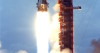
    Photo: The last Saturn V launch carried the Skylab space station to low Earth orbit in place of the third stage (Wikipedia/public domain).

    https://youtu.be/0uaquGZKx_0