Category: Learning

  • Pandemic preparedness through connected transnational digital networks of local actors

    Pandemic preparedness through connected transnational digital networks of local actors

    What is the link between pandemic preparedness, digital networks, and local action? In the Geneva Learning Foundation’s approach to effective humanitarian learning, knowledge acquisition and competency development are both necessary but insufficient. This is why, in July 2019, we built the first Impact Accelerator, to support local practitioners beyond learning outcomes all the way to achieving actual health outcomes.

    What we now call the Full Learning Cycle has become a mature package of interventions that covers the full spectrum from knowledge acquisition to implementation and continuous improvement. This package has produced the same effects in every area of work where we have been able to test it: self-motivated groups manifesting remarkable, emergent leadership, connected laterally to each other in each country and between countries, with a remarkable ability to quickly learn and adapt in the face of the unknown. Such networks have obvious relevant for pandemic preparedness.

    In 2020, we got to test this package during the COVID-19 pandemic, co-creating the COVID-19 Peer Hub with over 6,000 frontline health professionals, and building together the Ideas Engine to rapidly share ideas and practices to problem-solve and take action quickly in the face of dramatic consequences of the new virus on immunization services (largely due to fear, risk, and misinformation). By January 2021, over a third of Peer Hub members had successfully implemented their immunization service recovery project, far faster than colleagues who faced the same problems but worked alone, without a global support network. Once connected to each other, these country teams then organized inter-country peer learning to help them figure out “what works” for COVID-19 vaccine introduction and scale-up.

    Such a holistic approach is about mobilizing and connecting country-based impact networks for pandemic preparedness that reach and involve practitioners at the local levels, as well as national MoH leaders and planners – quite different from conventional approaches (whether online or face-to-face) to building capacity and preparedness.

    TGLF’s global health network and platform reach significant numbers of practitioners at all levels of the health system. It is not only the number of people who participate (47,000 as I write this) but also the depth of engagement and diversity of contexts that they work in. Globally, 21.2% face armed conflict; 24.5% work with refugees or internally-displaced populations; 61.6% work in remote rural; 47% with the urban poor; 35.7% support the needs of nomadic/migrant populations. This is across 110 countries, with over 70 percent in “high burden” countries. Many have deep experience in responding to epidemic outbreaks of all kinds. Health professionals who join come from all levels of the health system, but most are (logically) from health facilities and districts, the bottom of the health pyramid.

    Through the network and platform, they build lateral connections, forging bonds not only of knowledge but also of trust. They do this not because they are from the same profession, but primarily (we believe) because they face similar challenges and see the benefit of sharing their experience in support of each other. Engagement is voluntary (ie people opt in and contribute because they want to), with no per diem or other extrinsic incentives offered. The concern for both epidemic outbreak and pandemic preparedness is shared.

    Individuals develop and implement corrective actions to tackle the root causes of the challenges they are taking on, drawing on both peer learning and the best available global guidelines. For the IA2030 Movement, our largest initiative so far, participants are simultaneously implementing 1,024 projects in 99 countries, learning from each other what works, sharing successes, lessons learned, and challenges. Here are four examples of what collective action through digital networks looks like :

    • In Ghana, TGLF’s alumni (including national and regional MoH EPI directors) decided to organize online sessions country-wide to share the latest information about COVID-19 with local staff, starting in April 2020. They had learned how to use digital tools to find the best available global knowledge and to combine it with their local expertise and experience to inform collective action.
    • In Burkina Faso, the national EPI manager entrusted the first “masked” vaccination campaign to the TGLF alumni team, which has organized itself country-wide, with over half of alumni working in conflict-affected areas. He told me no one else had the network and the capacity for change to figure out quickly how to get this right.
    • In the Democratic Republic of Congo, the TGLF alumni team is increasingly being asked by national EPI to contribute to various activities, due to their effectiveness in connecting and coordinating. The alumni network is country-wide and includes many from very remote areas. When Monkeypox was reported in Europe and North America, we were already seeing a steady stream of information through the DRC and other country networks.

    We believe that this continuous learning and action is actually the definition of pandemic preparedness. Trying to imagine preparedness and response to new pandemics using old, failed methods of training and capacity building – whether face-to-face or online – is both dangerous and irrational.

    Image: Remote villages illuminated by rays of light, with mountains beyond mountains in the background. The Geneva Learning Foundation Collection.

  • Reinventing the path from knowledge to action in global health

    Reinventing the path from knowledge to action in global health

    At the Geneva Learning Foundation (TGLF), we have just begun to share a publication like no other. It is titled Overcoming barriers to vaccine acceptance in the community: Key learning from the experiences of 734 frontline health workers.

    You can access the full report here in French and in English. Short summaries are also available in three special issues of The Double Loop, the Foundation’s free Insights newsletter, now available in both English and French. The report, prefaced by Heidi Larson who leads the Vaccine Confidence Project, includes DOI to facilitate citation in academic research. (The Foundation uses a repository established and maintained by the Geneva-based CERN for this purpose.)

    However, knowing that academic papers have (arguably) an average of three readers, we have a different aspiration for dissemination.

    As a global community, we recognize the significance of local action to achieve the global goals.

    The report documents vaccine confidence practices just weeks before the introduction of COVID-19 vaccines. It is grounded in the experience of 734 practitioners from local communities, districts, regions, and national teams, who developed case studies documenting a situation in which they were able to successfully lead individuals and groups toward better understanding and acceptance of the benefits of vaccines and vaccination.

    Immunization staff from all levels of the health system became citizen scientists, active knowledge-makers drawing on their personal experience of a situation in which they successfully overcame the barriers to vaccine acceptance in the community.

    Experiential learning offers a unique opportunity to discover unfiltered experiences and insights from thousands of people whose daily lives revolve around delivering immunization services. But what happens once experience has been shared? What is to be done with what we learn?

    Sharing this report, we have found, has triggered remarkable dialogue and led to the co-creation of a steadily growing collection of new practices actually used to build vaccine confidence (as opposed to the many theoretical frameworks on the topic), submitted through our new Insights system. New stories and their analysis are being shared back with local practitioners and with TGLF’s Insights partners, fostering continuous learning that is an action imperative of a strong learning culture. (For Insights, we work with Bridges to Development, the Centre for Change and Complexity in Learning (C3L), and the International Vaccine Access Center at Johns Hopkins.)

    In the coming weeks, we will be inviting 10,000 leaders of the Movement for Immunization Agenda 2030 to share this report to their colleagues, teams, and organizations (in both ministries of health and civil society organizations). They will be sharing back their own insights on how the findings can be used to improve demand for vaccines – and colleagues who listen to their presentation of the report will also be able to share back what they learn, connecting with each other through our Insights system.

    Then, the Foundation’s Impact Accelerator will track if and how insights from this report are linked to reported positive outcomes, and we should be able to document this, at least in some cases. This will not only foster double-loop learning but also explicitly link learning to implementation and results.

    In this way, local practitioners will be putting to use global knowledge grounded in their local experiences, for their own needs. We believe that this provides a complementary, more organic mechanism than current top-down processes for developing normative guidance driven by global assumptions and priorities.

    As Kate O’Brien, WHO’s Director of Immunization, said during a recent Insights Live session: “The global role on immunization is actually to bring together everything that is known by people at the grassroots level. That’s where the action is. Global guidance is basically one means to share knowledge and expertise that’s coming from the grassroots level around the world with others who may not have had that experience yet.”

    What we are doing with this report is part of a larger initiative to build the IA2030 Movement Knowledge to Action Hub. New knowledge produced by local practitioners will be available as both static and living documents that local and global practitioners can add their inputs to, at any time. This Hub will be launched at Teach to Reach 7 on 14 October 2022, with over 13,000 local practitioners registered for this event.

    Image: Many paths to moving mountains. The Geneva Learning Foundation Collection.

  • Which is better for global health: online, blended, or face-to-face learning?

    Which is better for global health: online, blended, or face-to-face learning?

    Question 1. Does supplementing face-to-face instruction with online instruction enhance learning?

    No. Positive effects associated with blended learning should not be attributed to the media, per se. (It is more likely that positive effects are due to people doing more work in blended learning, once online and then again in a physical space.)

    This is the conclusion of the U.S. Department of Education’s “Evaluation of evidence-based practices in online learning: a meta-analysis and review of online learning studies” in September 2010. You can find the full document here.

    Question 2. Is the final academic performance of students in distance learning programs better than that of those enrolled in traditional FTF programs, in the last twenty-year period?

    Yes. Distance learning results in increasingly better learning outcomes since 1991 – when learning technologies to support distance learning were far more rudimentary than they are now.

    This is the meta-analysis done by Mickey Shachar and Yoram Nuemann reviewing twenty years of research on the academic performance differences between traditional and distance learning: summative meta-analysis and trend examination in the Merlot Journal of Online Learning and Teaching. Vol 6, No. 2, June 2010.

    A long time ago, I asked Bill Cope what the evidence says about the superiority of online learning over blended and face-to-face. My experience had already consistently been that you could achieve so much more with the confines and constraints of physical space removed.

    Of course, it is complicated. But Bill pointed me to the two meta-analyses published in 2010 that provided fair and definitive evidence to answer two questions. Yet, in the field of global health, the underlying assumption of funders and technical partners remains that there is no better way to learn than by flying bodies and materials at high cost. This is scientifically and morally wrong, does not scale, and has created a per diem economy of perverse incentives. It is wrong even if it is easy to understand why international trainers and trainees both express a preference for the least effective, low volume, high cost approach to learning.

    Image: Online learning networks. Personal collection generated by Mindjourney.

  • Digital challenge-based learning in the COVID-19 Peer Hub

    A digital human knowledge and action network of health workers: Challenging established notions of learning in global health

    When Prof Rupert Wegerif introduced DEFI in his blog post, he argued that recent technologies will transform the notions and practice of education. The Geneva Learning Foundation (TGLF) is demonstrating this concept in the field of global health, specifically immunization, through the ongoing engagement of thousands of health workers in digital peer learning.

    As images of ambulance queues across Europe filled TV screens in 2020, another discussion was starting: how would COVID-19 affect countries with weaker health systems but more experience in facing epidemic outbreaks?

    In the global immunization community, there were early signs that ongoing efforts to protect children from vaccine preventable diseases – measles, polio, diphtheria – would suffer. On the ground, there were early reports of health workers being afraid to work, being excluded by communities, or having key supplies disrupted. The TGLF quickly realised it had a role to play in ensuring that routine immunization would carry on in the Global South during the pandemic and then to prepare for COVID-19 vaccine introduction.

    Peer learning vs hierarchical, transmissive learning models

    Since 2016, TGLF had been slowly gaining traction in the world of immunization learning, with its digital peer learning programmes for immunization staff. These programmes reached around 15,000 people in their first four years, before the pandemic, about 70% of whom were from West and Central Africa, and about 50% of whom work at the lowest levels of health systems: health facilities and districts.

    The TGLF peer learning programmes were developed as an alternative to hierarchical, transmissive learning models, in which knowledge is developed centrally, translated into guidance by global experts, which is then disseminated through cascade training.

    In the hierarchical model, health workers are merely consumers at the periphery of the process. COVID-19 brought the inadequacies of this approach into sharper focus, as health workers dealt with challenges that had not been foreseen or processed through existing guidance.

    No technical guidance could address every scenario health workers faced, such as reaching the most marginalised communities or engaging terrified parents at a time when science had few reassuring answers. They needed to be creative and empowered to find their own solutions. Health professionals learned to rely on each other as peers, learning from each other how to negotiate many unknowns, without waiting for the answers provided by formal science.

    The TGLF approach quickly demonstrated its usefulness in connecting peers during the pandemic. In 2020, the number of platform users doubled to 30,000 in just six months (compared to four years to gain the first 15,000 users) and has now trebled to 45,000.

    Adoption doubled from 15,000 pre-pandemic users to 30,000 users in the first six months of the pandemic. It now stands at 45,000 in 2022. 

    Addressing Covid-19 impacts through challenge-based learning

    The foundation of the TGLF approach was the COVID-19 Peer Hub, an 8-month project based on challenge-based learning, which challenged individuals to give and receive feedback as they collaborated to:

    • Identify a real challenge that they were expected to address in their everyday work
    • Carry out situation analysis, and
    • Develop action plans that are peer-reviewed and improved.

    The Peer Hub was inspired by the works of several of academics who helped create the Foundation: Bill Cope and Mary Kalantzis, and their technological implementation of “New Learning;” George Siemens’ learning theory of connectivism; and Karen E. Watkins and Victoria Marsick’s insights into the significance of incidental and informal learning.

    The Peer Hub demonstrated the creation of a “human knowledge and action network” formed through both formal and informal peer learning combined with ongoing informal social learning between participants. The network was built on the principle that participants were themselves experts in their own contexts, and creators, rather than consumers, of knowledge. Front-line health workers suddenly had the legitimacy and ability to share experiences with their peers and experts from around the globe.

    Screenshot showing ten user-generated posts displayed as two rows of colourful tiles

    In the first ten days, COVID-19 Peer Hub participants shared 1224 ideas and practices through the Ideas Engine, an online innovation management tool.

    Results of peer-led, challenge-based learning interventions

    More than 6,000 health workers joined the TGLF COVID-19 Peer Hub, where they:

    Assessing the value of peer-led learning in a global vaccine education programme

    The next challenge for TGLF was how to document and capture the value of this? Most of what was shared between peers was not new or innovative at a global level – but this did not make it less useful to the individual practitioner who had not encountered it before. How to account for the sense of identity, community and solidarity arising from peer learning that gives health workers the confidence and motivation to try new things? How to make a link between investment in peer learning, and children immunized?

    “Participation in the Peer Hub has motivated me to organize my district to implement actions developed. It has also encouraged me to invite many Immunization Officers to learn the experiences from other countries to improve country immunization sessions” 

    Peer Hub participant

    Global map with lines connecting countries where participants interacted

    Tracking movement of practices and ideas shared through the Ideas Engine between countries

    Because while health workers responded positively to opportunities to connect, learn and lead with one another, TGLF is very much a new entrant in a well-established institutional learning environment for global health. Here are some questions we’ve developed as TGLF challenges established norms and ways of working:

    • How would you feel as a global expert if you were asked to give up your role as ‘sage on the stage’ to be a ‘guide on the side’ to thousands of health workers?
    • Can self-reported data from thousands of health workers evaluated by peers be trusted more or less than a peer-reviewed study?
    • What does ubiquitous digital access mean for training programmes that have previously incentivised learner participation in face-to-face events through payment?

    “I can actually broaden my vision and be more imaginative, creative towards new ideas that have come up to improve overall immunization coverage.” Peer Hub participant

    Working with DEFI and other similar institutions, TGLF looks forward to:

    ­We look forward to fruitful dialogues!

    Ian Steed, Associate, Hughes Hall
    Ian works as a consultant in the international humanitarian and development sector, focusing on the policy and practice of ‘localising’ international aid. In addition to his work with TGLF, Ian is involved with financial sustainability in the Red Cross Red Crescent Movement and is founder and board member of the Cambridge Humanitarian Centre (now the Centre for Global Equality). He studied German and Dutch at Jesus College, Cambridge, and has lived and worked in Germany and Switzerland.

  • Learning for Knowledge Creation: The WHO Scholar Program

    Learning for Knowledge Creation: The WHO Scholar Program

    Excerpted from: Victoria J. Marsick, Rachel Fichter, Karen E. Watkins, 2022. From Work-based Learning to Learning-based Work: Exploring the Changing Relationship between Learning and Work, in: The SAGE Handbook of Learning and Work. SAGE Publications.

    Reda Sadki of The Geneva Learning Foundation (TGLF), working with Jhilmil Bahl from the World Health Organization (WHO) and funding from the Bill and Melinda Gates Foundation, developed an extraordinary approach to blending work and learning. The program started as a series of digitally offered courses for immunization personnel working in various countries, connecting in-country central planners, frontline workers, and global actors. The program was designed to address five common problems in training (Sadki, 2018): the inability to scale up to reach large audiences; the difficulty in transferring what is learned; the inability to accommodate different learners’ starting places; the need to teach learners to solve complex problems; and the inability to develop sufficient expertise in a timely way to ensure learning is greater than the rate of change (Revans, 1984).

    The approach grew out of work with Scholar, an innovative learning platform, developed at the University of Illinois by Bill Cope and Mary Kalantzis. As the technology implementation of their ‘new learning’ theory, Scholar emphasized seven affordances of learning in a digital age that look at how new technologies change the way knowledge is created and how people connect and socialize (Cope & Kalantzis, 2016). The elements of the Scholar approach include: community-building functions and resources, such as dialogue area surveys and social media; and knowledge creation functions, including a collaborative publishing and critiquing space and tools such as language checkers, annotation functions, and a number of analytics including grade-level writing scores (see Figure 11.3).

    Figure 11.3. Scholar pedagogy framework
    Source: Cope, Bill and Mary Kalantzis, “Assessment and Pedagogy in the Era of Machine-Mediated Learning,” pp. 350–74 in Education as Social Construction: Contributions to Theory, Research, and Practice, edited by Thalia Dragonas, Kenneth J. Gergen, Sheila McNamee and Eleftheria Tseliou, Chagrin Falls OH: Worldshare Books, 2015.

    Learning in this digital milieu is very different, not because it is new (given decades of experience with the internet), but because of the rapid rate of change compared to traditional courses that rely on a fixed understanding of how we learn when we share physical space. Published work is often generated by the learners themselves either from their existing libraries or what they produce within the course – which may also become available to other courses; from internet searches, source documents within their work, etc. Project-based learning is not new either, but the scale, the speed, and the meaning of such connections (i.e., how they are experienced) are. Learning contributions of this kind reduce the need for subject matter experts and are both convincing and situated in real-life contexts. Complex cases demonstrate the problems at the center of the course. Group dialogue and the development of proposals to solve real problems build a shared knowledge base. Participants develop action plans of how they will address the problems that are in their workplace. Finally, peer critiquing and support enable everyone to improve their plans from whatever starting place.

    Deliberate efforts are made to create a learning community using tools that are already embedded in daily practice (keeping in mind that these tools are constantly changing) and structured activities like randomized coffee trials (Soto, 2016) through which learners meet outside of class to get to know one another socially (i.e., ‘to be human together’). Learning is scaffolded by a human knowledge network (Watkins & Kim, 2018) with peer review, staff support, expert resources, and a unique Scholar alumni cadre of former students who volunteer as ‘accompanists’ to support new learners in navigating the technology and whatever else creates a barrier for novices. Peer review is based on an expert rubric and facilitated by the Scholar team. This approach is scalable, with more than 800 learners in each cohort and 400 alumni volunteering to serve as accompanists. A small project team manages multiple cohorts at a time, with a duration of six to 17 weeks, depending on the course.

    Recently, the Scholar team developed the Impact Accelerator, an extension to the courses that supports the implementation of course projects and encourages participants to develop new initiatives through collaboration. The Accelerator combines weekly webinars and assemblies, regular check-ins on implementation status, and support for developing in-country teams. Participants share best practices and challenging problems, for which peers provide help, responding as a culture without requiring prompting or intervention to do so. Initial findings from an evaluation of the Accelerator indicated faster implementation of action plans and improved collaboration among participants.

    Over 20 country groups formed. In a short time, alumni documented that, as a result of what they learned and implemented, immunization coverage in their region improved. Learning involves a unique blend of a traditional format – an e-learning delivery platform – and consistent and deliberate use of actual work challenges and plans to generate improved workplace performance through a combination of peer support, healthy peer competition, and mentoring and coaching.

    Sadki’s approach has been called ‘magic’. He disagrees. He says: ‘Learners are transmuted into teachers, leaders, and facilitators. In some countries, learners are self-organizing to take on issues that matter to them, evolving course projects into a potentially transformative agenda.’ He says success comes ‘from modestly intersecting the science of learning with real, lived learning culture and from reframing education as philosophy for change in the Digital Age. That, and a lot of elbow grease’ (Sadki, 2019). Sadki believes that impact is possible – even tangible – when educators connect the dots among the course, the individuals, and their context. His approach combines informal and incidental learning with conscious restructuring of context. The goal of his courses is knowledge creation focused on creating change in the workplace. The approach has gained sufficient momentum that ‘Scholar’ is more a movement than a learning approach. Sadki, a lifelong social entrepreneur and activist, has invented a new approach to learning and changing individuals and organizations. Table 11.2 summarizes features of the initiative map against the framework of learning in terms of separation, coterminous, seamlessly integrated or learning based work.

    Cope, B., Kalantzis, M., 2016. Conceptualizing e-Learning. Common Ground Publishing, Chicago.

    Revans, R. (1984). The origins and growth of action learning. London, England: Chartwell- Bratt.

    Sadki, R. (2018). Peer learning support capacity building with Scholar. Poster presented at the Teach to Reach Conference, Bill and Melinda Gates Foundation, Dar es Salaam, Tanzania.

    Sadki, R. (2019). Magic. Retrieved from: https://stories.learning.foundation/2019/03/25/magic/

    Siemens, G. (2007). Connectivism: Creating a learning ecology in distributed environments. In Hug, T. (Ed.). Didactics of micro- learning. Concepts, discourses and examples (pp. 53–68). Munster, Germany: Waxmann verlag GmbH.

    Soto, M. (2016). A simple tool to help M&A integration: Randomized coffee trials. Retrieved from: https://blogs.harvard.edu/ msoto/2016/01/26/a-simple-tool-to-help-ma-integration-randomised-coffee-trials/

    Watkins, K. & Kim, K. (2018). Current status and promising directions for research on the learning organization. Human Resource Development Quarterly29(1), 15–29. doi:10.1002/hrdq.21293

  • What is the value of strategy in the middle of a global crisis?

    What is the value of strategy in the middle of a global crisis?

    A new global vision and strategy titled ‘Immunization Agenda 2030: A Global Strategy to Leave No One Behind (IA2030)’ was endorsed by the World Health Assembly less than a year before the World Health Organization declared COVID-19 a Public Health Emergency of International Concern.

    Today, the cumulative tension of both urgent and longstanding challenges is stretching people who deliver vaccines. Challenges include immunization service recovery, COVID-19 vaccine introduction, and the persistence of epidemic outbreaks of diseases that can already be prevented by vaccines.

    Is this the right time to launch a global strategy – especially one developed before the pandemic – to achieve the immunization goals?

    Yes, immunization staff the world over – and the societies we live in – are still reeling from the shock of the COVID-19 pandemic.

    Nevertheless, in times of crisis, thinking and acting strategically can help each of us stay focused on the global immunization goals, keeping us on the path to equitable immunization coverage for everyone. In fact, my conviction is that it is this focus that could make the difference between short-term Pyrrhic recovery and building back better.

    Immunization was already recognized as a success story, saving millions of lives every year. The incredibly rapid development of vaccines to protect from the coronavirus has brought the significance of immunization to the entire world’s attention. Is it exaggerated to claim that vaccines – and the people who deliver them – are now saving the world?

    Global partners accountable for Immunization Agenda 2030 are hoping to generate a “groundswell of support” or even a “social movement” to ensure that immunization remains high on global and regional health agendas in support of countries.

    One good starting point is for global partners to take time to listen to the people who carry out the daily work of vaccination – and for immunization staff from countries to be empowered to share their challenges, lessons learned, and successes with each other. For such listening to be more than a quaint or condescending exercise requires a strategic focus and commitment to respond to these challenges. That, again, is how Immunization Agenda 2030 may be read and applied – if it is interpreted not as a prescriptive guideline-from-above but as a call and openness to new and flexible forms of action.

    Image: Towards Language, by Arve Henriksen – Groundswell.

  • Accountability in learning

    Accountability in learning

    What if you were the key internal resource person with learning expertise?

    What if you advocated, recommended, and prescribed low-volume, high-cost face-to-face training?

    What if your advocacy was so successful that global partners invested hundreds of millions of dollars in what you prescribed – even in the absence of any standard to determine the return on that investment?

    What if your recommended approach resulted in zero measurable impact?

    What if partners nevertheless kept spending on training, entrenching perverse incentives like per diem to substitute for motivation, evidence, and results?

    What if you ignored and then dismissed, for as long as you possibly could, the relevance and potential of digital networks to support learning?

    What if you then managed to replicate the worst, least effective kinds of training through sterile digital formats of slides with voiceovers and a quiz at the end?

    What if you kept badgering managers to get their people to stop work in order to learn?

    What if you responded to the disconnect between learning and work with convoluted competency frameworks and elaborate performance management “solutions” that changed nothing?

    What if you used your internal position as gatekeeper to stifle innovation, to ridicule and undermine those advocating new approaches?

    What if you then felt threatened when these new approaches began to show results that you have never been able to achieve?

    What if you were held accountable for any or all of the above?

    Image: Defoe in the Pillory (Wikipedia Commons).

  • What lies beyond the event horizon of the ‘webinar’?

    What lies beyond the event horizon of the ‘webinar’?

    It is very hard to convey to learners and newcomers to digital learning alike that asynchronous modes of learning are proven to be far more effective. There is an immediacy to a sage-on-the-stage lecture – whether it is plodding or enthralling – or to being connected simultaneously with others to do group work.

    Asynchronous goes against the way our brains work, driven by prompts, events, and immediacy. But people get the benefit of “time-shifting” their TV shows and “on demand” is the norm for media consumption now.

    Most webinars still require you to show up at a specific time. With live streaming of the Foundation’s events, we are observing growing appreciation for asynchronous “I’ll watch it when I want to” availability of recorded events. The behavior seems different from the intention of viewing a recorded webinar, which almost never happens. (This is, in part, the motivation question: does anyone watch recordings of webinars without being forced to?)

    It is wonderful that the big video platforms immediately make the recording available, at the same URL, after a livestreamed event. Right now, this is better than Zoom, which does not (yet) offer a simple, automated way to share the recording with everyone who missed a live session, nor a mechanism for post-event viewers to contribute comments or questions.

    Image: Time travel (Wikipedia Commons).

  • Can the transformation of global health education for impact rely on input-based accreditation?

    Can the transformation of global health education for impact rely on input-based accreditation?

    Burck Smith wrote in 2012 what remains one of the clearest summaries of how accreditation is based primarily on a higher education institution’s inputs rather than its outcomes, and serves to create an “iron triangle” to maintain high prices, keep out new entrants, and resist change.

    It is worth quoting Smith at length (summary and references via this link) as we think through the proposal that the transformation of global health education for impact should rely solely on accredited institutions. Global health efforts are focused on outcomes and aim to achieve impact. The focus on results makes the prevailing input-based accreditation criteria unlikely to be the most useful ones to help achieve global health goals. This calls for rethinking a broad swath of fairly fundamental issues, from how to construct education to what philosophy should underpin what we design and develop.

    The call for a “revolution” in education for public health is unlikely to be answered by institutions that form a protected monopoly. It is critical to understand how accreditation, intended to guarantee quality in education, serves to buttress a protected monopoly. The most exciting and promising innovations in education are happening on the fringes of the education landscape, in bootcamps, edtech startups, and other non-traditional organizations that are catalyzing change. Such change remains primarily seen as a threat by established institutions that, in a protected market buttressed by accreditation, are seeking to preserve gross margins that hover at around sixty percent in the United States.

    Of course, there is a very real problem with the proliferation of degree mills and other shady profit-first organizations that sell the promise of career development and opportunities but cannot deliver them. Unfortunately, many such outfits are, it turns out, accredited ones. This explains why, alongside accreditation, a parallel industry of quality labels and certifications is supposed to help potential “customers” make better purchasing decision.

    Instead, we should rethink what determines the value of a credential. Moving toward competency-based degrees is one necessary but insufficient step that has already been explored. Could we invent a “lifelong credential” that would increase in value over time, as its holder applies what was learned in order to progress and ultimately achieve measurable impact? The tools (blockchain, AI, etc.) to support this already exist. A reductive obsession with legitimacy based on accreditation and the prestige and rankings it supposedly confers will only serve to hinder those of us who are working toward new forms of credentialing, grounded in the needs of people working in countries and guided by what will actually save lives and improve health.

    Image: Walled garden, New College (Oxford). Photo by Elaine Heathcote on Flickr.

  • What does the changing nature of knowledge mean for global health?

    What does the changing nature of knowledge mean for global health?

    Charlotte Mbuh and I will be welcoming Julie Jacobson, one of the founders of Bridges to Development, for our 15-minute Global Health Symposium about neglected needs of women’s health, and specifically the upcoming Female Genital Schistosomiasis (FGS) workshop being organized by the FAST package, a group of international and country partners. Join the Symposium on Facebook, YouTube, or LinkedIn. (If you miss the live stream, the recording is immediately available afterward, via these same links.)

    During the Ebola crisis response of 2014-2015, I sweet-talked Panu Saaristo into doing the first “15-minute global health symposium”, giving him just 6 minutes for an update about the complex work he was leading. (You can read about it here.) I still remember every point of his presentation and the emotion associated with it, as he described how Red Cross volunteers were risking their own lives to help families bury their dead safely.

    It turns out that the 60-minute webinar is both boring and ineffective for a reason: in a world of knowledge abundance, we are wasting the precious moments when we are connected to each other if we only use that time to present information. “Zoom fatigue” is due not so much to the technology as it is to missing the point about what has changed about the nature of knowledge in the Digital Age.

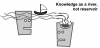
    Featured image: Figure 23. Knowledge as a river, not reservoir, found in Siemens, G., 2006. Knowing knowledge.