Category: Skills

  • A round table for Immunization Agenda 2030: The leap from “bottom-up” consultation to multidimensional dialogue

    A round table for Immunization Agenda 2030: The leap from “bottom-up” consultation to multidimensional dialogue

    They connected from health facilities, districts, and national teams all over the world. 4,769 immunization professionals from the largest network of immunization managers in the world joined this week’s Special Event for Immunization Agenda 2030 (IA2030), the new strategy for immunization, with 59 global and regional partners who accepted the invitation to listen, learn, and share their feedback. (The Special Event is now being re-run every four hours, and you can join the next session here.)

    “My ‘Eureka moment’ was when the presenter emphasized that many outbreaks are happening throughout the globe and it is the people in the room who can steer things in a better direction”, shared a participant. “This gave me motivation and confidence that by unifying on a platform and by discussing the challenges, we can reach a solution.”

    Two of the top global people accountable for executing this new strategy, WHO’s Ann Lindstrand and UNICEF’s Robin Nandy, were in attendance. “With such commitment”, said Robin Nandy, “I am confident that we can achieve the goals of IA2030. Let us be mindful of the importance of convenient and high quality services delivered by a well informed workforce, which you all embody.”

    Hearing “invaluable insights”, Ann Lindstrand recalled that “IA2030 was developed with thousands of immunization stakeholders like you. It reflects exactly what you are telling today. I am encouraged to hear your analyses and ideas to face our common challenges.”

    Indeed, in developing Immunization Agenda 2030 intended to be “adaptive and flexible”, global partners employed a “bottom-up co-creation process”, described as “close engagement of countries to ensure that the vision, strategic priorities and goals are aligned with country needs.”

    There is, however, a risk of confirmation bias. Staff from countries do their best to carry out what they have been asked to do. In the conventional top-down hierarchical system, global recommendations are adopted by ministries of health that then command staff to execute them. If the system remains overly rigid, staff who want to keep their jobs are likely to confirm and comfort the assumptions of the higher-ups whose vision they have been tasked to implement, no matter the depth of the chasm between these assumptions and reality.

    During the Teach to Reach Accelerator conference in January 2021, Kate O’Brien, the director of WHO’s Immunization Department, pointed out that the term “bottom-up initiative” does not call into question existing hierarchies: “I don’t like the sort of hierarchy, about this is the bottom and this is the top, it has a certain sort of power element to me. […] I think leadership is about sitting around a table with a group of people, and drawing the best ideas from everybody who’s sitting around that table, wherever they come from.”

    Of course, immunization programmes have a strong technical dimension that require standardization. There are critical elements required for safe and effective vaccination. For example, WHO now organizes weekly didactic Q&A webinars (with Project ECHO, a fascinating organization of doctors exploring new ways to learn, and TechNet-21, a pioneering digital platform for immunization) that do the job of transmitting information to people involved in COVID-19 vaccine introduction. However, we know that information is necessary but insufficient to lead to the effective localization and application of standards. 

    As Kate O’Brien explained, “we need people to feel like they have the authority and are empowered to lead change in their community, in their programme, at the most local level, understanding what the goal is and what the targets are, taking those critical things that really cannot be compromised and adapting all around that.”

    The IA2030 framework is, according to its global custodians, “designed to be tailored by countries to their local context, and to be revised throughout the decade as new needs and challenges emerge.” In line with this vision, global partners are hoping to foster a “groundswell of support” or even a “social movement”, to ensure that immunization remains high on global and regional health agendas in support of countries.

    Alicia Juarrero, whose research focuses upon complex systems’ models of neural processes involved in proto-moral, moral and ethical cognition, emotions and behaviors, has made the compelling point that requires us to restructure what she calls the “space of possibility”. Continuous dialogue enabled by digital technologies can cut across hierarchies and borders to help create such a space. This represents a logical and constructive shift from “bottom-up” toward what Ian Steed has called multidimensional dialogue.

    Such a dialogue is likely to be different from what global partner staff are used to. It may be interesting, yet feel somehow illegitimate, if only because challenging the status quo may not be in their job description. Some may question its relevance. “This is just not how we do things in immunization,” is how one partner rebuked us in private. Others may even feel threatened, choosing to ignore or dismiss it, even if their organization’s mission is to support countries and people who deliver vaccines. Certainly, what is emergent is far from perfect and requires continued improvement to be truly inclusive of all voices and stakeholders needed to achieve the immunization goals. Nevertheless, participants in this week’s global round table collectively expressed the feeling of empowerment that stems from being connected in a global community for action. Combined with active presence and strong support of organizational leaders, it is moments like these that can spark new consciousness and could foster the birth of a movement.

    Image: Rainbow above the clouds. Personal collection.

  • What lies beyond the event horizon of the ‘webinar’?

    What lies beyond the event horizon of the ‘webinar’?

    It is very hard to convey to learners and newcomers to digital learning alike that asynchronous modes of learning are proven to be far more effective. There is an immediacy to a sage-on-the-stage lecture – whether it is plodding or enthralling – or to being connected simultaneously with others to do group work.

    Asynchronous goes against the way our brains work, driven by prompts, events, and immediacy. But people get the benefit of “time-shifting” their TV shows and “on demand” is the norm for media consumption now.

    Most webinars still require you to show up at a specific time. With live streaming of the Foundation’s events, we are observing growing appreciation for asynchronous “I’ll watch it when I want to” availability of recorded events. The behavior seems different from the intention of viewing a recorded webinar, which almost never happens. (This is, in part, the motivation question: does anyone watch recordings of webinars without being forced to?)

    It is wonderful that the big video platforms immediately make the recording available, at the same URL, after a livestreamed event. Right now, this is better than Zoom, which does not (yet) offer a simple, automated way to share the recording with everyone who missed a live session, nor a mechanism for post-event viewers to contribute comments or questions.

    Image: Time travel (Wikipedia Commons).

  • Two false dichotomies: quality vs. quantity and peer vs. global expertise

    Two false dichotomies: quality vs. quantity and peer vs. global expertise

    The national EPI manager of the Expanded Programme for Immunization (EPI) of the Democratic Republic of the Congo (DRC), just addressed the COVID-19 Peer Hub Teams from DRC and Ivory Coast, saluting both teams for their effort to prepare and strengthen COVID-19 vaccine introduction. I am honored to have been invited and pleased to see how this initiative is not only country-led but truly owned and led by its participants.

    She has joined the Inter-Country Peer Exchange (reserved for COVID-19 Peer Hub Members) organized by the Peer Hub’s DRC Team to share rapid learning from COVID-19 vaccine introduction.

    In the room are immunization professionals, primarily those working for the Ministries of Health, directly involved in vaccine introduction from both countries and from all levels of the health system.

    Other COVID-19 Peer Hub country teams are organizing similar inter-country exchanges, in response to their own needs, building on what they have learned as Scholars about the value of digital networks to strengthen and accelerate their response to the pandemic, from recovery to vaccine introduction.

    Today’s exchange is reserved for COVID-19 Peer Hub Members from the two countries, following a public meeting on 27 March 2021. (Short recaps in French and in English are available below. The full recording of the inaugural 27 March 2021 exchange is available on The Geneva Learning Foundation’s social media channels.)

    The Inter-Country Peer Exchange is only possible because, in response to the pandemic in 2020, we co-designed the Peer Hub and rapidly doubled the size of what was already the largest platform for immunization managers. We combined the best of both worlds: the best available global technical expertise with the field-based expertise of thousands of participants.

    In this way, we do not need to choose between false dichotomies that seek to oppose quality to quantity or peer versus global expertise.

    COVID-19 vaccine introduction: Recaps below in English and French about the first COVID-19 Peer Hub Inter-Country Peer Exchange between the Peer Hub teams from the Democratic Republic of the Congo (DRC) and Ivory Coast

  • Can the transformation of global health education for impact rely on input-based accreditation?

    Can the transformation of global health education for impact rely on input-based accreditation?

    Burck Smith wrote in 2012 what remains one of the clearest summaries of how accreditation is based primarily on a higher education institution’s inputs rather than its outcomes, and serves to create an “iron triangle” to maintain high prices, keep out new entrants, and resist change.

    It is worth quoting Smith at length (summary and references via this link) as we think through the proposal that the transformation of global health education for impact should rely solely on accredited institutions. Global health efforts are focused on outcomes and aim to achieve impact. The focus on results makes the prevailing input-based accreditation criteria unlikely to be the most useful ones to help achieve global health goals. This calls for rethinking a broad swath of fairly fundamental issues, from how to construct education to what philosophy should underpin what we design and develop.

    The call for a “revolution” in education for public health is unlikely to be answered by institutions that form a protected monopoly. It is critical to understand how accreditation, intended to guarantee quality in education, serves to buttress a protected monopoly. The most exciting and promising innovations in education are happening on the fringes of the education landscape, in bootcamps, edtech startups, and other non-traditional organizations that are catalyzing change. Such change remains primarily seen as a threat by established institutions that, in a protected market buttressed by accreditation, are seeking to preserve gross margins that hover at around sixty percent in the United States.

    Of course, there is a very real problem with the proliferation of degree mills and other shady profit-first organizations that sell the promise of career development and opportunities but cannot deliver them. Unfortunately, many such outfits are, it turns out, accredited ones. This explains why, alongside accreditation, a parallel industry of quality labels and certifications is supposed to help potential “customers” make better purchasing decision.

    Instead, we should rethink what determines the value of a credential. Moving toward competency-based degrees is one necessary but insufficient step that has already been explored. Could we invent a “lifelong credential” that would increase in value over time, as its holder applies what was learned in order to progress and ultimately achieve measurable impact? The tools (blockchain, AI, etc.) to support this already exist. A reductive obsession with legitimacy based on accreditation and the prestige and rankings it supposedly confers will only serve to hinder those of us who are working toward new forms of credentialing, grounded in the needs of people working in countries and guided by what will actually save lives and improve health.

    Image: Walled garden, New College (Oxford). Photo by Elaine Heathcote on Flickr.

  • Disseminating rapid learning about COVID-19 vaccine introduction

    Disseminating rapid learning about COVID-19 vaccine introduction

    In July 2019, barely six months before the pandemic, we worked with alumni of The Geneva Learning Foundation’s immunization programme to build the Impact Accelerator in 86 countries. This global community of action for national and sub-national immunization staff pledged, following completion of one of the Foundation’s courses, to support each other in other to achieve impact.

    Closing the loop from learning to impact produced startling results, accelerating the rate at which locally-resourced projects were implemented and fostering new forms of collaborative leadership. Alumni launched what immediately became the largest network of immunization managers in the world.

    Then the pandemic dramatically raised the stakes: at least 80 million children under one were placed at risk of vaccine-preventable diseases such as diphtheria, measles and polio as COVID-19 disrupted immunization service as worldwide.

    Alumni were amongst the first in their countries to respond, leveraging the power of being connected to each other to create a virtuous circle of peer support that became the COVID-19 Peer Hub. As a result, the pace of growth keeps increasing. Membership doubled during the summer of 2020.

    The network effect cannot be replicated by smaller platforms built on top-down legacy models of the past. Nor can the trust and friendship that bind members to each other.

    Members are telling their own stories of the COVID-19 pandemic, disseminating rapid learning, first about recovery of immunization services and, more recently, about COVID-19 vaccine introduction.

    There is no upper limit to the number of participants or stories. Rather than painstakingly collecting a few stories so highly curated that they seem too sanitized to be authentic or meaningful, we created the conditions for each person to share their story and learn from the stories of others. We do not require you to be “exemplary” to experience or share significant learning. Some of the most powerful lessons learned, in fact, come from the experience of failure.

    In November 2020, for example, members worked together to produce in just four weeks over 700 detailed, peer-reviewed case studies of vaccine hesitancy in health facilities and districts. These were used to inform the COVID-19 Peer Hub’s early scenario planning for vaccine introduction and are now being analyzed for the unique insights they contain, available by no other means.

    These stories are about collaboration and learning from each other, within and across borders and all levels of the health system, in new ways to do new things required to face the pandemic. I do not believe it is an overstatement to say that participants are writing history.

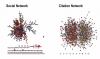
    Visualization of the sharing ideas and practices across borders, roles, and system levels in the COVID-19 Peer Hub

    Co-design as a networked practice of continuous invention, innovation, and learning

    For COVID-19 vaccine introduction to succeed, we need new ways to disseminate rapid learning. Through co-design with members of our platform, we invented two in the first three months of this year: Teach to Reach: Connect and the COVID-19 Peer Hub Inter-Country Learning Collaborative to support vaccine introduction.

    We already knew that presentation webinars do little more than replicate classroom training in a digital format. Yet they proliferate, despite the dearth of evidence about their effectiveness, with unsubstantiated claims that they are somehow “collaborative” or that 10 minutes of attendees asking the experts a few questions qualifies as “peer learning”. Social Network Analysis (SNA) of the COVID-19 Peer Hub by Sasha Poquet and Vitomir Kovanovic at the Centre for Complexity and Change in Learning helped us to understand that the power of the network lies in the relationships between its members, not only in our ability to convene or call to action, and certainly not in one-way information transmission.

    So, on Friday 26 March 2021, 1,372 immunization professionals attended Teach to Reach: Connect to meet, network, and learn about COVID-19 vaccine introduction, how to improve immunization training, and how to reach “zero-dose” children. The feedback received from participants has been incredible, starting with their own surprise that they had so much to learn from each other. (You can catch the opening ceremony on our YouTube channel, and we will soon be sharing what we learned in upcoming live-streamed events on our Facebook page.)

    My first networking meeting during Teach to Reach: Connect. Wasnam Faye is a district midwife in Senegal. I remembered her sharing powerful testimonial about how she took practical steps to ensure safe vaccination and explained the words she used to reassure caregivers, when the pandemic first hit.

    An inter-country peer learning collaborative to accelerate COVID-19 vaccine introduction

    The next day, the COVID-19 Peer Hub team from the Democratic Republic of the Congo (DRC) invited their colleagues from Ivory Coast to learn from the latter’s experience of vaccine introduction. Participants compared the enthusiasm to that for a football match, only this time, they said, the purpose was to “kick out the Coronavirus”. The meeting, hosted by DRC Peer Hub team leader Franck Monga and facilitated by a brilliant young doctor from Burkina Faso, Palenfo Dramane, drew over 1,000 attendees from 20 francophone countries. Panelists from Ivory Coast were alumni of Foundation programmes directly involved in vaccine introduction, working at various levels of the system. They shared first-hand experience from the first few weeks of vaccine introduction. Attendance barely declined even though the meeting ran over time by more than 90 minutes.

    Our ‘grand challenge’

    Our biggest challenge, so far, has been to explain the power, significance, potential, and value of such events to our global partners. This is ironic given that the global immunization community agrees that it is sub-national immunization staff who make the difference needed to achieve Immunization Agenda 2030, the new strategy adopted last year by the World Health Assembly. Some global colleagues did take the time to apologize, explaining that they were too busy on Friday afternoon due to COVID-19 vaccine introduction to take 15 minutes to meet, network, and learn with immunization staff from the countries they serve and who are actually introducing the vaccine. (To be fair, a few colleagues did attend and loved it.) Last but not least, donors remain risk-adverse, preaching innovation while repeatedly choosing conventional approaches and traditional partners, even when they have failed in the past, seemingly driven by considerations other than scale, results, or demand from countries. In some cases, they have even expressed disbelief, doubting our results as too good to be true, flummoxed by how a new entrant with limited immunization experience could achieve them when better-funded, far-more-legitimate institutions have simply not been able to do so.

  • Solidarity across public health and medicine silos during a pandemic

    Solidarity across public health and medicine silos during a pandemic

    We are launching a new Scholar programme about environmental threats to health, with an initial focus on radiation. (I mapped out what this might look like in 2017.) As part of the launch, we are enlisting support of immunization colleagues.

    Our immunization programme is our largest and most advanced programme, and still growing fast since its inception in 2016. At The Geneva Learning Foundation, we have spent 5 years pouring mind, body, and soul into building what has become the largest digital platform for national and sub-national immunization leaders.

    Along the way, we discovered that it is not only about scale. Social Network Analysis (SNA) by colleagues Sasha Poquet and Vitomir Kovanovic at the Centre for Complexity and Change in Learning is now helping us to understand the power in the relationships not just one-to-many but many-to-many across the network.

    Yes, there is a linkage as most vaccines are for children, and our first course in the new programme (with WHO) is about communicating radiation risks in paediatric imaging. But I was not sure if our request for help would make sense to the immunization network, especially when so many immunization staff are overwhelmed by COVID-19 vaccine introduction.

    Yet, in less than 2 hours, immunization colleagues had already shared the announcement over 300 times. This is an impressive display of solidarity across public health and medicine silos.

    This bodes well for the Foundation’s work as we are developing new programmes in other areas of global health, such as non-communicable diseases (NCDs) or neglected tropical diseases (NTDs) like female genital schistomiosis (FGS).

    Until this morning, I was not sure to what extent one programme’s members would be willing to support others, outside their field of specialty.

  • New learning and leadership for front-line community health workers facing danger

    New learning and leadership for front-line community health workers facing danger

    This presentation was prepared for the second global meeting of the Health Care in Danger (HCiD) project in Geneva, Switzerland (17–18 May 2017).

    In October  2016, over 700 pre-hospital emergency workers from 70 countries signed up for the #Ambulance! initiative to “share experience and document situations of violence”. This initiative was led by Norwegian Red Cross and IFRC in partnership with the Geneva Learning Foundation, as part of the Health Care in Danger project. Over four weeks (equivalent to two days of learning time), participants documented 72 front-line incidents of violence and similar risks, and came up with practical approaches to dealing with such risks.

    This initiative builds on the Scholar Approach, developed by the University of Illinois College of Education, the Geneva Learning Foundation, and Learning Strategies International. In 2013, IFRC had piloted this approach to produce 105 case studies documenting learning in emergency operations.

    These are some of the questions which I address in the video presentation below:

    • Mindfulness: Can behaviors and mindfulness change through a digital learning initiative? If so, what kind of pedagogical approach (and technology to scaffold it) is needed to achieve such meaningful outcomes?
    • Leadership: How can learners become leaders through connected learning? What does leadership mean in a global community – and how does it connect back to the ground?
    • Diversity: What does leadership mean in a global knowledge community where every individual’s context is likely to be different?
    • Local relevance: What is the value of a global network when one’s work is to serve a local community?
    • Credential: What is the credential of value (badges and other gimmicks won’t do) that can appropriately recognize the experience of front-line humanitarians?
    • Pedagogy: Why are MOOCs (information transmission) and gamification (behaviorism)  unlikely to deliver meaningful outcomes for the sustainable development or disaster preparedness of communities?

    The video presentation below (31 minutes):

    • examines a few of the remarkable outcomes produced in 2016 and
    • explains how they led to growing the initiative in 2017.

    To learn more about or join the #Ambulance! activities in 2017, please click here. You may also view below the selfie videos recorded by #Ambulance! course team volunteers to call fellow pre-hospital emergency health practitioners to join the initiative.

    Image credit: #Ambulance! project course team volunteers.

  • Inventing by investing in new business models for humanitarian training

    Inventing by investing in new business models for humanitarian training

    Through research and broad sector collaboration, a consensus has emerged on the recognition that uneven quality of personnel is a major limiting factor in humanitarian response, and that serious effort is needed to address the global gap in skills and build capacity of countries and local communities. At the same time, there is growing recognition that existing models for learning, education and training (LET) are not succeeding in addressing this gap, and that new approaches are needed.

    Structured learning has long been assumed to be an expenditure and, for a long time, remained unquestioned as a necessary investment. Yet learning advocates increasingly find themselves in a defensive posture, in part due to the complexity involved in correlating education initiatives with measurable outcomes for a cost centre. However, new business models point to education driven by demand that can not only cover its own costs but generate revenue to be reinvested in the organization’s growth. Challenges include transforming cultural norms around trainings and workshops, rethinking the roles of those who earn their livelihoods from such activities, and correctly assessing markets in which those who pay are usually not those who learn.

    In a world of knowledge abundance, selling content is an increasingly tough proposition. The objective of market research is no longer to decide which courses to issue. Rather, it is about determining the value of content – to the extent that content adds to a credential of value. In the search for new business models for education, marketing itself may be considered to be a learning function, with the goal of establishing meaningful connections and loyalty with end users through the utilization of learning processes.

    The bottom line of humanitarian learning, education and training is still mostly an afterthought. Supply-driven initiatives are launched with donor funding traded for vague promises of sustainability within five years, but no incentives built into the project that will help it get there. Scrambling for alternatives to an existing model in which financing has long been assumed rather than earned may be the toughest challenge of them all for established organizations.

    The path of least resistance is to do more of what has been done in the past. In a startling failure of imagination, scaling up resources results in more courses and programmes, more trainings of trainers, more classrooms in shiny new training centres, and more online platforms. Those tasked with spending are then bound to ensure that the metrics will look good, fast enough so that donor support remains unwavering. Yet it is vital for such initiatives to also invest in questioning their own assumptions, starting with those that underpin the business model of a status quo that is unlikely to produce the results that are needed tomorrow, irrespective of the impressive announcements about resources secured today.

    Image: Old cash register (Andrés Moreira/flickr)

  • Can analysis and critical thinking be taught online in the humanitarian context?

    Can analysis and critical thinking be taught online in the humanitarian context?

    This is my presentation at the First International Forum on Humanitarian Online Training (IFHOLT) organized by the University of Geneva on 12 June 2015.

    I describe some early findings from research and practice that aim to go beyond “click-through” e-learning that stops at knowledge transmission. Such transmissive approaches replicate traditional training methods prevalent in the humanitarian context, but are both ineffective and irrelevant when it comes to teaching and learning the critical thinking skills that are needed to operate in volatile, uncertain, complex and ambiguous environments faced by humanitarian teams. Nor can such approaches foster collaborative leadership and team work.

    Most people recognize this, but then invoke blended learning as the solution. Is it that – or is it just a cop-out to avoid deeper questioning and enquiry of our models for teaching and learning in the humanitarian (and development) space? If not, what is the alternative? This is what I explore in just under twenty minutes.

    This presentation was first made as a Pecha Kucha at the University of Geneva’s First International Forum on Online Humanitarian Training (IFHOLT), on 12 June 2015. Its content is based in part on LSi’s first white paper written by Katia Muck with support from Bill Cope to document the learning process and outcomes of Scholar for the humanitarian contest. 

    Photo: All the way down (Amancay Maahs/flickr.com)

  • Experience and blended learning: two heads of the humanitarian training chimera

    Experience and blended learning: two heads of the humanitarian training chimera

    Experience is the best teacher, we say. This is a testament to our lack of applicable quality standards for training and its professionalization, our inability to act on what has consequently become the fairly empty mantra of 70-20-10, and the blinders that keep the economics (low-volume, high-cost face-to-face training with no measurable outcomes pays the bills of many humanitarian workers, and per diem feeds many trainees…) of humanitarian education out of the picture.

    We are still dropping people into the deep end of the pool (i.e., mission) and hoping that they somehow figure out how to swim. We are where the National Basketball Association in the United States was in 1976. However, if the Kermit Washingtons in our space were to call our Pete Newells (i.e., those of us who design, deliver, or manage humanitarian training), what do we have to offer?

    The corollary to this question is why no one seems to care? How else could an independent impact review of DFID’s five-year £1.2 billion investment in research, evaluation and personnel development conclude that the British agency for international development “does not clearly identify how its investment in learning links to its performance and delivering better impact”… with barely anybody noticing?

    Let us just use blended learning, we say. Yet the largest meta-analysis and review of online learning studies led by Barbara Means and her colleagues in 2010 found no positive effects associated with blended learning (other than the fact that learners typically do more work in such set-ups, once online and then again face-to-face). Rather, the call for blended learning is a symptom for two ills.

    First, there is our lingering skepticism about the effectiveness of online learning (of which we make demands in terms of outcomes, efficacy, and results that we almost never make for face-to-face training), magnified by fear of machines taking away our training livelihoods.

    Second, there is the failure of the prevailing transmissive model of e-learning which, paradoxically, is also responsible for its growing acceptance in the humanitarian sector. We have reproduced the worst kind of face-to-face training in the online space with our click-through PowerPoints that get a multiple-choice quiz tacked on at the end. This is unfair, if only because it only saves the trainer (saved from the drudgery of delivery by a machine) from boredom.

    So the litany about blended learning is ultimately a failure of imagination: are we really incapable of creating new ways of teaching and learning that model the ways we work in volatile, uncertain, complex and ambiguous (VUCA) humanitarian contexts? We actually dialogue, try, fail, learn and iterate all the time – outside of training. How can humanitarians who share a profoundly creative problem-solving learning culture, who operate on the outer cusp of complexity and chaos… do so poorly when it comes to organizing how we teach and learn? How can organizations and donors that preach accountability and results continue to unquestioningly pour money into training with nothing but a fresh but thin coat of capacity-building paint splashed on?

    Transmissive learning – whatever the medium – remains the dominant mode of formal learning in the humanitarian context, even though everyone knows patently that such an approach is both ineffective and irrelevant when it comes to teaching and learning the critical thinking skills that are needed to deliver results and, even more crucially, to see around the corner of the next challenge. Such approaches do not foster collaborative leadership and team work, do not provide experience, and do not confront the learner with complexity. In other words, they fail to do anything of relevance to improved preparedness and performance.

    If you find yourself appalled at the polemical nature of the blanket statements above – that’s great! I believe that the sector should be ripe for such a debate. So please do share the nature of your disagreement and take me to task for getting it all wrong (here is why I don’t have a comments section). If you at least reluctantly acknowledge that there is something worryingly accurate about my observations, let’s talk. Finally, if you find this to be darkly depressing, then check back tomorrow (or subscribe) on this blog when I publish my presentation at the First International Forum on Online Humanitarian training. It is all about new learning and assessment practice that models the complexity and creativity of the work that humanitarians do in order to survive, deliver, and thrive.

    Painting: Peter Paul Rubens. From 1577 to 1640. Antwerp. Medusa’s head. KHM Vienna.