Category: Global health

  • Metaphors of global health: jazz improvisation ensemble or classical orchestra?

    Metaphors of global health: jazz improvisation ensemble or classical orchestra?

    In the realm of classical music, the orchestra stands as a formidable emblem of aesthetic grandeur and refinement. However, beneath the veneer of sophistication lies a deeply entrenched system that stymies the potential for creative exploration and spontaneity. As in a straitjacket, the rigidity of this system threatens to reduce the rich tapestry of human experience into a sterile hierarchy, devoid of the serendipity that breathes life into artistic expression.

    The classical orchestra is governed by a hierarchy that places the conductor at the apex, wielding an almost tyrannical authority over the musicians. It is a system that perpetuates a culture of conformity, where musicians are coerced into subsuming their individuality in the service of an imposed order. This stifling environment leaves little room for the musicians to contribute their own interpretations or creative impulses, and instead demands that they adhere strictly to the conductor’s vision, which is often based on a prescriptive reading of the composer’s intent.

    The result is a musical experience that is reductive in nature, an experience that is stripped of the chaos and unpredictability that are essential to the vitality of artistic expression. In its quest for order, the classical orchestra neglects the potential for serendipity, which can arise from the unscripted interplay of individual talents and the embrace of the unexpected. By eschewing the possibility of chance encounters and emergent beauty, the orchestra constricts the wellspring of creative potential, relegating the musicians to mere cogs in a mechanistic apparatus.

    Furthermore, the insistence on a strict adherence to the conductor’s interpretation perpetuates an illusion of coherence and stability that belies the complexities of the human experience. The orchestral structure does not allow for the acknowledgement of discord and dissonance that are inherent in life. Rather, it seeks to impose a singular vision of order, relegating the multitudes of voices and perspectives to the margins of the performance.

    In the end, the classical orchestra emerges as an antiquated institution that, in its blind pursuit of order, risks smothering the creative spirit that animates the very essence of artistic expression. It is a system that demands submission and conformity at the expense of individuality and exploration. By refusing to acknowledge the serendipity and complexity that lie at the heart of human experience, the classical orchestra risks becoming a hollow shell, a lifeless relic of a bygone era that has yet to fully grasp the true potential of the human spirit.

    Is global health more like a classical orchestra or jazz improvisation?

    In a dimly lit club, a hazy smoke fills the air, while the soft murmur of conversation weaves its way through the room. Then, the jazz ensemble erupts in a mesmerizing explosion of sound – an intoxicating mix of chaos and order, each musician adding their own unique twist to the shared melody. As their improvisation unfolds, the music becomes a living, breathing entity, transcending the boundaries of the individual instruments.

    This vibrant expression of creativity and spontaneity form the improvisational spirit. Could embracing the fluidity and adaptability inherent in jazz as a metaphor help us rise to meet the myriad challenges that crop up in our quest to improve the health of people across the globe?

    The notion of orchestrating global health initiatives like a classical ensemble, with a conductor dictating every note and movement, might be appealing at first glance. But the diverse and interdependent nature of global health demands that we adopt a more inclusive approach that values flexibility, adaptability, and collaboration. Just as a jazz ensemble thrives on its ability to respond to the unexpected, global health initiatives must be nimble enough to adjust to the constantly shifting realities on the ground.

    It’s a world where the unexpected reigns supreme, where musicians effortlessly dance between moments of chaos and harmony. In this realm of improvisation, there’s a certain magic that takes hold – a power that transcends the limits of scripted notes and carefully crafted melodies.

    The power of improvisation lies in its ability to tap into the uncharted territories of human creativity. It’s a process that relies on a deep sense of trust and vulnerability between the musicians, who must be willing to venture into the unknown, guided by nothing more than their intuition and their shared connection to the music. As they navigate this uncertain terrain, the musicians become explorers of a musical landscape that is constantly shifting and evolving, and in doing so, they discover new possibilities and pathways that would have otherwise remained hidden.

    Improvisation also fosters a unique form of communication, one that transcends the boundaries of language and culture. In the midst of a jazz jam session, the musicians engage in a conversation that is at once wordless and profound, speaking to one another through the language of their instruments. As each musician adds their own voice to the collective melody, they create a tapestry of sound that tells a story – a story that is rich in emotion and nuance, and that speaks to the universal human experience.

    Moreover, improvisation has the power to challenge and transform our understanding of what is possible. By breaking free from the constraints of traditional structures and forms, improvisation invites us to question the status quo and to reimagine the world in new and exciting ways. It teaches us to embrace uncertainty and change, and to see the beauty in the unexpected. In this sense, improvisation serves as a potent reminder of the boundless potential that lies within each of us, waiting to be unleashed.

    As the haunting strains of a saxophone solo rise and fall, and the pulse of the bass line echoes through the dimly lit club, the power of improvisation is laid bare for all to see. It’s a force that defies categorization, and yet it holds within it the capacity to move and inspire, to challenge and transform. In the ever-changing world of jazz, the power of improvisation is the lifeblood that courses through the music, and it’s a force that, if harnessed, can open up new worlds of possibility and wonder.

    In this context, the jazz ensemble emerges as the more fitting metaphor. By incorporating the principles of complexity and change found within the jazz improvisation, we can more effectively navigate the challenges that come with addressing global health issues. It is through this adaptable and collaborative approach that we can truly accelerate progress and create lasting, meaningful change.

    So, as the last notes of the saxophone linger in the air and the final beats of the drums echo through the club, we’re reminded of the power and potential of improvisation. It’s a lesson that, if taken to heart, might help transform our efforts to improve global health and the lives of those we seek to help.

    Is global health more like a classical orchestra or a jazz improvisation ensemble? Which should it be in the future?

    Reference

    Jacobson, J., Brooks, A., 2022. Reflections on “Orchestrating for Impact”: Harmonizing across Stakeholders to Accelerate Global Health Gains. The American Journal of Tropical Medicine and Hygiene. https://doi.org/10.4269/ajtmh.21-1101

  • What works in practice to build vaccine confidence?

    What works in practice to build vaccine confidence?

    This is the content of a poster about vaccine confidence presented today by The Geneva Learning Foundation (LinkedIn | YouTube | Podcast | X/Twitter) at the International Social and Behavior Change Communication Summit 2022 (#SBCCSummit) held 5-9 December 2022 in Marrakech, Morocco. What is the Geneva Learning Foundation? Get the full reportRead the preface by Heidi Larson

    Vaccine confidence: from responding to the initial shock of the pandemic to preparing COVID-19 vaccine introduction

    Over 6,000 health professionals joined the COVID-19 Peer Hub in July 2022, part of the Geneva Learning Foundation’s (TGLF) global immunization learning-to-action platform.

    • From August to October, they focused on developing and implementing recovery plans.
    • In November 2020, members of the COVID-19 Peer Hub decided to launch a reflective exercise to prepare COVID-19 vaccine introduction, after three months on early recovery implementation.
    • The exercise took place between 9 November and 18 December 2020.

    We asked a simple question in relation to vaccine confidence: Can you think of a time when you helped an individual or group overcome their initial reluctance, hesitancy, or fear about vaccination?

    • Each participant developed a case study to describe and analyze such a situation.
    • They then peer reviewed each other’s case studies, giving and receiving feedback to learn from each other.

    Who participated?

    Local practitioners from 86 countries joined this peer learning exercise about vaccine confidence:

    • 81% (n=591) in West and Central Africa
    • 11% (n=80) in Eastern and Southern Africa
    • 6% (n=43) in South Asia

    Health system levels:

    • 18% (n=131) national
    • 29% (n=213) sub-national
    • 29% (n=214) district
    • 20% (n=144) facility

    So what?

    What was the significance of the experience for participants?

    Transformation: “I can tell you this experience changed my life. It has changed my practice and made me think differently about the way I work, considering things I did not think about before.”

    Defying boundaries: “It was a opportunity like I have never had before… I have studied with peer from my country. Having a lot of people from other countries sharing their experience was something else.”

    What we learned from local practice about vaccine confidence

    1. Vaccine hesitancy is a complex problem that blanket recommendations or prescriptive guidelines are unlikely to solve.
    2. Instead, we should strive to recognize that solutions must be local to be effective, leveraging the ability of local staff to adapt to their context in order to foster confidence and acceptance of vaccines.
    3. Supporting health workers, already recognized as trusted advisors to communities, requires new ways of listening and learning.
    4. It also requires new ways of fostering, recognizing, and supporting the leadership of immunization staff who work at the local level under often difficult conditions.

    4 targeted intervention approaches that worked to strengthen vaccine confidence

    1. targeted individual counselling at the individual or household level;
    2. community outreach for larger groups;
    3. formal meetings (usually for community and religious leaders); and
    4. organized training sessions in which particular subgroups were involved (e.g., training for religious teachers, health workers, youth groups, women’s groups).

    2 key determinants that changed minds and behaviors about vaccine confidence

    1. The tone and delivery of the interventions were as critical to the success of the immunization as the activities themselves.
    2. The positive effect of using multiple approaches: high degree of understanding and compassion; navigating sensitive dynamics, grieving families, and issues related to vulnerable communities affected by displacement or war.

    Anthrologica performed the qualitative analysis of the case studies and developed the report for the Geneva Learning Foundation.

  • Heidi Larson: “So much remains determined by the capacity of people on the frontlines to explain, advocate, and respond in ways that are almost entirely dictated by context”

    This is the preface by Heidi Larson for the report “Overcoming barriers to vaccine acceptance in the community: Key learning from the experiences of 734 frontline health workers”. This report is presented today by The Geneva Learning Foundation (LinkedIn | YouTube | Podcast | Twitter) at the International Social and Behavior Change Communication Summit 2022 (#SBCCSummit) held 5-9 December 2022 in Marrakech, Morocco. What is the Geneva Learning Foundation? Get the full reportRead the preface by Heidi Larson

    My own consciousness of the fragile equilibrium sustaining vaccine confidence came from working with immunization programmes and local health workers to defuse rumors that threatened to derail vaccination initiatives. Twenty years ago, this meant traveling to countries to meet, build relationships with, and work side-by-side with frontliners.

    Since that time, the corpus of research on the topic has grown tremendously. Elaborate behavioral science frameworks, supported by robust monitoring and evaluation, are now available to guide policy makers, donors, and other decision makers, for those who have the time and resources to implement them. 

    Nevertheless, there remains a gap in our understanding of how the complex dynamics of change actually happen, especially at the most local levels. For this we need to listen to the local experiences and voices of those at the front lines who can tell the real-life stories of how these complex dynamics are navigated.

    I found the idea of this report fascinating: 734 health professionals from all levels of the health system took time out from their demanding daily duties to reflect on their practice, describing and then analyzing a situation in which they successfully helped an individual or a group accept or gain confidence that taking vaccines would protect them from disease. Furthermore, they did this during four weeks of remote collaboration at a very crucial historical moment, months before the first doses of COVID-19 vaccine were to arrive in Ghana and Côte d’Ivoire.

    Reading this report, I experienced a sense of discovery. The stories shared reminded me of my early work with colleagues working at the local levels, and gave me renewed appreciation of   these health professionals who faced even greater challenges in the face of a deadly pandemic. I could feel how hard it is to remain that ‘most trusted adviser’ to communities, and how so much remains determined by the capacity of people on the frontlines to explain, advocate, and respond in ways that are almost entirely dictated by context, in this case a highly uncertain and evolving pandemic.

    I could also feel the tensions due to the imperfection of a participatory methodology that did not neatly fit the conventions and norms of expert-led research. Conventional research has seldom been able to access such local narratives, and even less so with such a large and diverse sample. Furthermore, the peer learning methodology used by the Geneva Learning Foundation meant that there was an immediate benefit for participants who learned from each other. Rather than research subjects or native informants, case study authors were citizen scientists supporting each other in the face of a common challenge. The scale, geographic scope, and diversity of contexts, job roles, and experiences are also strengths of this work. 

    Supporting health workers, already recognized as trusted advisors to communities, requires new ways of listening, new ways of supporting, new ways of measuring, documenting and learning.

    It also requires new ways of recognizing the leadership of immunization staff who work at local levels under often difficult conditions. 

    In some cases, it may actually be the lack of prescriptive guidelines that enabled local health staff to draw on their own creativity and problem-solving capabilities to respond to community needs.

    Rather than generalizations, we should therefore strive to recognize that solutions must be local to be effective, recognizing the ability of local staff to adapt to their context in order to foster confidence and acceptance of vaccines, and do all we can to support – letting them be the guide for future efforts.

    Heidi Larson, PhD
    Professor of Anthropology, Risk and Decision Science and
    Founding Director of the Vaccine Confidence Project at the London School of Hygiene & Tropical Medicine

  • Digital challenge-based learning in the COVID-19 Peer Hub

    A digital human knowledge and action network of health workers: Challenging established notions of learning in global health

    When Prof Rupert Wegerif introduced DEFI in his blog post, he argued that recent technologies will transform the notions and practice of education. The Geneva Learning Foundation (TGLF) is demonstrating this concept in the field of global health, specifically immunization, through the ongoing engagement of thousands of health workers in digital peer learning.

    As images of ambulance queues across Europe filled TV screens in 2020, another discussion was starting: how would COVID-19 affect countries with weaker health systems but more experience in facing epidemic outbreaks?

    In the global immunization community, there were early signs that ongoing efforts to protect children from vaccine preventable diseases – measles, polio, diphtheria – would suffer. On the ground, there were early reports of health workers being afraid to work, being excluded by communities, or having key supplies disrupted. The TGLF quickly realised it had a role to play in ensuring that routine immunization would carry on in the Global South during the pandemic and then to prepare for COVID-19 vaccine introduction.

    Peer learning vs hierarchical, transmissive learning models

    Since 2016, TGLF had been slowly gaining traction in the world of immunization learning, with its digital peer learning programmes for immunization staff. These programmes reached around 15,000 people in their first four years, before the pandemic, about 70% of whom were from West and Central Africa, and about 50% of whom work at the lowest levels of health systems: health facilities and districts.

    The TGLF peer learning programmes were developed as an alternative to hierarchical, transmissive learning models, in which knowledge is developed centrally, translated into guidance by global experts, which is then disseminated through cascade training.

    In the hierarchical model, health workers are merely consumers at the periphery of the process. COVID-19 brought the inadequacies of this approach into sharper focus, as health workers dealt with challenges that had not been foreseen or processed through existing guidance.

    No technical guidance could address every scenario health workers faced, such as reaching the most marginalised communities or engaging terrified parents at a time when science had few reassuring answers. They needed to be creative and empowered to find their own solutions. Health professionals learned to rely on each other as peers, learning from each other how to negotiate many unknowns, without waiting for the answers provided by formal science.

    The TGLF approach quickly demonstrated its usefulness in connecting peers during the pandemic. In 2020, the number of platform users doubled to 30,000 in just six months (compared to four years to gain the first 15,000 users) and has now trebled to 45,000.

    Adoption doubled from 15,000 pre-pandemic users to 30,000 users in the first six months of the pandemic. It now stands at 45,000 in 2022. 

    Addressing Covid-19 impacts through challenge-based learning

    The foundation of the TGLF approach was the COVID-19 Peer Hub, an 8-month project based on challenge-based learning, which challenged individuals to give and receive feedback as they collaborated to:

    • Identify a real challenge that they were expected to address in their everyday work
    • Carry out situation analysis, and
    • Develop action plans that are peer-reviewed and improved.

    The Peer Hub was inspired by the works of several of academics who helped create the Foundation: Bill Cope and Mary Kalantzis, and their technological implementation of “New Learning;” George Siemens’ learning theory of connectivism; and Karen E. Watkins and Victoria Marsick’s insights into the significance of incidental and informal learning.

    The Peer Hub demonstrated the creation of a “human knowledge and action network” formed through both formal and informal peer learning combined with ongoing informal social learning between participants. The network was built on the principle that participants were themselves experts in their own contexts, and creators, rather than consumers, of knowledge. Front-line health workers suddenly had the legitimacy and ability to share experiences with their peers and experts from around the globe.

    Screenshot showing ten user-generated posts displayed as two rows of colourful tiles

    In the first ten days, COVID-19 Peer Hub participants shared 1224 ideas and practices through the Ideas Engine, an online innovation management tool.

    Results of peer-led, challenge-based learning interventions

    More than 6,000 health workers joined the TGLF COVID-19 Peer Hub, where they:

    Assessing the value of peer-led learning in a global vaccine education programme

    The next challenge for TGLF was how to document and capture the value of this? Most of what was shared between peers was not new or innovative at a global level – but this did not make it less useful to the individual practitioner who had not encountered it before. How to account for the sense of identity, community and solidarity arising from peer learning that gives health workers the confidence and motivation to try new things? How to make a link between investment in peer learning, and children immunized?

    “Participation in the Peer Hub has motivated me to organize my district to implement actions developed. It has also encouraged me to invite many Immunization Officers to learn the experiences from other countries to improve country immunization sessions” 

    Peer Hub participant

    Global map with lines connecting countries where participants interacted

    Tracking movement of practices and ideas shared through the Ideas Engine between countries

    Because while health workers responded positively to opportunities to connect, learn and lead with one another, TGLF is very much a new entrant in a well-established institutional learning environment for global health. Here are some questions we’ve developed as TGLF challenges established norms and ways of working:

    • How would you feel as a global expert if you were asked to give up your role as ‘sage on the stage’ to be a ‘guide on the side’ to thousands of health workers?
    • Can self-reported data from thousands of health workers evaluated by peers be trusted more or less than a peer-reviewed study?
    • What does ubiquitous digital access mean for training programmes that have previously incentivised learner participation in face-to-face events through payment?

    “I can actually broaden my vision and be more imaginative, creative towards new ideas that have come up to improve overall immunization coverage.” Peer Hub participant

    Working with DEFI and other similar institutions, TGLF looks forward to:

    ­We look forward to fruitful dialogues!

    Ian Steed, Associate, Hughes Hall
    Ian works as a consultant in the international humanitarian and development sector, focusing on the policy and practice of ‘localising’ international aid. In addition to his work with TGLF, Ian is involved with financial sustainability in the Red Cross Red Crescent Movement and is founder and board member of the Cambridge Humanitarian Centre (now the Centre for Global Equality). He studied German and Dutch at Jesus College, Cambridge, and has lived and worked in Germany and Switzerland.

  • What is the Movement for Immunization Agenda 2030 (IA2030)?

    What is the Movement for Immunization Agenda 2030 (IA2030)?

    The Immunization Agenda 2030 (IA2030) and the Movement for Immunization Agenda 2030 represent two interconnected but distinct aspects of a global effort to enhance immunization coverage and impact.

    What is Immunization Agenda 2030?

    Immunization Agenda 2030 or “IA2030” is a global strategy endorsed by the World Health Assembly, aiming to maximize the lifesaving impact of vaccines over the decade from 2021 to 2030.

    • It sets an ambitious vision for a world where everyone, everywhere, at every age, fully benefits from vaccines for good health and well-being.
    • The strategy was designed before the COVID-19 pandemic, with the goal of saving 50 million lives through increased vaccine coverage and addresses several strategic priorities, including making immunization services accessible as part of primary care, ensuring everyone is protected by immunization regardless of location or socioeconomic status, and preparing for disease outbreaks.
    • IA2030 emphasizes country ownership, broad partnerships, and data-driven approaches. It seeks to integrate immunization with other essential health services, ensuring a reliable supply of vaccines and promoting innovation in immunization programs.

    Watch the Immunization Agenda 2030 (IA2030) inaugural lecture by Anne Lindstrand (WHO) and Robin Nandy (UNICEF)

    What is the Movement for Immunization Agenda 2030?

    The Movement for Immunization Agenda 2030, on the other hand, is a collaborative, community-driven effort to operationalize the goals of IA2030 at the local and national – and to foster double-loop learning for international partners.

    It emerged in response to the Director-General’s call for a “groundswell of support” for immunization and combines a network, platform, and community of action.

    The Movement focuses on turning the commitment to IA2030 into locally-led, context-specific actions, encouraging peer exchange, and sharing progress and results to foster a sense of ownership among immunization practitioners and the communities they serve. It has:

    • has demonstrated a scalable model for facilitating peer exchange among thousands of motivated immunization practitioners.
    • emphasizes locally-developed solutions, connecting local innovation to global knowledge, and is instrumental in resuscitating progress towards more equitable immunization coverage.
    • operates as a platform for learning, sharing, and collaboration, aiming to ground action in local realities to reach the unreached and accelerate progress towards the IA2030 goals.

    In April 2021, over 5,000 immunization professionals came together during World Immunization Week to listen and learn from challenges faced by immunization colleagues from all over the world. Watch the Special Event to hear practitioners from all over the world share the challenges they face. Learn more

    What is the difference between the Agenda for IA2030 and the Movement for IA2030?

    • Scope and Nature: IA2030 is a strategic framework with a global vision for immunization over the decade, while the Movement for IA2030 is a dynamic, community-driven effort to implement that vision through local action and global collaboration.
    • Operational Focus: IA2030 outlines the strategic priorities and goals for immunization efforts by global funders and agencies, whereas the Movement focuses on mobilizing support, facilitating peer learning, and sharing innovative practices to achieve those goals.
    • Engagement and Collaboration: While IA2030 is a product of global consensus and sets the agenda for immunization, the Movement actively engages immunization professionals, stakeholders, and communities in a bottom-up approach to foster ownership and tailor strategies to local contexts.

    What is the role of The Geneva Learning Foundation (TGLF)?

    The Geneva Learning Foundation (TGLF) plays a pivotal role in facilitating the Movement for Immunization Agenda 2030 (IA2030). A Swiss non-profit organization with the mission to research and develop new ways to learn and lead, TGLF is instrumental in implementing large-scale, collaborative efforts to support the goals of IA2030. Here are the key roles TGLF fulfills within the Movement:

    1. Facilitation and leadership: TGLF leads the facilitation of the Movement for IA2030, providing a platform for immunization professionals to collaborate, share knowledge, and drive action towards the IA2030 goals.
    2. Learning-to-action approach: TGLF contributes to transforming technical assistance (TA) to strengthen immunization programs. This involves challenging traditional power dynamics and empowering immunization professionals to apply local knowledge to solve problems, support peers in doing the same, and contribute to global knowledge.
    3. Peer learning scaffolding and facilitation: TGLF has demonstrated the feasibility of establishing a global peer learning platform for immunization practitioners. This platform enables health professionals to contribute knowledge, share experiences, and learn from each other, thereby fostering a community of practice that spans across borders.
    4. Advocacy and mobilization: TGLF calls on immunization professionals to join the Movement for IA2030, aiming to mobilize a global community to share experiences and work collaboratively towards the IA2030 objectives. This includes engaging over 60,000 immunization professionals from 99 countries.
    5. Governance, code of conduct, and ethical standards: Participants in TGLF’s programs are required to adhere to a strict Code of Conduct that emphasizes integrity, honesty, and the highest ethical, scientific, and intellectual standards. This includes accurate attribution of sources and appropriate collection and use of data. Movement Members are also expected respect and abide by any restrictions, requirements, and regulations of their employer and government.
    6. Research and evaluation: TGLF may facilitate the connections between peers, for example to help them give and receive feedback on their local projects and other knowledge produced by learners. Insights and evidence from local action may also contribute in communication, advocacy, and training efforts. TGLF also invites learners to participate in research and evaluation to further the understanding of effective learning and performance management approaches for frontline health workers.
  • Learning for Knowledge Creation: The WHO Scholar Program

    Learning for Knowledge Creation: The WHO Scholar Program

    Excerpted from: Victoria J. Marsick, Rachel Fichter, Karen E. Watkins, 2022. From Work-based Learning to Learning-based Work: Exploring the Changing Relationship between Learning and Work, in: The SAGE Handbook of Learning and Work. SAGE Publications.

    Reda Sadki of The Geneva Learning Foundation (TGLF), working with Jhilmil Bahl from the World Health Organization (WHO) and funding from the Bill and Melinda Gates Foundation, developed an extraordinary approach to blending work and learning. The program started as a series of digitally offered courses for immunization personnel working in various countries, connecting in-country central planners, frontline workers, and global actors. The program was designed to address five common problems in training (Sadki, 2018): the inability to scale up to reach large audiences; the difficulty in transferring what is learned; the inability to accommodate different learners’ starting places; the need to teach learners to solve complex problems; and the inability to develop sufficient expertise in a timely way to ensure learning is greater than the rate of change (Revans, 1984).

    The approach grew out of work with Scholar, an innovative learning platform, developed at the University of Illinois by Bill Cope and Mary Kalantzis. As the technology implementation of their ‘new learning’ theory, Scholar emphasized seven affordances of learning in a digital age that look at how new technologies change the way knowledge is created and how people connect and socialize (Cope & Kalantzis, 2016). The elements of the Scholar approach include: community-building functions and resources, such as dialogue area surveys and social media; and knowledge creation functions, including a collaborative publishing and critiquing space and tools such as language checkers, annotation functions, and a number of analytics including grade-level writing scores (see Figure 11.3).

    Figure 11.3. Scholar pedagogy framework
    Source: Cope, Bill and Mary Kalantzis, “Assessment and Pedagogy in the Era of Machine-Mediated Learning,” pp. 350–74 in Education as Social Construction: Contributions to Theory, Research, and Practice, edited by Thalia Dragonas, Kenneth J. Gergen, Sheila McNamee and Eleftheria Tseliou, Chagrin Falls OH: Worldshare Books, 2015.

    Learning in this digital milieu is very different, not because it is new (given decades of experience with the internet), but because of the rapid rate of change compared to traditional courses that rely on a fixed understanding of how we learn when we share physical space. Published work is often generated by the learners themselves either from their existing libraries or what they produce within the course – which may also become available to other courses; from internet searches, source documents within their work, etc. Project-based learning is not new either, but the scale, the speed, and the meaning of such connections (i.e., how they are experienced) are. Learning contributions of this kind reduce the need for subject matter experts and are both convincing and situated in real-life contexts. Complex cases demonstrate the problems at the center of the course. Group dialogue and the development of proposals to solve real problems build a shared knowledge base. Participants develop action plans of how they will address the problems that are in their workplace. Finally, peer critiquing and support enable everyone to improve their plans from whatever starting place.

    Deliberate efforts are made to create a learning community using tools that are already embedded in daily practice (keeping in mind that these tools are constantly changing) and structured activities like randomized coffee trials (Soto, 2016) through which learners meet outside of class to get to know one another socially (i.e., ‘to be human together’). Learning is scaffolded by a human knowledge network (Watkins & Kim, 2018) with peer review, staff support, expert resources, and a unique Scholar alumni cadre of former students who volunteer as ‘accompanists’ to support new learners in navigating the technology and whatever else creates a barrier for novices. Peer review is based on an expert rubric and facilitated by the Scholar team. This approach is scalable, with more than 800 learners in each cohort and 400 alumni volunteering to serve as accompanists. A small project team manages multiple cohorts at a time, with a duration of six to 17 weeks, depending on the course.

    Recently, the Scholar team developed the Impact Accelerator, an extension to the courses that supports the implementation of course projects and encourages participants to develop new initiatives through collaboration. The Accelerator combines weekly webinars and assemblies, regular check-ins on implementation status, and support for developing in-country teams. Participants share best practices and challenging problems, for which peers provide help, responding as a culture without requiring prompting or intervention to do so. Initial findings from an evaluation of the Accelerator indicated faster implementation of action plans and improved collaboration among participants.

    Over 20 country groups formed. In a short time, alumni documented that, as a result of what they learned and implemented, immunization coverage in their region improved. Learning involves a unique blend of a traditional format – an e-learning delivery platform – and consistent and deliberate use of actual work challenges and plans to generate improved workplace performance through a combination of peer support, healthy peer competition, and mentoring and coaching.

    Sadki’s approach has been called ‘magic’. He disagrees. He says: ‘Learners are transmuted into teachers, leaders, and facilitators. In some countries, learners are self-organizing to take on issues that matter to them, evolving course projects into a potentially transformative agenda.’ He says success comes ‘from modestly intersecting the science of learning with real, lived learning culture and from reframing education as philosophy for change in the Digital Age. That, and a lot of elbow grease’ (Sadki, 2019). Sadki believes that impact is possible – even tangible – when educators connect the dots among the course, the individuals, and their context. His approach combines informal and incidental learning with conscious restructuring of context. The goal of his courses is knowledge creation focused on creating change in the workplace. The approach has gained sufficient momentum that ‘Scholar’ is more a movement than a learning approach. Sadki, a lifelong social entrepreneur and activist, has invented a new approach to learning and changing individuals and organizations. Table 11.2 summarizes features of the initiative map against the framework of learning in terms of separation, coterminous, seamlessly integrated or learning based work.

    Cope, B., Kalantzis, M., 2016. Conceptualizing e-Learning. Common Ground Publishing, Chicago.

    Revans, R. (1984). The origins and growth of action learning. London, England: Chartwell- Bratt.

    Sadki, R. (2018). Peer learning support capacity building with Scholar. Poster presented at the Teach to Reach Conference, Bill and Melinda Gates Foundation, Dar es Salaam, Tanzania.

    Sadki, R. (2019). Magic. Retrieved from: https://stories.learning.foundation/2019/03/25/magic/

    Siemens, G. (2007). Connectivism: Creating a learning ecology in distributed environments. In Hug, T. (Ed.). Didactics of micro- learning. Concepts, discourses and examples (pp. 53–68). Munster, Germany: Waxmann verlag GmbH.

    Soto, M. (2016). A simple tool to help M&A integration: Randomized coffee trials. Retrieved from: https://blogs.harvard.edu/ msoto/2016/01/26/a-simple-tool-to-help-ma-integration-randomised-coffee-trials/

    Watkins, K. & Kim, K. (2018). Current status and promising directions for research on the learning organization. Human Resource Development Quarterly29(1), 15–29. doi:10.1002/hrdq.21293

  • General Assembly of the Movement for Immunization Agenda 2030 on 14 March 2022

    Summary of highlights from the Full Learning Cycle, Monday 14 March

    1. # of participants: By Monday, 6,319 immunization professionals accepted to the Full Learning Cycle, including 3,592 Anglophones and 2,727 Francophones.
    2. Participation: Scholars are participating with high motivation and bringing an incredible energy to build the IA2030 Movement. You can read their first-person perspectives on why they are participating in the Full Learning Cycle on slides 81-99. These slides show only a selected few quotes from more than 2,000 Scholars’ feedback to our “barometer”, a tool for them to share how they are doing in the Full Learning Cycle, which helps us to get the “pulse” of the whole group and adapt support.
    3. By Monday, 313 ideas and practices submitted over the course of one week in the Ideas Engine. This number has now gone up to 559. You can see a breakdown of these ideas by country and by SP on slides 32-80.
    4. Scholars are sharing with peers their immunization experiences in short 30-minute sessions with François Gasse and Charlotte. You can see slides 102-105 for a summary of experiences shared last week.

    Resources

    Anglophones: link to slidedecklink to recording

    Francophones: link to slidedecklink to recording

  • What is the value of strategy in the middle of a global crisis?

    What is the value of strategy in the middle of a global crisis?

    A new global vision and strategy titled ‘Immunization Agenda 2030: A Global Strategy to Leave No One Behind (IA2030)’ was endorsed by the World Health Assembly less than a year before the World Health Organization declared COVID-19 a Public Health Emergency of International Concern.

    Today, the cumulative tension of both urgent and longstanding challenges is stretching people who deliver vaccines. Challenges include immunization service recovery, COVID-19 vaccine introduction, and the persistence of epidemic outbreaks of diseases that can already be prevented by vaccines.

    Is this the right time to launch a global strategy – especially one developed before the pandemic – to achieve the immunization goals?

    Yes, immunization staff the world over – and the societies we live in – are still reeling from the shock of the COVID-19 pandemic.

    Nevertheless, in times of crisis, thinking and acting strategically can help each of us stay focused on the global immunization goals, keeping us on the path to equitable immunization coverage for everyone. In fact, my conviction is that it is this focus that could make the difference between short-term Pyrrhic recovery and building back better.

    Immunization was already recognized as a success story, saving millions of lives every year. The incredibly rapid development of vaccines to protect from the coronavirus has brought the significance of immunization to the entire world’s attention. Is it exaggerated to claim that vaccines – and the people who deliver them – are now saving the world?

    Global partners accountable for Immunization Agenda 2030 are hoping to generate a “groundswell of support” or even a “social movement” to ensure that immunization remains high on global and regional health agendas in support of countries.

    One good starting point is for global partners to take time to listen to the people who carry out the daily work of vaccination – and for immunization staff from countries to be empowered to share their challenges, lessons learned, and successes with each other. For such listening to be more than a quaint or condescending exercise requires a strategic focus and commitment to respond to these challenges. That, again, is how Immunization Agenda 2030 may be read and applied – if it is interpreted not as a prescriptive guideline-from-above but as a call and openness to new and flexible forms of action.

    Image: Towards Language, by Arve Henriksen – Groundswell.

  • Two false dichotomies: quality vs. quantity and peer vs. global expertise

    Two false dichotomies: quality vs. quantity and peer vs. global expertise

    The national EPI manager of the Expanded Programme for Immunization (EPI) of the Democratic Republic of the Congo (DRC), just addressed the COVID-19 Peer Hub Teams from DRC and Ivory Coast, saluting both teams for their effort to prepare and strengthen COVID-19 vaccine introduction. I am honored to have been invited and pleased to see how this initiative is not only country-led but truly owned and led by its participants.

    She has joined the Inter-Country Peer Exchange (reserved for COVID-19 Peer Hub Members) organized by the Peer Hub’s DRC Team to share rapid learning from COVID-19 vaccine introduction.

    In the room are immunization professionals, primarily those working for the Ministries of Health, directly involved in vaccine introduction from both countries and from all levels of the health system.

    Other COVID-19 Peer Hub country teams are organizing similar inter-country exchanges, in response to their own needs, building on what they have learned as Scholars about the value of digital networks to strengthen and accelerate their response to the pandemic, from recovery to vaccine introduction.

    Today’s exchange is reserved for COVID-19 Peer Hub Members from the two countries, following a public meeting on 27 March 2021. (Short recaps in French and in English are available below. The full recording of the inaugural 27 March 2021 exchange is available on The Geneva Learning Foundation’s social media channels.)

    The Inter-Country Peer Exchange is only possible because, in response to the pandemic in 2020, we co-designed the Peer Hub and rapidly doubled the size of what was already the largest platform for immunization managers. We combined the best of both worlds: the best available global technical expertise with the field-based expertise of thousands of participants.

    In this way, we do not need to choose between false dichotomies that seek to oppose quality to quantity or peer versus global expertise.

    COVID-19 vaccine introduction: Recaps below in English and French about the first COVID-19 Peer Hub Inter-Country Peer Exchange between the Peer Hub teams from the Democratic Republic of the Congo (DRC) and Ivory Coast

  • What does the changing nature of knowledge mean for global health?

    What does the changing nature of knowledge mean for global health?

    Charlotte Mbuh and I will be welcoming Julie Jacobson, one of the founders of Bridges to Development, for our 15-minute Global Health Symposium about neglected needs of women’s health, and specifically the upcoming Female Genital Schistosomiasis (FGS) workshop being organized by the FAST package, a group of international and country partners. Join the Symposium on Facebook, YouTube, or LinkedIn. (If you miss the live stream, the recording is immediately available afterward, via these same links.)

    During the Ebola crisis response of 2014-2015, I sweet-talked Panu Saaristo into doing the first “15-minute global health symposium”, giving him just 6 minutes for an update about the complex work he was leading. (You can read about it here.) I still remember every point of his presentation and the emotion associated with it, as he described how Red Cross volunteers were risking their own lives to help families bury their dead safely.

    It turns out that the 60-minute webinar is both boring and ineffective for a reason: in a world of knowledge abundance, we are wasting the precious moments when we are connected to each other if we only use that time to present information. “Zoom fatigue” is due not so much to the technology as it is to missing the point about what has changed about the nature of knowledge in the Digital Age.

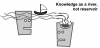
    Featured image: Figure 23. Knowledge as a river, not reservoir, found in Siemens, G., 2006. Knowing knowledge.