What we do and how we do it have both changed rapidly since we launched the Impact Accelerator, the key component Geneva Learning Foundation’s learning-to-action pathway.
We catalyze large scale peer networks of frontline actors facing critical threats to our societies.
The Geneva Learning Foundation (TGLF) unique approach, rooted in decades of research and experience in learning science, uses the spark of intrinsic motivation to inspire individuals to link up and lead change.
TGLF develops and implements learning experiences that reach people in 137 countries. Our programmes scale quickly to connect thousands of learners and leaders working on the frontlines of conflicts, poverty, and other inequalities. We catalyze local expertise into innovation, action, and results.
The insights generated by and with learners are gathered, analyzed, and shared, for the benefit of communities and partners to scale and develop truly ground-tested and evidence-based policies and programmes.
The Immunization Agenda 2030 (IA2030) and the Movement for Immunization Agenda 2030 represent two interconnected but distinct aspects of a global effort to enhance immunization coverage and impact.
What is Immunization Agenda 2030?
Immunization Agenda 2030 or “IA2030” is a global strategy endorsed by the World Health Assembly, aiming to maximize the lifesaving impact of vaccines over the decade from 2021 to 2030.
It sets an ambitious vision for a world where everyone, everywhere, at every age, fully benefits from vaccines for good health and well-being.
The strategy was designed before the COVID-19 pandemic, with the goal of saving 50 million lives through increased vaccine coverage and addresses several strategic priorities, including making immunization services accessible as part of primary care, ensuring everyone is protected by immunization regardless of location or socioeconomic status, and preparing for disease outbreaks.
IA2030 emphasizes country ownership, broad partnerships, and data-driven approaches. It seeks to integrate immunization with other essential health services, ensuring a reliable supply of vaccines and promoting innovation in immunization programs.
Watch the Immunization Agenda 2030 (IA2030) inaugural lecture by Anne Lindstrand (WHO) and Robin Nandy (UNICEF)
What is the Movement for Immunization Agenda 2030?
The Movement for Immunization Agenda 2030, on the other hand, is a collaborative, community-driven effort to operationalize the goals of IA2030 at the local and national – and to foster double-loop learning for international partners.
It emerged in response to the Director-General’s call for a “groundswell of support” for immunization and combines a network, platform, and community of action.
The Movement focuses on turning the commitment to IA2030 into locally-led, context-specific actions, encouraging peer exchange, and sharing progress and results to foster a sense of ownership among immunization practitioners and the communities they serve. It has:
has demonstrated a scalable model for facilitating peer exchange among thousands of motivated immunization practitioners.
emphasizes locally-developed solutions, connecting local innovation to global knowledge, and is instrumental in resuscitating progress towards more equitable immunization coverage.
operates as a platform for learning, sharing, and collaboration, aiming to ground action in local realities to reach the unreached and accelerate progress towards the IA2030 goals.
In April 2021, over 5,000 immunization professionals came together during World Immunization Week to listen and learn from challenges faced by immunization colleagues from all over the world. Watch the Special Event to hear practitioners from all over the world share the challenges they face. Learn more…
What is the difference between the Agenda for IA2030 and the Movement for IA2030?
Scope and Nature: IA2030 is a strategic framework with a global vision for immunization over the decade, while the Movement for IA2030 is a dynamic, community-driven effort to implement that vision through local action and global collaboration.
Operational Focus: IA2030 outlines the strategic priorities and goals for immunization efforts by global funders and agencies, whereas the Movement focuses on mobilizing support, facilitating peer learning, and sharing innovative practices to achieve those goals.
Engagement and Collaboration: While IA2030 is a product of global consensus and sets the agenda for immunization, the Movement actively engages immunization professionals, stakeholders, and communities in a bottom-up approach to foster ownership and tailor strategies to local contexts.
What is the role of The Geneva Learning Foundation (TGLF)?
The Geneva Learning Foundation (TGLF) plays a pivotal role in facilitating the Movement for Immunization Agenda 2030 (IA2030). A Swiss non-profit organization with the mission to research and develop new ways to learn and lead, TGLF is instrumental in implementing large-scale, collaborative efforts to support the goals of IA2030. Here are the key roles TGLF fulfills within the Movement:
Facilitation and leadership: TGLF leads the facilitation of the Movement for IA2030, providing a platform for immunization professionals to collaborate, share knowledge, and drive action towards the IA2030 goals.
Learning-to-action approach: TGLF contributes to transforming technical assistance (TA) to strengthen immunization programs. This involves challenging traditional power dynamics and empowering immunization professionals to apply local knowledge to solve problems, support peers in doing the same, and contribute to global knowledge.
Peer learning scaffolding and facilitation: TGLF has demonstrated the feasibility of establishing a global peer learning platform for immunization practitioners. This platform enables health professionals to contribute knowledge, share experiences, and learn from each other, thereby fostering a community of practice that spans across borders.
Advocacy and mobilization: TGLF calls on immunization professionals to join the Movement for IA2030, aiming to mobilize a global community to share experiences and work collaboratively towards the IA2030 objectives. This includes engaging over 60,000 immunization professionals from 99 countries.
Governance, code of conduct, and ethical standards: Participants in TGLF’s programs are required to adhere to a strict Code of Conduct that emphasizes integrity, honesty, and the highest ethical, scientific, and intellectual standards. This includes accurate attribution of sources and appropriate collection and use of data. Movement Members are also expected respect and abide by any restrictions, requirements, and regulations of their employer and government.
Research and evaluation: TGLF may facilitate the connections between peers, for example to help them give and receive feedback on their local projects and other knowledge produced by learners. Insights and evidence from local action may also contribute in communication, advocacy, and training efforts. TGLF also invites learners to participate in research and evaluation to further the understanding of effective learning and performance management approaches for frontline health workers.
We stand ready to support any organization or network that needs to mobilize people at scale in support of meaningful change.
We are seeking partners that share our yearning for transformation, and that can bring their challenges, resources, and capabilities to make this yearning a reality.
We are actively fundraising to develop our global platform so we can support more partners tackling ‘wicked’ problems.
The need for change is evident.
Is your organization rethinking how it contributes to achieving global goals?
Humanitarian INGOs headquartered in Geneva, London, or Washington are striving to “localize aid”.
A growing concert of voices is calling for the decolonization of global health.
Some donors are trying to listen to feedback from communities, not just metrics.
How do we shift our capacity to embrace a volatile, complex world?
We do this in ways that motivate participants to connect and implement thousands of their own locally-designed projects, leading to measurable, lasting impact.
Participants working in local communities from 110 countries found intrinsic motivation to implement thousands of real-world local projects, using their own indigenous expertise and their own resources to achieve impact. View our Lightning Chat about intrinsic motivation…
The COVID-19 pandemic has created an opportunity for a digital-first Renaissance.
The next 20 years of working for change are likely to be about harnessing digital transformation through hybrid networks fusing digital and physical.
In July 2019, barely six months before the pandemic, we worked with alumni of The Geneva Learning Foundation’s immunization programme to build the Impact Accelerator in 86 countries. This global community of action for national and sub-national immunization staff pledged, following completion of one of the Foundation’s courses, to support each other in other to achieve impact.
Closing the loop from learning to impact produced startling results, accelerating the rate at which locally-resourced projects were implemented and fostering new forms of collaborative leadership. Alumni launched what immediately became the largest network of immunization managers in the world.
Then the pandemic dramatically raised the stakes: at least 80 million children under one were placed at risk of vaccine-preventable diseases such as diphtheria, measles and polio as COVID-19 disrupted immunization service as worldwide.
Alumni were amongst the first in their countries to respond, leveraging the power of being connected to each other to create a virtuous circle of peer support that became the COVID-19 Peer Hub. As a result, the pace of growth keeps increasing. Membership doubled during the summer of 2020.
The network effect cannot be replicated by smaller platforms built on top-down legacy models of the past. Nor can the trust and friendship that bind members to each other.
Members are telling their own stories of the COVID-19 pandemic, disseminating rapid learning, first about recovery of immunization services and, more recently, about COVID-19 vaccine introduction.
There is no upper limit to the number of participants or stories. Rather than painstakingly collecting a few stories so highly curated that they seem too sanitized to be authentic or meaningful, we created the conditions for each person to share their story and learn from the stories of others. We do not require you to be “exemplary” to experience or share significant learning. Some of the most powerful lessons learned, in fact, come from the experience of failure.
In November 2020, for example, members worked together to produce in just four weeks over 700 detailed, peer-reviewed case studies of vaccine hesitancy in health facilities and districts. These were used to inform the COVID-19 Peer Hub’s early scenario planning for vaccine introduction and are now being analyzed for the unique insights they contain, available by no other means.
These stories are about collaboration and learning from each other, within and across borders and all levels of the health system, in new ways to do new things required to face the pandemic. I do not believe it is an overstatement to say that participants are writing history.
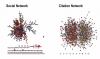
Visualization of the sharing ideas and practices across borders, roles, and system levels in the COVID-19 Peer Hub
Co-design as a networked practice of continuous invention, innovation, and learning
For COVID-19 vaccine introduction to succeed, we need new ways to disseminate rapid learning. Through co-design with members of our platform, we invented two in the first three months of this year: Teach to Reach: Connect and the COVID-19 Peer Hub Inter-Country Learning Collaborative to support vaccine introduction.
We already knew that presentation webinars do little more than replicate classroom training in a digital format. Yet they proliferate, despite the dearth of evidence about their effectiveness, with unsubstantiated claims that they are somehow “collaborative” or that 10 minutes of attendees asking the experts a few questions qualifies as “peer learning”. Social Network Analysis (SNA) of the COVID-19 Peer Hub by Sasha Poquet and Vitomir Kovanovic at the Centre for Complexity and Change in Learning helped us to understand that the power of the network lies in the relationships between its members, not only in our ability to convene or call to action, and certainly not in one-way information transmission.
So, on Friday 26 March 2021, 1,372 immunization professionals attended Teach to Reach: Connect to meet, network, and learn about COVID-19 vaccine introduction, how to improve immunization training, and how to reach “zero-dose” children. The feedback received from participants has been incredible, starting with their own surprise that they had so much to learn from each other. (You can catch the opening ceremony on our YouTube channel, and we will soon be sharing what we learned in upcoming live-streamed events on our Facebook page.)
My first networking meeting during Teach to Reach: Connect. Wasnam Faye is a district midwife in Senegal. I remembered her sharing powerful testimonial about how she took practical steps to ensure safe vaccination and explained the words she used to reassure caregivers, when the pandemic first hit.
An inter-country peer learning collaborative to accelerate COVID-19 vaccine introduction
The next day, the COVID-19 Peer Hub team from the Democratic Republic of the Congo (DRC) invited their colleagues from Ivory Coast to learn from the latter’s experience of vaccine introduction. Participants compared the enthusiasm to that for a football match, only this time, they said, the purpose was to “kick out the Coronavirus”. The meeting, hosted by DRC Peer Hub team leader Franck Monga and facilitated by a brilliant young doctor from Burkina Faso, Palenfo Dramane, drew over 1,000 attendees from 20 francophone countries. Panelists from Ivory Coast were alumni of Foundation programmes directly involved in vaccine introduction, working at various levels of the system. They shared first-hand experience from the first few weeks of vaccine introduction. Attendance barely declined even though the meeting ran over time by more than 90 minutes.
Our ‘grand challenge’
Our biggest challenge, so far, has been to explain the power, significance, potential, and value of such events to our global partners. This is ironic given that the global immunization community agrees that it is sub-national immunization staff who make the difference needed to achieve Immunization Agenda 2030, the new strategy adopted last year by the World Health Assembly. Some global colleagues did take the time to apologize, explaining that they were too busy on Friday afternoon due to COVID-19 vaccine introduction to take 15 minutes to meet, network, and learn with immunization staff from the countries they serve and who are actually introducing the vaccine. (To be fair, a few colleagues did attend and loved it.) Last but not least, donors remain risk-adverse, preaching innovation while repeatedly choosing conventional approaches and traditional partners, even when they have failed in the past, seemingly driven by considerations other than scale, results, or demand from countries. In some cases, they have even expressed disbelief, doubting our results as too good to be true, flummoxed by how a new entrant with limited immunization experience could achieve them when better-funded, far-more-legitimate institutions have simply not been able to do so.
We are launching a new Scholar programme about environmental threats to health, with an initial focus on radiation. (I mapped out what this might look like in 2017.) As part of the launch, we are enlisting support of immunization colleagues.
Our immunization programme is our largest and most advanced programme, and still growing fast since its inception in 2016. At The Geneva Learning Foundation, we have spent 5 years pouring mind, body, and soul into building what has become the largest digital platform for national and sub-national immunization leaders.
Along the way, we discovered that it is not only about scale. Social Network Analysis (SNA) by colleagues Sasha Poquet and Vitomir Kovanovic at the Centre for Complexity and Change in Learning is now helping us to understand the power in the relationships not just one-to-many but many-to-many across the network.
Yes, there is a linkage as most vaccines are for children, and our first course in the new programme (with WHO) is about communicating radiation risks in paediatric imaging. But I was not sure if our request for help would make sense to the immunization network, especially when so many immunization staff are overwhelmed by COVID-19 vaccine introduction.
Yet, in less than 2 hours, immunization colleagues had already shared the announcement over 300 times. This is an impressive display of solidarity across public health and medicine silos.
This bodes well for the Foundation’s work as we are developing new programmes in other areas of global health, such as non-communicable diseases (NCDs) or neglected tropical diseases (NTDs) like female genital schistomiosis (FGS).
Until this morning, I was not sure to what extent one programme’s members would be willing to support others, outside their field of specialty.
This article is based on Zapnito CEO Charles Thiede’s interview of Reda Sadki on 16 September 2019.
“I knew we had hit gold when a young doctor in Ghana was able to turn what he learned into action – and get results that improved the health outcome prospects of every pregnant woman in his district – in just four weeks,” says Reda Sadki, founder of the Geneva Learning Foundation. “His motivation was being part of this global network, this global community, but his focus was on local action.”
The transformation from classroom learning to immediate implementation in a healthcare setting taught Sadki something profound about how people learn to lead change when facing life-threatening emergencies. For the Geneva Learning Foundation, which he founded just three years ago, this connection between knowledge and action is not accidental. It is the result of a deliberate methodology that challenges conventional assumptions about professional development in crisis response.
Speaking with Charles Thiede, CEO of Zapnito, in a September 2019 interview, Sadki outlined his organization’s mission: research and development to find better ways to learn, foster new forms of leadership, and lead change in humanitarian development and global health work. The foundation operates at the intersection of urgent need and institutional capacity, working with major international organizations while reaching practitioners directly in communities across 137 countries.
The reluctant learning systems manager
Sadki’s path to founding the Geneva Learning Foundation began with twenty years of community organizing, working directly with families facing poverty, disease, and racism in the HIV pandemic. His journey to education as a philosophy for change had its start in the office of an Undersecretary General at the International Red Cross, who asked him if he could “help him bring the Red Cross into the twenty-first century”.
“In practice, I got stuck with managing a broken learning management system that could not possibly do what I was being asked to do, which was address a network of 17 million volunteers working in 137 countries and figure out how to support their learning needs using digital means,” Sadki recalls.
The system failure forced fundamental questions about community building, organizational culture, and the relationship between formal learning and practical application. Rather than simply fixing the technology, Sadki began examining why traditional learning approaches consistently failed to produce the leadership capabilities needed for complex humanitarian challenges.
That broken learning platform became the fastest-growing information system in the global network for two simple but breakthrough insights. Sadki figured out that it was about culture, weaving technology into daily life. And that learning is about producing knowledge, not consuming information.
This questioning led him to seek out networks of cutting-edge educators from higher education, including George Siemens, one of the founding figures in massive open online courses, or Bill Cope, who was busy building the technological implementation of his “new learning” pedagogy. Sadki’s approach was direct: these educators were transforming higher education, but could their insights apply to people facing life-threatening emergencies?
“You challenge them by saying, well, you are doing this cutting-edge work with higher education, but in development, humanitarian, and global health work, in terms of learning, education, and training, we have some challenges,” Sadki explains. “They all said yes” to contribute to the foundation’s early work.
Communities of action, not practice
The Geneva Learning Foundation’s core innovation emerged from recognizing a persistent disconnect in professional development: the gap between stopping work to learn and applying that learning to solve immediate problems. Traditional training programs, Sadki observed, create what he calls “communities of practice,” which “basically, mostly do not work.”
Instead, the foundation developed what they term “communities of action”—networks of practitioners united by shared purpose and mission rather than simply shared professional interests. The distinction matters because people facing emergencies cannot afford learning that exists separate from implementation.
“We produce the kinds of learning outcomes that you get through training, but also go beyond that,” Sadki notes. “We have people come out after a very short time connected to each other, feeling empowered by each other as peers.”
The foundation’s “Scholar package” represents a systematic approach to creating these communities around virtually any thematic area or operational challenge. The methodology integrates learning with immediate application, enabling practitioners to develop capabilities while simultaneously addressing urgent problems in their specific contexts.
Measuring what matters
The foundation’s latest innovation, the Impact Accelerator, launched in July 2019, addresses one of the most persistent problems in organizational learning: demonstrating concrete results rather than participation metrics or satisfaction scores.
“In learning and development, every Chief Learning Officer has this dilemma,” Sadki explains. “How do you demonstrate impact that you are not just a cost center within the organization?”
The Impact Accelerator functions as both monitoring system and empowerment network, tracking participants as they move from learning to implementation while providing peer support and accountability mechanisms. The system measures real-world applications—like the Ghanaian doctor’s vaccination information program—rather than quiz scores or completion rates.
The foundation recently completed piloting this component with results that exceeded expectations from both their team and their partners. One major partner and donor declared they were “doing magic,” recognition that reflects the foundation’s ability to deliver outcomes that larger, better-funded organizations often struggle to achieve.
The execution imperative
Sadki’s reflection on organizational effectiveness reveals his pragmatic approach to institutional change: “At the end of the day, you are judged by execution. You can have nice ideas and a lofty mission, but what are you actually able to deliver.”
This focus on execution shapes the foundation’s work across multiple complex challenges, from immunization programs to gender in humanitarian emergencies. Their current projects include helping organizations ensure that the specific needs of men, women, boys, and girls are addressed in crisis response, ensuring that nobody gets left behind even in the most complicated emergency situations.
The foundation’s approach addresses critical gaps in global capacity: the world faces challenges requiring people with skill combinations that currently do not exist in sufficient numbers. Their focus on leadership development recognizes that effective responses require capabilities at every level, from community organizing to international coordination.
Digital transformation as democratic access
The foundation’s methodology leverages what Sadki calls the “ubiquitous affordability of digital transformation,” creating what he terms a “whole new economy of effort.” This technological access enables direct engagement with communities rather than working exclusively through institutional gatekeepers.
“As educators, we are addressing people everywhere and anywhere,” Sadki explains. While the foundation works with the world’s largest international organizations—UN agencies, Red Cross and Red Crescent movement, major international NGOs—their educational approach reaches practitioners directly where they work.
This dual approach reflects Sadki’s understanding that effective change requires both institutional support and grassroots capability. The foundation operates as a bridge between global resources and local implementation, creating networks that connect individual practitioners to larger systems while maintaining focus on immediate, practical problems.
The privilege of purpose
When asked about his daily motivation, Sadki frames his work in terms of connection and privilege. “I have spent my entire adult life working on things that I am passionate about, committed to, and that hopefully have not been detrimental to the world,” he says. “I realize not everyone gets to do that.”
This sense of purpose extends beyond personal satisfaction to encompass the foundation’s role in connecting practitioners across geographical and institutional boundaries. The organization serves as both educator and network facilitator, enabling practitioners to share successes, discuss challenges, and maintain motivation for continued innovation.
For Sadki, the foundation’s impact is most visible in these individual connections: receiving updates on achievements from practitioners worldwide, connecting at unusual hours due to time zone differences, responding to urgent needs from colleagues facing immediate crises. These relationships embody the foundation’s core insight that learning and leadership development must be embedded in the actual work of responding to complex challenges.
The Geneva Learning Foundation’s model suggests that professional development in crisis response requires more than knowledge transfer—it demands the creation of networks capable of translating learning into immediate action. In a world where humanitarian emergencies and global health challenges increasingly require rapid adaptation and innovation, the foundation’s approach offers a framework for transforming how organizations develop the leadership capabilities they desperately need.
GENEVA, 23 April 2019 – The Geneva Learning Foundation (GLF) is partnering with artificial intelligence (AI) learning pioneer Wildfire to pilot cutting edge learning technology with over 1,000 immunization professionals in 90 countries, many working at the district level.
British startup Wildfire, an award-winning innovator, is helping the Swiss non-profit tackle a wicked problem: while international organizations publish global guidelines, norms, and standards, they often lack an effective, scalable mechanism to support countries to turn these into action that leads to impact.
By using machine learning to automate the conversion of such guidelines into learning modules, Wildfire’s AI reduces the cost of training health workers to recall critical information. This is a key step for global norms and standards to translate into making a real impact in the health of people.
If the pilot is successful, Wildfire’s AI will be included in TGLF’s Scholar Approach, a state-of-the-art evidence-based package of pedagogies to deliver high-quality, multi-lingual learning. This unique Approach has already been shown to not only enhance competencies but also to foster collaborative implementation of transformative projects that began as course work.
TGLF President Reda Sadki (@redasadki) said: “The global community allocates considerable human and financial resources to training (1). This investment should go into pedagogical innovation to revolutionize health (2).”
Wildfire CEO Donald Clark (@donaldclark) said: “As a Learning Innovation Partner to the Geneva learning Foundation, our aim is to improve the adoption and application of digital learning toward achievement of the Sustainable Development Goals (SDGs).”
Wildfire is one of the Foundation’s first Learning Innovation Partners. It is an award-winning educational technology startup based in the United Kingdom.
Described by the company as the “first AI driven content creation tool”, Wildfire’s system takes any document, PowerPoint or video to automatically create online learning.
This may reduce costs and time required to produce self-guided e-learning that can help improve the ability to recall information.
About the Geneva Learning Foundation
The mission of the Geneva Learning Foundation (TGLF) is to research, invent, and trial breakthrough approaches for new learning, talent and leadership as a way of shaping humanity and society for the better.
Learning Innovation Partners (LIP) are startups selected by the Foundation to trial new ways of doing new things to tackle ‘wicked’ problems that have resisted conventional approaches.
The Foundation is currently developing the first Impact Accelerator to support learners using the Scholar Approach beyond training, with support from the Bill and Melinda Gates Foundation (BMGF).
(2) Sadki, R., 2013. The significance of technology for humanitarian education, in: World Disasters Report 2013: Technology and the Effectiveness of Humanitarian Action. International Federation of Red Cross and Red Crescent Societies, Geneva.
My presentation for the Geneva Learning Foundation at the 15th meeting of the WHO Radiation Emergency Medical Preparedness and Assistance Network (REMPAN), World Health Organization, Geneva – 3-5 July 2017.
The 15th meeting of the WHO Radiation Emergency Medical Preparedness and Assistance Network (REMPAN) Geneva 3–5 July 2017
Featured image: Participants of the Radiation Effects Research Foundation’s (RERF) Seventh Epidemiological Training Workshop for Biologists. The objective of the RERF is to conduct research and studies for peaceful purposes on medical effects of radiation and associated diseases in humans, with a view to contributing to maintenance of the health and welfare of the atomic bomb (A-bomb) survivors and to enhancement of the health of all humankind.
This presentation was prepared for the second global meeting of the Health Care in Danger (HCiD) project in Geneva, Switzerland (17–18 May 2017).
In October 2016, over 700 pre-hospital emergency workers from 70 countries signed up for the #Ambulance! initiative to “share experience and document situations of violence”. This initiative was led by Norwegian Red Cross and IFRC in partnership with the Geneva Learning Foundation, as part of the Health Care in Danger project. Over four weeks (equivalent to two days of learning time), participants documented 72 front-line incidents of violence and similar risks, and came up with practical approaches to dealing with such risks.
These are some of the questions which I address in the video presentation below:
Mindfulness: Can behaviors and mindfulness change through a digital learning initiative? If so, what kind of pedagogical approach (and technology to scaffold it) is needed to achieve such meaningful outcomes?
Leadership: How can learners become leaders through connected learning? What does leadership mean in a global community – and how does it connect back to the ground?
Diversity: What does leadership mean in a global knowledge community where every individual’s context is likely to be different?
Local relevance: What is the value of a global network when one’s work is to serve a local community?
Credential: What is the credential of value (badges and other gimmicks won’t do) that can appropriately recognize the experience of front-line humanitarians?
Pedagogy: Why are MOOCs (information transmission) and gamification (behaviorism) unlikely to deliver meaningful outcomes for the sustainable development or disaster preparedness of communities?
The video presentation below (31 minutes):
examines a few of the remarkable outcomes produced in 2016 and
explains how they led to growing the initiative in 2017.
To learn more about or join the #Ambulance! activities in 2017, please click here. You may also view below the selfie videos recorded by #Ambulance! course team volunteers to call fellow pre-hospital emergency health practitioners to join the initiative.
Image credit: #Ambulance! project course team volunteers.
The course officially launches on Monday. Yet participants joining the online community have begun introducing themselves and, in the process, are already tackling challenging questions on the pedagogy, content, and economics of education and its digital transformation.
“Look at all the people here!” exclaimed one Digital Scholar. And, yes, we are from everywhere. You could start from “cloudy England”, a hop-and-a-skip away from “rainy Amsterdam” and then keep travelling, stopping in any of the 103 countries where participants live. You might end up in the “paradise island” of Mauritius, “sunny but chilly” Sidney, or “hot and humid” Puerto Rico.
Think about it. When Bill Cope and Mary Kalantzis describe the affordance of “ubiquity”, the anywhere-anytime in digital learning, that describes the ability of learners to connect to a course. But ubiquity also enables our connections to each other, across time and space. A banal weather report becomes a way of relating here to there, a way to refer the diversity of contexts and paths that have led us here.
“Thrilled” and “excited” and “delighted” come up more than once. But why are we here? In the words of one Digital Scholar: “I hope to learn and obtain skills to rock!” It is the “opportunity to learn new skills” about the “nuts and bolts” of digital learning. It is also for “professional and educational growth”. Yes, technology is the “new shiny” but our task as learning leaders is to be “always thinking about how it can best be used in learning”.
So we are here to begin building our own digital course. Not everyone is sure what to expect – and I was surprised by the number who do not know what course they want to develop. That will be the first order of business on Monday and throughout the first week of the course. What we express is of course situated in our context of work and life. The diversity of contexts is staggering – and harder to wrap my head around than the weather. I get that the choice, for example, to focus on “citizen-centered community action”, education, peace, or social justice issues is of course no accident.
The Geneva Learning Foundation’s initial call for applications focused on its own network, in the humanitarian, development, and global health space. So there are public health specialists, evaluators, crisis mappers, knowledge managers, leadership developers, school principals and teachers.
But our bet was that the call would then escape the boundaries of our known circles and reach other industries. And we have. Hence we find decision-making and risk management, writing, faculty development, and the occasional topic that intersect specialties, such as the course on “Twitter for health professionals”.
The common thread is the yearning to share, translate, grow, develop, fusing experience and practice and networks.
So you want to build a course. How do you know that there is a demand for it? Yes, that is the crass language of Economics 101 supply-and-demand intruding in a world of learning that we would like to imagine pure and removed from material considerations. But one of the key lessons we hope to convey in this course will be the realization that there is a political economy to knowledge and learning. “There seems to be an interest to learn more” about Twitter for health professionals, explained one participant, after giving presentations “at various local medical organizations”. Is that sufficient to demonstrate demand for a course that will require investment of time and resources and possibly carry a price tag? There is, in fact, only one business model for education that can happen fast and be sustainable: institutions, individuals or both must be prepared to pay enough to cover the costs of the operation.
Traditional institutions of higher education already have channels for marketing, recruitment, sales, and so on. But what about those of us who do not work within one of these institutions – or who wish to develop learning that does not fit into their sometimes-narrow constraints, especially as we push to innovate the practice of education?
For one participant, the logic is one of austerity, of how to do more with less: “Due to the sharp decrease in training funding from the government, we are looking seriously at the fully-online mode” rather than blended learning that had been used in the past. The caveat is that the mere fact that technology does enable you to make “services more widely accessible” does not mean they will be more affordable – and nor does accessibility mean that people will come (much less pay for) an educational programme.
My premise is that content and pedagogy are the easy parts (tongue in cheek) to figure out. The real challenge is in taking it to market (even if the learners won’t be the ones paying for it). In developing their course announcement, #DigitalScholar course participants may well find that this is the most challenging part of the endeavor. How do you test and verify your assumptions about who would actually want to take your course? What if you are wrong?
My last question to incoming participants is about the Digital Transformation. Yes, that’s with capital letters, originally used in management theory to describe how conventional industries are transformed by “e-business”. I believe that this is one useful lens to reframe our role as learning leaders, to help us adapt and perhaps even stay a step ahead of the accelerated pace of technological change.
Some Digital Scholars are not sure about what it means. For others, it referred to the impact of technology on learning, “how we interact with content” or “with each other in a Digital Age”, “how content is made available, and how it is utilized” in a “mix of dynamic possibilities”. Others ascribed the concept with inspirational or aspirational aims, leading to “a transformed learning experience” “potentially offering innovative and dynamic courses”, in the name of “deeper, more meaningful learning” and “rich interactions with peers and the instructor”.
Many of us keep coming back to scale (““improving access of education to more learners”) as the starting point for thinking about what we can afford to do through effective use of technology. What we will explore in the course is that there are, in fact, many more affordances of digital learning’s amazing economy of effort.
You can still join to become a #DigitalScholar until Sunday, 3 July 2016. The course will launch on the 4th of July. Read the full course announcement and apply here. We also have Facebook, Twitter, and Slack.