Tag: IA2030

  • Making connections: Ghana’s Alumni of The Geneva Learning Foundation meet in Accra

    Making connections: Ghana’s Alumni of The Geneva Learning Foundation meet in Accra

    The Geneva Learning Foundation (TGLF) will host its first physical-world meeting of Ghana Scholars and Alumni on Wednesday, October 30, 2024 in Accra. Seventy-two health professionals from across Ghana’s health system will participate in the evening event.

    The participants include staff from the Ghana Health Service, teaching hospitals, district health directorates, and non-governmental organizations. They represent all levels of the health system, with 8 working at the national level, 8 at regional facilities, 39 in district health services, and 13 in community-based programs.

    “This is a great opportunity for all health workers for impact,” says one participant, reflecting the anticipation among attendees.

    These professionals are alumni of TGLF’s programs, including the Movement for Immunization Agenda 2030 (IA2030) and Teach to Reach initiatives, which focus on transforming global health strategies into practical, locally-adapted solutions.

    “TGLF’s learning platforms give us great information and knowledge that are feasible and can be applied in the field,” notes Gordon Yibey from the Asutifi South District.

    The meeting will feature a message from the Programme Manager of Ghana’s Expanded Programme on Immunisation (EPI), followed by discussions on strengthening partnerships with Ghana Health Service and advancing immunization and responding to health of impacts of climate change, malaria, and NTDs. Participants will share experiences from their work and discuss challenges in implementing health programs across different contexts.

    To enable broad participation, the organizers have arranged a hybrid format. 31 participants will attend in person, while 39 will join remotely. This approach allows health workers from northern regions and remote districts to contribute their perspectives without traveling to Accra.

    As one participant from a civil society organization explains, “I will join remotely to avoid travelling and accommodation inconveniences since I am not a resident in Accra.”

    Another participant from Kintampo in the Bono East Region captures the spirit of anticipation: “Even though I’m not based in Accra, I can’t wait. I must be there as a member of TGLF Alumni.”

    The non-governmental health sector will be represented by staff of organizations that include the Community and Family Aid Foundation-Ghana, Seek to Save Foundation, and Restorative Seed Society, which work to complement government health services in various communities.

    Healthcare facilities with participating staff include teaching hospitals in Tamale, Sunyani, and Korle Bu, district hospitals, polyclinics, and community health centers. Several nursing training colleges will also participate, bringing perspectives from health education.

    The evening’s agenda includes discussions on:

    • Current challenges in Ghana’s health system
    • Implementation of Immunization Agenda 2030
    • Impact of climate change on health services and disease patterns
    • Malaria control and elimination strategies
    • Neglected Tropical Diseases, with specific focus on female genital schistosomiasis (FGS)
    • Service integration opportunities for primary health care (PHC)
    • Professional development opportunities
    • Collaboration between different levels and domains of the health system

    The meeting aims to facilitate knowledge sharing among health professionals and explore ways to strengthen Ghana’s health services through collaborative approaches grounded in The Geneva Learning Foundation’s innovative model to catalyze change led by health professionals working with communities.

    Another participant from looks ahead: “What next, after this historic encounter in Ghana for sustainable improvement and continued knowledge brokering exchange?”

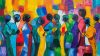
    Painting: The Geneva Learning Foundation Collection © 2024

  • Experience-sharing sessions in the Movement for Immunization Agenda 2030: A novel approach to localize global health collaboration

    Experience-sharing sessions in the Movement for Immunization Agenda 2030: A novel approach to localize global health collaboration

    As immunization programs worldwide struggle to recover from pandemic disruptions, the Movement for Immunization Agenda 2030 (IA2030) offers a novel, practitioner-led approach to accelerate progress towards global vaccination goals.

    From March to June 2022, the Geneva Learning Foundation (TGLF) conducted the first Full Learning Cycle (FLC) of the Movement for IA2030, engaging 6,185 health professionals from low- and middle-income countries.

    A cornerstone of this programme was a series of 44 experience-sharing sessions held between 7 March and 13 June 2022. These sessions brought together between 20 and 400 practitioners per session to discuss and solve real-world immunization challenges.

    IA2030 case study 16, by Charlotte Mbuh and François Gasse, offers valuable insights from these experience-sharing session:

    1. what we learned from the experiences themselves and how it can help practitioners; and
    2. what we learned about the significance and potential of the peer learning process itself.

    Download the full case study: IA2030 Case study 16. Continuum from knowledge to performance. The Geneva Learning Foundation.

    For every challenge shared during the experience sharing sessions, there was always at least one member who had encountered or was encountering the same challenge and had carried out measures to resolve it.

    These sessions provided a space to share practical stories that are making a difference – and supported participants in considering their relevance to their own situations.

    Experience sharing also helped build confidence and motivation.

    Members were able to identify with experiences shared, realizing they were not alone in facing similar challenges.

    The sessions covered a wide range of critical immunization topics.

    For instance, a participant from Nigeria discussed strategies for reaching zero-dose children in Borno state.

    Facing the challenge of reaching approximately 600,000 unvaccinated children, the presenter received practical suggestions from peers, including developing a zero-dose reduction operational plan, leveraging new vaccine introductions, and partnering with the private sector for evening vaccination services.

    In another session, a subnational Ministry of Health staff member from Cîte d’Ivoire presented challenges related to cross-border immunization campaigns.

    Peers shared experiences of organizing cross-border meetings to identify unvaccinated children, synchronize efforts, and involve community representatives in the process.

    Such context-specific, experience-based advice exemplifies the unique value of peer learning in addressing complex health system challenges.

    The case study of 44 sessions highlights how these sessions fostered multiple types of learning simultaneously.

    Participants reported learning from each other’s experiences, experiencing the power of solving problems together across distances, feeling a growing sense of belonging to a community, and connecting across country borders and health system levels.

    A district-level Ministry of Health staff member from Ghana encapsulated the impact: “I have linked up with expert vaccinators worldwide through experience sharing and twinning. I have become more competent and knowledgeable in the area of immunization, and work confidently.”

    This sentiment was echoed by many participants who found value not only in acquiring new knowledge but also in expanding their professional networks and gaining confidence in their problem-solving abilities.

    The case study also reveals the adaptability of the approach in responding to unique contexts.

    This resilience underscores the potential of digital platforms to democratize access to expertise and foster global collaboration.

    However, the study also identifies areas for improvement.

    • Participants expressed a desire for more follow-up support and opportunities to continue their peer learning groups beyond the initial sessions.
    • Additionally, the need for better integration of community engagement strategies was identified as a key area for future development.

    To contextualize these findings, we can turn to a 2022 study by Watkins et al., which evaluated a prototype of these experience-sharing sessions known as Immunization Training Challenge Hackathons (ITCH), conducted in 2020.

    The ITCH methodology, developed by The Geneva Learning Foundation (TGLF), informed the design of the 2022 IA2030 Movement sessions.

    Watkins et al. found that the ITCH approach fostered four simultaneous types of learning: peer, remote, social, and networked.

    1. Peer Learning: This involves participants learning directly from each other’s experiences and knowledge. In the context of immunization, imagine a scenario where a vaccination program manager from rural India shares their successful strategy for improving vaccine cold chain management with a colleague facing similar challenges in sub-Saharan Africa. This direct exchange of practical, context-specific knowledge can complement more theoretical training, as it is based on real-world application.
    2. Remote Learning: This refers to the ability to learn and solve problems collaboratively across geographical distances. For an immunization specialist, this might seem counterintuitive, as many believe that hands-on, in-person training is essential. However, the ITCH sessions demonstrated that meaningful learning can occur remotely. For example, a team in Bangladesh could describe their approach to overcoming vaccine hesitancy, and a team in Nigeria could immediately adapt and apply those strategies to their local context, all without the need for costly and time-consuming travel.
    3. Social Learning: This concept emphasizes the importance of learning within a network. In the immunization field, professionals often work in isolation, especially at sub-national levels. The ITCH sessions created a sense of belonging to a global network, community, and platform of immunization practitioners. This social aspect can boost motivation, reduce feelings of isolation, and foster a collective approach to problem-solving that transcends individual or even national boundaries.
    4. Networked Learning: This type of learning emerges from connections made across different levels of health systems and across country borders. For an epidemiologist, this might be analogous to how disease surveillance networks function across borders. In the ITCH context, it means that a district-level immunization officer could learn from and share ideas with national-level policymakers from other countries, fostering a more holistic understanding of immunization challenges and solutions.

    These four types of learning operate simultaneously during ITCH sessions, creating a synergistic effect. 

    For instance, a participant might learn a new cold chain management technique (peer learning) from a colleague in another country (remote learning), feel supported by the global community in implementing this new technique (social learning), and then share their adaptation of this technique with others across various levels of the health system (networked learning).

    From an epidemiological perspective, this approach to learning could be compared to how we understand disease transmission and intervention effectiveness.

    Just as multiple factors contribute to disease spread and control, these multiple learning types contribute to knowledge dissemination and capacity building in the immunization field.

    The value of this approach lies in its potential to rapidly disseminate practical, context-specific knowledge and solutions across a global network of immunization professionals.

    This can lead to faster adoption of best practices, more innovative problem-solving, and ultimately, improvements in immunization program performance that could contribute to better disease control outcomes.

    While this approach may seem unconventional compared to traditional training methods in the immunization field, the evidence presented by Watkins et al. suggests that it can be a powerful complement to existing capacity-building efforts, particularly in resource-constrained settings where access to formal training opportunities may be limited.

    This multifaceted approach allowed participants to not only acquire new knowledge but also to expand their professional networks and gain confidence in their problem-solving abilities—findings that align closely with the outcomes observed in the 2022 IA2030 Movement sessions.

    The Watkins study emphasized the importance of building confidence and motivation through peer learning experiences, a theme strongly echoed in the Mbuh case study.

    Furthermore, Watkins et al. highlighted the potential of this approach to create a “space of possibility” for innovation and problem-solving, which is evident in the diverse and creative solutions shared during the 2022 sessions.

    Both studies underscore the significance of peer-led, digital learning experiences in accelerating progress towards global health goals.

    By fostering peer learning and digital collaboration, these approaches empower health workers to turn global strategies into effective local action.

    References

    Mbuh, C., Gasse, F., Jones, I., Sadki, R., Brooks, A., Zha, M., Steed, I., Sequeira, J., Churchill, S., Kovanovic, V., 2022. IA2030 Case study 16. Continuum from knowledge to performance. The Geneva Learning Foundation. https://doi.org/10.5281/zenodo.7014392

    Watkins, K.E., Sandmann, L.R., Dailey, C.A., Li, B., Yang, S.-E., Galen, R.S., Sadki, R., 2022. Accelerating problem-solving capacities of sub-national public health professionals: an evaluation of a digital immunization training intervention. BMC Health Serv Res 22, 736. https://doi.org/10.1186/s12913-022-08138-4

    Image: The Geneva Learning Foundation Collection © 2024

  • 50 years of the Expanded Programme on Immunization

    50 years of the Expanded Programme on Immunization

    In two articles published during the fiftieth year of the World Health Organization’s Expanded Programme on Immunization (EPI), Samarasekera and Shattock provide valuable insights into EPI’s remarkable impact on reducing childhood mortality and morbidity since its launch in 1974.

    Shattock et al. present a detailed quantitative analysis of the lives saved and health gains attributed to vaccination.

    They estimate that “since 1974, vaccination has averted 154 million deaths, including 146 million among children younger than 5 years of whom 101 million were infants younger than 1 year.” 

    The authors further emphasize the long-term benefits of vaccination, noting that “for every death averted, 66 years of full health were gained on average, translating to 10.2 billion years of full health gained.”

    These findings underscore the transformative impact of the Expanded Programme on Immunization on global health outcomes.

    Bill Moss of the International Vaccines Access Center (IVAC) calls this “one of humankind’s greatest achievements”.

    Inherent uncertainties based on the modeling approaches, data limitations and gaps, and challenges in attributing causality over a 50-year time horizon do not diminish their significance.

    Fresh challenges

    Samarasekera highlights several fresh challenges as EPI moves into its next 50 years:

    1. COVID-19 pandemic disruptions: The pandemic has led to 67 million children globally missing out on one or more vaccines. This has resulted in outbreaks of vaccine-preventable diseases, with measles outbreaks being reported in twice as many countries in 2023 compared to 2022. Due to pandemic disruption, many unimmunized children are now older than 2 years, requiring new approaches to reach them and prevent further outbreaks.
    2. Sustainable funding: Countries are facing challenges in sustaining funding for immunization programs due to debt crises, conflicts, and climate change.
    3. Improving collaboration during emergencies: There is a need for quicker access to vaccines and better coordination among stakeholders during humanitarian crises and outbreaks.
    4. Reaching the “last child”: Challenges persist in reaching children in conflict areas, active war zones, and those facing humanitarian crises, with immunization coverage in these settings being as low as 50-60%.

    While both articles recognize the urgent need to address these setbacks and reach underserved populations, they tend to emphasize the role of global agencies and donors in driving progress.

    For example, Samarasekera highlights the importance of initiatives like Gavi, the Vaccine Alliance, which was established in 2000 “to close the equity gap in access to vaccines,” and the Accelerated Development and Introduction Plans, which “expedited vaccine introduction in Gavi-supported countries.”

    While global plans and funding have been – and remain – undoubtedly crucial, this begs three questions:

    How to carry out such coordinated action and advocacy?

    Who will do it?

    What, if anything, should be different, compared to what was done in the past?

    Can we assume deployment?

    Both articles acknowledge that today’s challenges are different, and that immunization strategies should be grounded in local realities.

    Samarasekera’s report suggests exploring ideas such as involving community health workers more effectively, introducing newly approved vaccines (e.g., for malaria), and innovating vaccine delivery methods (e.g., microarray patches, single-dose vaccines).

    Ephrem T. Lemango, for example, emphasizes the role of health workers : “They are the most trusted source of information” for communities. “If we can skill these community health workers to vaccinate, provide them the required vaccines, then the likelihood of reaching the last child could be much more imminent”.

    Samarasekera also quotes O’Brien, who stresses that “every government that has had backsliding needs a plan, and most governments have made a plan and are starting to deploy. We have a very narrow window to get this completed.” 

    Neither article delves deeply into the specific strategies or mechanisms that connect global policy and funding to local action.

    Can “deployment” be assumed?

    There is wide recognition that local adaptation is a key challenge.

    This is most obvious in zones of armed conflict or when faced with the breakdown of trust in vaccines or government

    At the end of the day, it is health workers at the local levels that get the job of vaccination done.

    They are also the first to see epidemic outbreaks and to recognize changes in community trust.

    Does the future of vaccination require new ways of thinking and doing to adapt or invent strategies to lead to improved, sustained health outcomes?

    Global advocacy for community health workers to be paid is undeniably important.

    But paid to do what, how, and with what degree of recognition and support of their capacities, leadership, and expertise?

    This is where learning from the Movement for Immunization Agenda 2030 (IA2030) may offer useful insights that complement the top-down, global-level efforts emphasized in the articles.

    What is the Movement for Immunization Agenda 2030 (IA2030)?

    Launched by the Geneva Learning Foundation in March 2022, the Movement is a global network of over 10,000 health workers from 99 countries who have pledged to work together to achieve the goals of the Immunization Agenda 2030, the global strategy adopted by the World Health Assembly in 2020.

    Through peer learning and locally-led action, IA2030 members are sharing experiences, identifying root causes of immunization challenges, and implementing corrective actions tailored to their specific contexts.

    What does that actually mean?

    Wasnam Faye, a Senegalese midwife, moved the needle of vaccination coverage in a poor-performing remote health outpost from 8% to over 80%.

    How did she do it?

    At Teach to Reach, she met a doctor from the Democratic Republic of Congo who shared his EPI know-how with her, over WhatsApp.

    She then invited and trained caregivers to become peer educators, also building on what she heard at Teach to Reach.

    She then realized that she could speak about HPV vaccination for their daughters to mothers who came for cervical cancer screening.

    In global health, individual case studies and lived experience are often dismissed as anecdotal evidence.

    Each edition of Teach to Reach connects over 15,000 health workers, who share experience around their local challenges.

    At that scale, the cumulative insights gained take us beyond anecdotes and enable us to document how change happens at the local levels.

    Watch: Teach to Reach Insights Live with Orin Levine

    Rethinking immunization’s learning culture: Capacity for change, innovation, and risk

    To catch up and achieve the goals set for 2030, these articles suggest that a combination of increased funding, political commitment, and innovative strategies will be needed.

    It is important to recognize that top-down control and directive management appear to have been key to how immunization programmes achieved impressive results in previous decades.

    This explains why some EPI stakeholders may have an innovation challenge: why risk making changes or consider new models? 

    Addressing these underlying issues may require strengthening learning culture.

    “Learning culture” is a new concept in global health that provides the missing link between learning and performance.

    It measures the capacity for change and the leadership to recognize and support that capacity over time.

    That requires sustained financing, including specific funding required to test and scale new models and approaches. 

    But who will risk funding new ways to tackle the challenges facing immunization programs, such as weak health systems, inadequate infrastructure, and community trust?

    References

    Faye, W., Jones, I., Mbuh, C., & Sadki, R. (2023). Wasnam Faye. Vaccine angels – Give us the opportunity and we can perform miracles. (IA2030 Case study 18) (1.0). The Geneva Learning Foundation. https://doi.org/10.5281/zenodo.7785244

    Jones, I., Eller, K., Mbuh, C., Steed, I., & Sadki, R. (2024). Making connections at Teach to Reach 8 (IA2030 Listening and Learning Report 6) (1.0). Teach to Reach: Connect 8, Geneva, Switzerland. The Geneva Learning Foundation. https://doi.org/10.5281/zenodo.8398550

    Jones, I., Sadki, R., Brooks, A., Gasse, F., Mbuh, C., Zha, M., Steed, I., Sequeira, J., Churchill, S., & Kovanovic, V. (2022). IA2030 Movement Year 1 report. Consultative engagement through a digitally enabled peer learning platform (1.0). The Geneva Learning Foundation. https://doi.org/10.5281/zenodo.7119648

    Samarasekera, U., 2024. 50 years of the Expanded Programme on Immunization. The Lancet 403, 1971–1972. https://doi.org/10.1016/S0140-6736(24)01016-X

    Shattock, A.J., et al. Contribution of vaccination to improved survival and health: modelling 50 years of the Expanded Programme on Immunization. The Lancet S014067362400850X. https://doi.org/10.1016/S0140-6736(24)00850-X

  • Semaine mondiale de la vaccination: Que voyez-vous?

    Semaine mondiale de la vaccination: Que voyez-vous?

    English version | Version française

    Ceci est la préface de la nouvelle publication Les visages de la vaccination. En savoir plusTélécharger la collection

    Chaque jour, des milliers d’agents de santĂ©, de l’Afghanistan au Zimbabwe, se lĂšvent et se rendent au travail avec un seul objectif en tĂȘte : faire en sorte que les vaccins parviennent Ă  ceux qui en ont besoin.

    À l’occasion de la Semaine mondiale de la vaccination du 24 au 30 avril 2023 et du lancement de la campagne « Big Catch Up », la Fondation Apprendre GenĂšve (TGLF) a invitĂ© les membres du Mouvement pour la vaccination Ă  l’horizon 2030 (IA2030) Ă  partager des photographies d’eux-mĂȘmes et de leur travail quotidien.

    Plus de 1 000 tĂ©moignages visuels ont Ă©tĂ© partagĂ©s.

    Il ne s’agit pas de clichĂ©s soigneusement composĂ©s et techniquement Ă©laborĂ©s par des photographes professionnels, mais plutĂŽt d’une vue authentique sur ce que signifie la vaccination dans la pratique. Les difficultĂ©s de transport. Les mĂšres concernĂ©es et aimantes. Les curieux. Le dialogue entre les praticiens et les membres de la communautĂ©. Les Ă©coliers brandissant leur carte de vaccination. Les cahiers contenant les donnĂ©es.

    Voici donc notre deuxiĂšme galerie annuelle de photographies partagĂ©es par les membres du Mouvement. Une fois encore, elle cĂ©lĂšbre la diversitĂ© de leurs rĂŽles et des dĂ©fis auxquels ils sont confrontĂ©s dans leur vie quotidienne, ainsi que leur engagement en faveur du Programme pour la vaccination Ă  l’horizon 2030 (IA2030), qui vise Ă  ce que chaque enfant, chaque famille, soit protĂ©gĂ©s contre les maladies Ă©vitables par la vaccination.

    Si nous avons rĂ©itĂ©rĂ© cette opĂ©ration, c’est parce que nous avons observĂ© que la narration visuelle avait un effet profond sur l’ensemble du Mouvement. Cet effet peut ĂȘtre difficile Ă  quantifier. En soi, il n’amĂ©liore certainement pas la couverture vaccinale. Il a tout Ă  voir avec la façon dont les agents de santĂ© se perçoivent eux-mĂȘmes, perçoivent la valeur de leur propre travail. En effet, le fait non seulement de savoir, mais aussi de voir qu’il y a des collĂšgues dans le monde entier qui font le mĂȘme travail, quel que soit le contexte, est rĂ©confortant et inspirant. Cela peut contribuer Ă  renforcer ou Ă  renouveler la dĂ©termination et l’engagement. Cela peut aider Ă  faire la diffĂ©rence – et Ă  la maintenir dans le temps.

    Certains professionnels de la santĂ© travaillent dans des centres de santĂ© offrant des services de vaccination et d’autres formes de soins de santĂ© primaires. D’autres prennent part Ă  des stratĂ©gies avancĂ©es, allant Ă  la rencontre de la population. Ils peuvent Ă©galement ĂȘtre basĂ©s dans des bureaux de district ou rĂ©gionaux, oĂč ils assurent la supervision et des conseils pour permettre aux praticiens de mieux faire leur travail.

    Pour ceux qui contribuent aux activitĂ©s de sensibilisation, ils peuvent ĂȘtre confrontĂ©s Ă  de multiples dĂ©fis. Ils peuvent avoir Ă  surmonter des obstacles gĂ©ographiques : riviĂšres, inondations, routes en mauvais Ă©tat, ou simplement de longues distances. Ils peuvent ĂȘtre amenĂ©s Ă  s’aventurer dans des zones d’instabilitĂ© politique ou de conflit. Ils peuvent ĂȘtre amenĂ©s Ă  entrer en contact avec des populations mobiles dont la localisation prĂ©cise peut ĂȘtre incertaine. Enfin, ils peuvent ĂȘtre amenĂ©s Ă  pĂ©nĂ©trer dans des zones urbaines informelles en perpĂ©tuel changement.

    Une fois arrivĂ©s Ă  destination, ils constatent parfois que les personnes qu’ils contactent ne sont pas forcĂ©ment rĂ©ceptives Ă  la vaccination. Ils devront alors passer du temps avec les gens pour les aider Ă  comprendre les bĂ©nĂ©fices et la sĂ©curitĂ© de la vaccination.

    Bien entendu, la vaccination proprement dite n’est pas la seule tĂąche Ă  accomplir. Les programmes de vaccination s’appuient sur un rĂ©seaux de personnes ayant des rĂŽles divers, tels que l’entretien des Ă©quipements essentiels de la chaĂźne du froid, la gestion des donnĂ©es et la collaboration avec les communautĂ©s pour obtenir leur soutien en faveur de la vaccination. Les volontaires issus de la communautĂ© constituent un lien vital entre les programmes de vaccination et les communautĂ©s locales. Un travail d’équipe efficace est essentiel.

    À la fin d’une longue journĂ©e, chaque praticien de la vaccination peut rentrer chez lui en sachant qu’il a contribuĂ© Ă  rendre le monde plus sain et qu’il a peut-ĂȘtre sauvĂ© une vie. Ce sont les vĂ©ritables hĂ©ros de la vaccination, et nous les saluons. 

    Charlotte Mbuh et Reda Sadki
    La Fondation Apprendre GenĂšve (TGLF)

  • World Immunization Week: What do you see?

    World Immunization Week: What do you see?

    English version | Version française

    This is the preface of the new publication The many faces of immunization. Learn more
 Download the collection


    Every day, thousands of health workers, from Afghanistan to Zimbabwe, get up and go to work with a single goal in mind ­ to ensure that vaccines reach those who need them.

    To mark World Immunization Week 2023 (24­–30 April 2023) and the launch of the “Big Catch Up” campaign, the Geneva Learning Foundation (TGLF) invited members of the Movement for Immunization Agenda 2030 (IA2030) to share photographs of themselves and their daily work.

    More than 1,000 visual stories were shared.

    These are not the carefully composed and technically accomplished shots of the professional photographer: rather, they capture a raw and authentic view of what immunization means in practice.

    The transport challenges.

    The concerned and loving mothers.

    The curious onlookers.

    The dialogue between practitioners and community members.

    The schoolchildren waving their vaccination cards.

    The reams of paper-based data.

    This is our second annual gallery of photographs shared by members of the Movement. Get the 2022 World Immunization Week photo book It takes people to make #vaccineswork


    Once again, it celebrates their diversity of roles and challenges faced in their daily lives, and their commitment to the IA2030 goal of ensuring that every child, every family, is protected from vaccine-preventable diseases.

    If we did it again, it is because we observed that visual storytelling had a profound effect across the Movement.

    This effect may be hard to quantify.

    On its own, it certainly does not improve vaccination coverage.

    And yet, it has everything to do with how health workers perceive themselves, perceive the value of their own work.

    Not just knowing but seeing that there are colleagues across the world who are doing the same work, whatever the contexts, is heartening and inspiring.

    It can help strengthen or renew resolve and commitment.

    It can help make a difference – and sustain it over time.

    To achieve their goals, they may be working in health facilities offering immunization services and other forms of primary health care.

    Or they may be taking part in outreach or stratégies avancées, delivering vaccines out in the communities where people live.

    Alternatively, they may be based in district or regional offices, providing oversight and offering “supportive supervision” ­ constructive feedback and advice to ensure practitioners can do their jobs better.

    If they are among the many practitioners engaged in outreach activities, they may face multiple challenges.

    They may have to overcome geographical obstacles ­ rivers, flooding, poor roads, or just long distances.

    They may have to venture into areas of political instability or conflict.

    They may have to make contact with mobile populations whose precise location may be uncertain.

    And they may have to enter informal urban settings in a state of permanent flux.

    Then, when they reach their destination, they may find that those they engage are not receptive to vaccination.

    They may have to spend time with people to help them understand the benefits and safety of vaccines.

    Of course, actually vaccinating people is not the only task that needs to be undertaken.

    Vaccination programmes rely on a collective of people with a diverse range of roles, such as maintaining essential cold chain equipment, managing data, and working with communities to build support for vaccination.

    Community-based volunteers provide a vital link between immunization programmes and local communities.

    Effective teamwork is essential.

    At the end of a long day, every vaccination practitioner can return home knowing that they have done their bit to make the world a healthier place, and just might have saved a life.

    Charlotte Mbuh and Reda Sadki
    The Geneva Learning Foundation (TGLF)

    Jones, I., Sadki, R., & Mbuh, C. (2024). The many faces of immunization (IA2030 Listening and Learning Report 5) (1.0). Special Event: World Immunization Week. The Geneva Learning Foundation. https://doi.org/10.5281/zenodo.8166653

  • Gender analysis of the World Health Organization online learning program on Immunization Agenda 2030

    Gender analysis of the World Health Organization online learning program on Immunization Agenda 2030

    The article “Gender analysis of the World Health Organization online learning program on Immunization Agenda 2030” is, according to the authors, “the first to showcase the positive inclusion of mainstreaming gender in a WHO capacity-building program.”

    Context:

    • The paper analyzes action plans developed and peer reviewed by participants in one cohort of the 2021 World Health Organization (WHO) Scholar Level 1 certification course on Immunization Agenda 2030 (IA2030), a course developed by The Geneva Learning Foundation (TGLF) with funding from the Bill & Melinda Gates Foundation (BMGF).
    • WHO’s Scholar courses only utilize the knowledge creation component of TGLF’s learning-to-action model, whereas the full model supports implementation that leads to improved health outcomes.
    • TGLF uses an innovative peer learning-to-action model, developed through over a decade of research and practice, focused on knowledge creation through dialogue, critique, and collaboration, with rubric-based peer feedback scaffolding the learning process.
    • The course was facilitated by Charlotte Mbuh and Min Zha, two women learning leaders at The Geneva Learning Foundation (TGLF), who combine deep expertise in learning science and real-world knowledge of immunization in low- and middle-income countries (LMICs).

    Key findings:

    • The analysis included 111 action plans, a subset of the projects and insights shared, from participants across 31 countries working to improve immunization programs.
    • It found that “all action plans in the 111 sample, except three, included gender considerations” showing the course was effective in raising awareness of gender barriers.

    This is consistent with the known effectiveness of peer feedback, as the rubric followed by each learner included specific instructions to “describe how your action plan has considered and integrated gender dimensions in immunization.”

    TGLF’s peer learning model focuses on generating and applying new knowledge. This appears to be conducive to raising awareness of issues like gender barriers to immunization. By giving and receiving feedback, participants build understanding.

    Whereas only around ten percent of learners participated in expert-led presentations offered about gender and immunization, every learner had to think through and write up gender analysis. And every learner had to give feedback on the gender analyses of three colleagues.

    The social nature of giving and received structured peer feedback, supported by expert-designed resources, creates accountability and motivation for integrating gender considerations. Participants educate one another on blindspots, helping embed attention to gender issues.

    Compared to traditional expert-led capacity building, this peer-led approach empowered participants to learn from each other’s experience, situating gender in their real-world practice, rather than as an abstract concept that requires global experts to explain it. This participant-driven process with built-in feedback mechanisms is likely to have helped make the increased gender awareness actionable.

    Gender analysis: what we learned about gender barriers

    • The most cited barrier was “low education and health literacy” affecting immunization uptake. As one plan stated, “lower educational levels of maternal caregivers are more commonly related to under-vaccination”.
    • Other major barriers were difficulties accessing services due to “gender-related factors influencing mobility, location, availability, or quality of health services” and lack of male involvement in decisions, as “men make most of the household decisions while they often do not have sufficient information”.
    • Proposed strategies focused on areas like “incentive schemes” and “on-the-job support” for female health workers, “community engagement” to improve literacy, and better “engagement of men” in immunization activities.

    TGLF’s peer learning approach likely contributed to raising awareness of gender issues and ability to propose context-specific solutions, though some implicit biases may have affected peer evaluations.

    Overall, the analysis shows mainstreaming gender was an effective part of this capacity building program, and the authors appear convinced of its potential to lead to more gender-equitable and effective immunization policies and services.

    However, the authors’ claim that “gender inequality and harmful gender norms in many settings create barriers and are the main reasons for suboptimal immunization coverage” is not substantiated by the available data. The action plans do provide some contextual descriptions of gender barriers and describe an intent to take action. But descriptions shared by learners were not verified, and the course did not offer any support to learners in implementing their proposed actions.

    Reference

    Nyasulu, B.J., Heidari, S., Manna, M., Bahl, J., Goodman, T., 2023. Gender analysis of the World Health Organization online learning program on Immunization Agenda 2030. Frontiers in Global Women’s Health 4, 1230109. https://doi.org/10.3389/fgwh.2023.1230109

    Illustration: The Geneva Learning Foundation Collection © 2024

  • Movement for Immunization Agenda 2030 (IA2030): grounding action in local realities to reach the unreached

    Movement for Immunization Agenda 2030 (IA2030): grounding action in local realities to reach the unreached

    Three years after the launch of Immunization Agenda 2030 (IA2030), WHO’s 154th Executive Board meeting provided a sobering picture of how the COVID-19 pandemic reversed decades of progress in expanding global immunization coverage and controlling vaccine-preventable diseases.

    1. Over 3 million more zero-dose children in 2022 compared to 2019 and widening inequities between and within countries.
    2. Africa in particular suffered a 25% increase in children missing out on basic vaccines.
    3. Coverage disparities grew between the best- and worst-performing districts in the same countries that previously made gains.

    In response, the World Health Organization is calling for action “grounded in local realities”.

    Growing evidence supports fresh approaches that do exactly that.

    Tom Newton-Lewis is part of the community of researchers and practitioners who have observed that “health systems are complex and adaptive” and, they say, that explains why top-down control rarely succeeds.

    • The claim is that directive performance management—relying on targets, monitoring, incentives and hierarchical control—is largely ineffective at driving outcomes in low- and middle-income country health systems.
    • By contrast, enabling approaches aim to leverage intrinsic motivation, foster collective responsibility, and empower teams for improvement.

    However, top-down control and directive management appear to have been key to how immunization programmes achieved impressive results in previous decades.

    Hence, it may be challenging for the current generation of global immunization leaders to consider that enabling approaches that leverage intrinsic motivation, foster collective responsibility, and empower teams – especially for local staff – are the ones needed now.

    One example of an enabling approach is the Movement for Immunization Agenda 2030 (IA2030).

    What is the Movement for Immunization Agenda 2030 (IA2030)?

    This is a locally-led network, platform, and community of action that emerged in March 2022 in response to the Director-General’s call for a “groundswell of support” for immunization.

    In Year 1 (report), this Movement demonstrated the feasibility of establishing a large-scale peer learning platform for immunization professionals, aligned with global IA2030 goals. Specifically:

    • Over 6,000 practitioners from 99 countries joined initial activities, with 1,021 implementing peer-reviewed local action plans by June 2022.
    • These participants generated over half a million quantitative and qualitative data points shedding light on local realities.
    • Regular peer learning events known as Teach to Reach rallied tens of thousands of national and sub-national immunization staff, defying boundaries of geography, hierarchy, gender, and job roles in collaborative sessions with each other, but also with IA2030 Working Groups.

    By September 2022, over 10,000 professionals had joined the Movement, turning their commitment to achieving IA2030 into context-specific actions, sharing progress and results to encourage and support each other.

    In Year 2, further evidence emerged on participant demand and public health impacts:

    • By June 2023, the network expanded to 16,835 members across over 100 countries.
    • Some participants directly attributed coverage increases to the Movement (see Wasnam Faye’s story and other examples), with many sharing a strong sense of IA2030 ownership.

    Overall, the Movement has already demonstrated a scalable model facilitating peer exchange between thousands of motivated immunization professionals during its first two years.

    • Locally-developed solutions are proving indispensable to practitioners, to make sense of generalized guidance from the global level.
    • Movement research confirmed that “progress more likely comes from the systematic application and adaptation of existing good practice, tailored to local contexts and communities.”
    • Connecting local innovation to global knowledge could be “instrumental for resuscitating progress” towards more equitable immunization, especially when integrated into coordinated action across health system levels.
    • It could be part of a teachable moment in which global partners learn from local action, rather than prescribe it.

    The Movement has already been making sparks. It will take the fuel of global partners to propel it to accelerate progress in new ways that could meet or exceed IA2030 goals.

  • Widening inequities: Immunization Agenda 2030 remains “off-track”

    Widening inequities: Immunization Agenda 2030 remains “off-track”

    The WHO Director General’s report to the 154th session of the Executive Board on progress towards the Immunization Agenda 2030 (IA2030) goals paints a “sobering picture” of uneven global recovery since COVID-19.

    As of 2022, 3 out of 7 main impact indicators remain “off-track”, including numbers of zero-dose children, future deaths averted through vaccination, and outbreak control targets.

    Current evidence indicates substantial acceleration is essential in order to shift indicators out of the “off-track” categories over the next 7 years.

    While some indicators showed recovery from pandemic backsliding, the report makes clear these improvements are generally insufficient to achieve targets set for 2030.

    While some indicators have improved from 2021, overall performance still “lags 2019 levels” (para 5).

    Specifically, global coverage of three childhood DTP vaccine doses rose from 81% in 2021 to 84% in 2022, but remains below the 86% rate achieved in 2019 before the pandemic (para 5).

    The number of zero-dose children fell from 18.1 million in 2021 to 14.3 million in 2022. However, this number is still 11% higher compared to baseline year 2019, when there were 12.9 million zero-dose children (para 10).

    Furthermore, the report stresses that recovery has been “very uneven” (para 6), with minimal gains observed in low-income countries:

    “As a group, there was no increase in DTP3 coverage across 26 low-income countries between 2021 and 2022.” (para 6)

    Regions are also recovering unevenly, especially Africa.

    “In the African Region, the number of zero-dose children increased from 7.64 million in 2021 to 7.78 million in 2022 − a 25% increase since baseline year 2019.” (para 6)

    Inequities within countries also continue expanding, with gaps widening “between the best-performing and worst-performing districts” since 2019 (para 6).

    The top priorities (para 34) include:

    1) “Catch-up and strengthening” immunization activities
    2) “Promoting equity” to reach underserved communities
    3) “Regaining control of measles” with intensified responses
    4) Advocacy for “increased investment in immunization, integrated into primary health care”
    5) “Accelerating new vaccine introduction” in alignment with WHO recommendations
    6) “Advancing vaccination in adolescence” such as HPV vaccine introduction

    The report stresses that “coordinated action” on these priorities can get countries back on track towards IA2030 targets in the wake of COVID-19 disruptions (para 27).

    What is needed, says WHO, is “grounding action in local realities” (para 32) to reach underserved areas thus far left behind.

    Given this context, this document asks: “What actions can global partners take to support countries to accelerate progress in the six priority areas highlighted?” (para 37).

    In response, WHO contends that “the operational model under IA2030 must continue shifting focus to the regional level, to facilitate coordinated and tailored support to countries.”

    It is unclear how devolution to the regional level could truly respond to highly localized barriers and enablers.

    Such a claim may best be understood with respect to the internal equilibrium between WHO’s Headquarters (HQ) and the Regional Offices, with IA2030 being initially driven by HQ.

    What other changes might be needed? And what are the barriers that might hinder global immunization partners from recognizing and supporting such changes?

    Reference: Tedros Adhanom Ghebreyesus, 2023. Progress towards global immunization goals and implementation of the Immunization Agenda 2030. Report by the Director-General, Executive Board 154th session Provisional agenda item 9. World Health Organization, Geneva, Switzerland.

    Illustration: The Geneva Learning Foundation Collection © 2024

  • Movement for Immunization Agenda 2030 (IA2030): National EPI leaders from 31 countries share experience of HPV vaccination

    Movement for Immunization Agenda 2030 (IA2030): National EPI leaders from 31 countries share experience of HPV vaccination

    What difference can peer-led learning and action make for national EPI planners seeking new strategies to support HPV vaccine introduction or reintroduction?

    The stakes are high: HPV vaccination efforts, if successful, will avert 3.4 million deaths by 2030.

    On Friday, EPI focal points for HPV and other national-level MOH colleagues from 31 countries convened under the banner of the Movement for Immunization Agenda 2030 (IA2030), which connects over 60,000 primarily sub-national health staff worldwide.

    What is the Movement for Immunization Agenda 2030 (IA2030)?

    This time, it was national HPV vaccination focal points and other national EPI planners who joined to share experience between countries of ‘what works’ (and how).

    They also discussed how the Geneva Learning Foundation’s unique peer learning-to-action pathway could help them overcome barriers they are facing to ensure that local communities understand and support the benefits of this vaccine.

    Such a pathway can complement existing, top-down forms of vertical technical assistance and may provide a new ‘lever’ for national planners.

    In June and October 2023, health workers – primarily from districts and facilities – in over 60 countries shared 298 lessons learned and success stories about HPV vaccination in the Foundation’s Teach to Reach peer learning events. Watch the video: Why HPV matters for women who deliver vaccines.

    The active participation of national EPI managers from Burkina Faso and key stakeholders Sierra Leone led to the consultative engagement in January.

    Although HPV vaccine is not new, the global community’s effort to introduce it has been stymied by a number of factors.

    Doing what has been done before is unlikely to produce the change that is needed.

    For example, it remains unclear how early gains achieved through campaigns can sustainably become part of routine immunization.

    TGLF’s Insights Unit will now produce a short summary of key learning from this inter-country peer learning exchange, which will be shared back with participants.

    If you are interested in learning more about the Movement for Immunization Agenda 2030 (IA2030) or the Geneva Learning Foundation’s HPV vaccination learning-to-action pathway, please do get in touch.

  • What did we learn from the Movement for Immunization Agenda 2030 (IA2030) in its first two years?

    What did we learn from the Movement for Immunization Agenda 2030 (IA2030) in its first two years?

    At a World Health Organization conference in Panama, The Geneva Learning Foundation is hosting an Innovations Café today.

    The session’s title is “Connected learning to accelerate local impact at global scale: Year 1 of the Movement for Immunization Agenda 2030 (IA2030)”.

    What is the Movement for Immunization Agenda 2030 (IA2030)?

    Immunization Agenda 2030 (IA2030) is the world’s strategy, adopted by the World Health Assembly in 2020, to achieve the global goals for immunization.

    In March 2022, The Geneva Learning Foundation (TGLF) launched a call to form a movement in support of IA2030.

    By June 2023, over 16,000 health workers were participating.

    More than 80% work in districts and health facilities and over half are government workers.

    70% work in fragile contexts such as armed conflict, remote areas, urban poverty, and other challenges.

    This ground-up commitment has the potential to complement the top-down work of the IA2030 global partners, if this community of practitioners is recognized, empowered, and listened to by global health agencies and donors.

    In today’s session, you will hear first-hand from IA2030 Movement Members.

    How has participation in this Movement helped them to better serve the immunization and primary health care needs of the local communities they serve?

    In Year 1 of this Movement, we demonstrated the feasibility of establishing a global peer learning platform for immunization practitioners, with the creation of a movement of more than 10,000 health workers in support of IA2030 goals. Learn more about Year 1 outcomes.

    In Year 2, as the Movement continued to grow rapidly in over 100 countries, we generated evidence of practitioner demand and public health impact, captured in academic papers and multiple detailed case studies. Request your invitation to the IA2030 Movement’s Knowledge-to-Action Hub to get access to research outputs.

    Learn more about how new digital learning approach can open access to international global health conferences otherwise restricted to the select few.