Tag: REACH

  • Ahead of Teach to Reach 11, health leaders from 45 countries share malaria experiences in REACH network session

    Ahead of Teach to Reach 11, health leaders from 45 countries share malaria experiences in REACH network session

    Nearly 300 malaria prevention health leaders from 45 countries met virtually on November 20, 2024, in parallel English and French sessions of REACH. This new initiative connects organizational leaders tackling malaria prevention and control – and other pressing health challenges – across borders. REACH emerged from Teach to Reach, a peer learning platform with over 23,000 health professionals registered for its eleventh edition on 5-6 December 2024.

    The sessions connected community-based health workers with health leaders from districts to national planners from across Africa, Asia, and South America, bringing together government health staff, civil society organizations, teaching hospitals, and international agencies, in a promising cross-section of local-to-global health expertise.

    Global partnership empowers malaria prevention health leaders

    The sessions featured RBM Partnership to End Malaria as Teach to Reach’s newest global partner, ahead of a special event on malaria planned for December 10. Read about the RBM-TGLF Partnership

    Request your invitation for the special event on malaria: https://www.learning.foundation/malaria

    “To end malaria, we must empower the people closest to the problem – health workers in affected communities,” said Antonio Pizzuto, Partnership Manager at RBM. “[Teach to Reach] allows us to listen to and learn from those on the frontlines of malaria control, ensuring their voices drive our global strategies.”

    Watch the REACH session focused on health leaders sharing experience to end malaria

    Voir la version française de cet événement

    Community health leaders report prevention challenges

    Health leaders described persistent challenges in malaria prevention, particularly around mosquito net usage.

    “For the mosquito nets, majority of them, mostly those who don’t come to hospital regularly, use it to do their fish ponds. Some use it to do their vegetables,” reported Ajai Patience, who works with WHO in Nigeria. Her team countered this through targeted education: “At antenatal level, we try to make them understand the importance of not having malaria in pregnancy. By the time we give them this health talk, they now calm down to use their mosquito nets. We visit them in the communities to see what they are doing.”

    In Burkina Faso, where pregnancy care is free, similar challenges persist. “Unfortunately, some don’t use their insecticide-treated nets or take their medication during pregnancy,” said Sophie Ramde, Head of Reproductive Health Services. “This remains a challenge in our region, especially with heavy rainfall.”

    What do health leaders do when there are malaria medicine or supply shortages?

    Leaders shared various approaches to medicine and supply shortages.

    “If we don’t have medicines, we request to borrow from other international NGOs,” explained Geoffray Kakesi, Chief of Mission for ALIMA in Mali.

    In DRC, Dr. Mathieu Kalemayi organized a “watch party” for this REACH session, joining with a group of 11 CSO leaders. He explained how the Ministry of Health in his district works together with CSOs on mosquito net distribution: “These organizations play a major role in community sensitization… We’ve taken the initiative to meet each time there’s a session.”

    What are barriers to access?

    Distance to treatment emerged as a critical challenge. Professor Beckie Tagbo from Nigeria’s University Teaching Hospital shared this example, shared by a colleague during the REACH networking session : “He works in a primary health care center unable to treat severe malaria. Patients must travel 60-70 kilometers to higher centers for treatment, and some lack the funds.”

    In Chad, one organization adapted by embedding healthcare workers in communities. “We live with these volunteer nurses in the villages to provide care, with community relays distributing medicines to anyone showing signs of simple malaria,” explained Moguena Koldimadji, Coordinator of the Collective of United Health and Social Workers for Care Improvement and Enhancement.

    How is climate change affecting malaria patterns?

    Participants noted shifting disease patterns due to climate change. “Unlike previous years, malaria now occurs in high altitude areas and in patients who have no travel history,” reported Mersha Gorfu, who works for WHO in Ethiopia.

    What is the value of community engagement?

    Some organizations reported success through structured outreach programs. In Kenya, Taphurother Mutange, a Community Health Worker with Kenya’s Ministry of Health, described their approach: “We have been subdivided into units as health workers. I’ve been given 100 households I visit every week. When they have problems or are sick, I refer them. When there were floods, we were given tablets to give community members to treat water.”

    How do health workers cope personally with malaria?

    Arthur Fidelis Metsampito Bamlatol, Coordinator of AAPSEB (Association for Support to Health, Environment and Good Governance Promotion) in Cameroon’s East Region, shared how personal experience shaped his work: “I had a severe malaria episode. I was shivering, trembling. It hit me hard with waves of heat washing over me… I had to take six doses of IV treatment. Since then, I’ve been advised to sleep under mosquito nets every night, along with my family members. In our association, this is one of the key messages we bring to communities.”

    What is the value of learning across geographic borders?

    Malaria prevention health leaders identified similar challenges across countries. “The challenges in DRC can be the same as in Ivory Coast and what is done in Ivory Coast can also help address challenges in DRC,” noted Patrice Kazadi, Project Director at Save the Children International DRC.

    What’s next for health leaders?

    Health leadership is more needed than ever to drive innovation and collaboration to tackle this global challenge.

    The next REACH session, scheduled for November 27, will focus on climate and health risks and barriers, in partnership with Grand Challenges Canada (GCC). Learn more about the partnership with GCC

    This is all building up to Teach to Reach’s 11th edition on December 5-6 and the special malaria event on December 10.

    Health professionals can request invitations at www.learning.foundation/teachtoreach

    Learn more about the Teach to Reach Special Event for Malaria: https://www.learning.foundation/malaria

  • Teach to Reach’s new leadership network connects health organizations tackling common challenges

    Teach to Reach’s new leadership network connects health organizations tackling common challenges

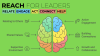
    The Geneva Learning Foundation is launching REACH (Relate, Engage, Act, Connect, Help), a new leadership network to connect local, national, and international leaders of health organizations who are solving similar problems in different countries.

    Launching November 6, 2024 REACH responds to an unexpected outcome of Teach to Reach, a peer learning platform that–in less than four years–has already documented over 10,000 local solutions and experiences to health challenges by connecting more than 60,000 participants across 77 countries.

    When organizations began formally participating in Teach to Reach in June 2024, many leaders discovered they were tackling similar challenges.

    A digital immunization tracking system in Rwanda sparked interest from several African countries.

    A community engagement approach to vaccine hesitancy in Nigeria resonated with teams in Kenya and Zimbabwe.

    These spontaneous connections led to the creation of REACH.

    What is Teach to Reach?

    “Teach to Reach is a place where you learn in the most formidable way. You’re learning from people’s experiences and it makes the learning very easy to adapt, very easy to replicate wherever you are,” says Ful Marine Fuen, Humanitarian Program Coordinator at Cameroon Baptist Convention Health Services.

    Teach to Reach is a bilingual (French/English) peer learning platform where government health workers, local organizations, and frontline staff document, analyze, and share implementation solutions across borders.

    Half of all participants work in government health services, with around 80% based at district and facility levels where policy meets practice.

    The platform’s structured peer learning process includes pre-event experience sharing, live sessions for discussion and networking, and post-event analysis to capture insights.

    “It’s a meeting of giving and receiving. Because with Teach to Reach, we always learn from peers and we develop ourselves and develop others,” notes Arthur Fidelis Metsampito Bamlatol, Coordinator at AAPSEB Cameroon.

    From individual learning to organizational impact

    The impact of these connections is already visible.

    Nduka Ozor, Project Director at the Centre for HIV/AIDS and STD RESEARCH in Nigeria, describes how a single connection expanded his organization’s reach: “I was able to meet with a potential partner who stays in Australia. Something I thought is just an online stuff is moving into a greater partnership. We have had several meetings with other networks from that initial meeting, including with representatives of New York University.”

    These kinds of partnerships form naturally as organizations share their work.

    Imagine what else might happen as health leaders like these meet, connect, and learn:

    • In Rwanda, Albert Ndagijimana shared how his country achieved 95% childhood vaccination coverage through initiatives like digital tracking of immunization outreach
    • In Kenya, Samuel Mutambuki‘s organization works with other civil society groups to rehabilitate areas affected by illegal dumping and create community gardens
    • In Zimbabwe, Rebecca Chirenga’s team addresses how climate change and food insecurity are driving early marriage and teenage pregnancy, with half of girls dropping out before completing secondary school

    “It is essentially a framework that allows us to share experiences… to strengthen our capacities,” says Patrice Kazadi, Project Director at Save the Children International DR Congo. “The challenges in DRC can be the same as in Ivory Coast and what is done in Ivory Coast can also help address challenges in DRC.”

    REACH: A new network exclusively for Teach to Reach Partners

    REACH builds on this foundation but with an important distinction – it’s exclusively for leaders of organizations that have committed to partnership with Teach to Reach.

    Over 700 organizational leaders have already confirmed their participation, representing both government agencies and civil society organizations.

    The first REACH sessions will:

    1. Connect organizations working on similar challenges
    2. Share practical approaches that have worked in different contexts
    3. Facilitate direct conversations between organizational leaders
    4. Identify potential areas for collaboration

    How can organizations join REACH?

    To participate in REACH, organizations must complete all partnership steps for Teach to Reach:

    1. Attend a Partner briefing
    2. Complete the Partnership application
    3. Share the Teach to Reach announcement
    4. Have organizational leadership endorse participation