Tag: VaccinesWork

  • Semaine mondiale de la vaccination: Que voyez-vous?

    Semaine mondiale de la vaccination: Que voyez-vous?

    English version | Version française

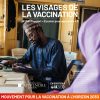
    Ceci est la préface de la nouvelle publication Les visages de la vaccination. En savoir plusTélécharger la collection

    Chaque jour, des milliers d’agents de santé, de l’Afghanistan au Zimbabwe, se lèvent et se rendent au travail avec un seul objectif en tête : faire en sorte que les vaccins parviennent à ceux qui en ont besoin.

    À l’occasion de la Semaine mondiale de la vaccination du 24 au 30 avril 2023 et du lancement de la campagne « Big Catch Up », la Fondation Apprendre Genève (TGLF) a invité les membres du Mouvement pour la vaccination à l’horizon 2030 (IA2030) à partager des photographies d’eux-mêmes et de leur travail quotidien.

    Plus de 1 000 témoignages visuels ont été partagés.

    Il ne s’agit pas de clichés soigneusement composés et techniquement élaborés par des photographes professionnels, mais plutôt d’une vue authentique sur ce que signifie la vaccination dans la pratique. Les difficultés de transport. Les mères concernées et aimantes. Les curieux. Le dialogue entre les praticiens et les membres de la communauté. Les écoliers brandissant leur carte de vaccination. Les cahiers contenant les données.

    Voici donc notre deuxième galerie annuelle de photographies partagées par les membres du Mouvement. Une fois encore, elle célèbre la diversité de leurs rôles et des défis auxquels ils sont confrontés dans leur vie quotidienne, ainsi que leur engagement en faveur du Programme pour la vaccination à l’horizon 2030 (IA2030), qui vise à ce que chaque enfant, chaque famille, soit protégés contre les maladies évitables par la vaccination.

    Si nous avons réitéré cette opération, c’est parce que nous avons observé que la narration visuelle avait un effet profond sur l’ensemble du Mouvement. Cet effet peut être difficile à quantifier. En soi, il n’améliore certainement pas la couverture vaccinale. Il a tout à voir avec la façon dont les agents de santé se perçoivent eux-mêmes, perçoivent la valeur de leur propre travail. En effet, le fait non seulement de savoir, mais aussi de voir qu’il y a des collègues dans le monde entier qui font le même travail, quel que soit le contexte, est réconfortant et inspirant. Cela peut contribuer à renforcer ou à renouveler la détermination et l’engagement. Cela peut aider à faire la différence – et à la maintenir dans le temps.

    Certains professionnels de la santé travaillent dans des centres de santé offrant des services de vaccination et d’autres formes de soins de santé primaires. D’autres prennent part à des stratégies avancées, allant à la rencontre de la population. Ils peuvent également être basés dans des bureaux de district ou régionaux, où ils assurent la supervision et des conseils pour permettre aux praticiens de mieux faire leur travail.

    Pour ceux qui contribuent aux activités de sensibilisation, ils peuvent être confrontés à de multiples défis. Ils peuvent avoir à surmonter des obstacles géographiques : rivières, inondations, routes en mauvais état, ou simplement de longues distances. Ils peuvent être amenés à s’aventurer dans des zones d’instabilité politique ou de conflit. Ils peuvent être amenés à entrer en contact avec des populations mobiles dont la localisation précise peut être incertaine. Enfin, ils peuvent être amenés à pénétrer dans des zones urbaines informelles en perpétuel changement.

    Une fois arrivés à destination, ils constatent parfois que les personnes qu’ils contactent ne sont pas forcément réceptives à la vaccination. Ils devront alors passer du temps avec les gens pour les aider à comprendre les bénéfices et la sécurité de la vaccination.

    Bien entendu, la vaccination proprement dite n’est pas la seule tâche à accomplir. Les programmes de vaccination s’appuient sur un réseaux de personnes ayant des rôles divers, tels que l’entretien des équipements essentiels de la chaîne du froid, la gestion des données et la collaboration avec les communautés pour obtenir leur soutien en faveur de la vaccination. Les volontaires issus de la communauté constituent un lien vital entre les programmes de vaccination et les communautés locales. Un travail d’équipe efficace est essentiel.

    À la fin d’une longue journée, chaque praticien de la vaccination peut rentrer chez lui en sachant qu’il a contribué à rendre le monde plus sain et qu’il a peut-être sauvé une vie. Ce sont les véritables héros de la vaccination, et nous les saluons. 

    Charlotte Mbuh et Reda Sadki
    La Fondation Apprendre Genève (TGLF)

  • World Immunization Week: What do you see?

    World Immunization Week: What do you see?

    English version | Version française

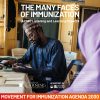
    This is the preface of the new publication The many faces of immunization. Learn more… Download the collection

    Every day, thousands of health workers, from Afghanistan to Zimbabwe, get up and go to work with a single goal in mind ­ to ensure that vaccines reach those who need them.

    To mark World Immunization Week 2023 (24­–30 April 2023) and the launch of the “Big Catch Up” campaign, the Geneva Learning Foundation (TGLF) invited members of the Movement for Immunization Agenda 2030 (IA2030) to share photographs of themselves and their daily work.

    More than 1,000 visual stories were shared.

    These are not the carefully composed and technically accomplished shots of the professional photographer: rather, they capture a raw and authentic view of what immunization means in practice.

    The transport challenges.

    The concerned and loving mothers.

    The curious onlookers.

    The dialogue between practitioners and community members.

    The schoolchildren waving their vaccination cards.

    The reams of paper-based data.

    This is our second annual gallery of photographs shared by members of the Movement. Get the 2022 World Immunization Week photo book It takes people to make #vaccineswork

    Once again, it celebrates their diversity of roles and challenges faced in their daily lives, and their commitment to the IA2030 goal of ensuring that every child, every family, is protected from vaccine-preventable diseases.

    If we did it again, it is because we observed that visual storytelling had a profound effect across the Movement.

    This effect may be hard to quantify.

    On its own, it certainly does not improve vaccination coverage.

    And yet, it has everything to do with how health workers perceive themselves, perceive the value of their own work.

    Not just knowing but seeing that there are colleagues across the world who are doing the same work, whatever the contexts, is heartening and inspiring.

    It can help strengthen or renew resolve and commitment.

    It can help make a difference – and sustain it over time.

    To achieve their goals, they may be working in health facilities offering immunization services and other forms of primary health care.

    Or they may be taking part in outreach or stratégies avancées, delivering vaccines out in the communities where people live.

    Alternatively, they may be based in district or regional offices, providing oversight and offering “supportive supervision” ­ constructive feedback and advice to ensure practitioners can do their jobs better.

    If they are among the many practitioners engaged in outreach activities, they may face multiple challenges.

    They may have to overcome geographical obstacles ­ rivers, flooding, poor roads, or just long distances.

    They may have to venture into areas of political instability or conflict.

    They may have to make contact with mobile populations whose precise location may be uncertain.

    And they may have to enter informal urban settings in a state of permanent flux.

    Then, when they reach their destination, they may find that those they engage are not receptive to vaccination.

    They may have to spend time with people to help them understand the benefits and safety of vaccines.

    Of course, actually vaccinating people is not the only task that needs to be undertaken.

    Vaccination programmes rely on a collective of people with a diverse range of roles, such as maintaining essential cold chain equipment, managing data, and working with communities to build support for vaccination.

    Community-based volunteers provide a vital link between immunization programmes and local communities.

    Effective teamwork is essential.

    At the end of a long day, every vaccination practitioner can return home knowing that they have done their bit to make the world a healthier place, and just might have saved a life.

    Charlotte Mbuh and Reda Sadki
    The Geneva Learning Foundation (TGLF)

    Jones, I., Sadki, R., & Mbuh, C. (2024). The many faces of immunization (IA2030 Listening and Learning Report 5) (1.0). Special Event: World Immunization Week. The Geneva Learning Foundation. https://doi.org/10.5281/zenodo.8166653

  • Visual storytelling for health

    Visual storytelling for health

    Do you work for health? Your are invited to a visual storytelling workshop with health care workers from 44 countries. The Geneva Learning Foundation’s first Fellow of Photography, Chris de Bode, will lead this workshop.

    544 health care workers from 44 countries have already confirmed their participation. 80% of participants are sub-national staff working in fragile contexts. Most work for their country’s ministry of health.

    Chris deBode spent decades on assignments, traveling around the globe for various NGOs, magazines, and newspapers.

    Now, he has partnered with the Geneva Learning Foundation (TGLF) to share his experience with health practitioners who are there every day, as they learn to tell their own visual stories about immunization, the impacts of climate change on health, and other issues that matter for the communities they serve.

    “Technical knowledge is not decisive in making your picture”, says Chris. “The person behind the camera makes the difference. You are the source of your image.”

    The workshop is reserved for health professionals who contributed photos to the 2022 and 2023 Immunization Agenda 2030 (IA2030) Movement’s International Photo Exhibitions for World Immunization Week. However, it will also be livestreamed for everyone who has not previously been able to participate.

    In 2022 and 2023, over 2,000 photos were shared by immunization staff from all over the world.

    On 18 March 2024, health professionals from the following countries will be participating: Afghanistan, Angola, Bangladesh, Belgium, Benin, Burkina Faso, Burundi, Cameroon, Canada, Central African Republic, Chad, Comoros, Congo, Costa Rica, Côte d’Ivoire, Democratic Republic of the Congo, Ethiopia, France, Gabon, Gambia, Germany, Ghana, Guinea, Guinea-Bissau, Haiti, India, Indonesia, Kenya, Lebanon, Lesotho, Liberia, Madagascar, Malawi, Mali, Mauritania, Morocco, Niger, Nigeria, Pakistan, Saudi Arabia, Senegal, Sierra Leone, Somalia, South Africa, South Sudan, Sri Lanka, Sudan, Tanzania, Togo, Tunisia, Turkey, Uganda, United States, Zambia, Zimbabwe.

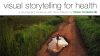
    Photo by Chris deBode: Eleven-year-old Wilberforce runs along an unpaved road near his home in Gulu, Northen Uganda where he lives with his parents and 6 siblings. He says: “I want to be the fastest. I want my parents, my school and country to be proud of me. Every day I run. I dream of coming home with the biggest trophy.”

    Watch the inauguration of the First International Photography Exhibition for Immunization Agenda 2030

    Watch the Special Event: World Immunization Week 2023

    Watch the Special Event: World Immunization Week 2022

  • Movement for Immunization Agenda 2030 (IA2030): National EPI leaders from 31 countries share experience of HPV vaccination

    Movement for Immunization Agenda 2030 (IA2030): National EPI leaders from 31 countries share experience of HPV vaccination

    What difference can peer-led learning and action make for national EPI planners seeking new strategies to support HPV vaccine introduction or reintroduction?

    The stakes are high: HPV vaccination efforts, if successful, will avert 3.4 million deaths by 2030.

    On Friday, EPI focal points for HPV and other national-level MOH colleagues from 31 countries convened under the banner of the Movement for Immunization Agenda 2030 (IA2030), which connects over 60,000 primarily sub-national health staff worldwide.

    What is the Movement for Immunization Agenda 2030 (IA2030)?

    This time, it was national HPV vaccination focal points and other national EPI planners who joined to share experience between countries of ‘what works’ (and how).

    They also discussed how the Geneva Learning Foundation’s unique peer learning-to-action pathway could help them overcome barriers they are facing to ensure that local communities understand and support the benefits of this vaccine.

    Such a pathway can complement existing, top-down forms of vertical technical assistance and may provide a new ‘lever’ for national planners.

    In June and October 2023, health workers – primarily from districts and facilities – in over 60 countries shared 298 lessons learned and success stories about HPV vaccination in the Foundation’s Teach to Reach peer learning events. Watch the video: Why HPV matters for women who deliver vaccines.

    The active participation of national EPI managers from Burkina Faso and key stakeholders Sierra Leone led to the consultative engagement in January.

    Although HPV vaccine is not new, the global community’s effort to introduce it has been stymied by a number of factors.

    Doing what has been done before is unlikely to produce the change that is needed.

    For example, it remains unclear how early gains achieved through campaigns can sustainably become part of routine immunization.

    TGLF’s Insights Unit will now produce a short summary of key learning from this inter-country peer learning exchange, which will be shared back with participants.

    If you are interested in learning more about the Movement for Immunization Agenda 2030 (IA2030) or the Geneva Learning Foundation’s HPV vaccination learning-to-action pathway, please do get in touch.

  • Ten eyewitness reports from the frontline of climate change and health

    Ten eyewitness reports from the frontline of climate change and health

    The Geneva Learning Foundation (TGLF) has created a platform enabling health workers to describe the impacts of climate change on their local communities. Here are ten of the most striking reports.

    Published on 30 November 2023 on the Gavi #VaccinesWork blog. Written by Ian Jones for Gavi.

    In July 2023, more than 1,200 health workers from 68 countries shared their experiences of changes in climate and health at a unique Geneva Learning Foundation event designed to shed light on the realities of climate impacts on the health of the communities they serve.

    A special TGLF report – On the frontline of climate change and health: A health worker eyewitness report – includes a compendium and analysis of these 1,200 health workers’ observations and insights. Here are ten of the most striking.

    Samuel Chukwuemeka Obasi, who works for the Ministry of Health in Abuja, Nigeria, has noticed big changes to the environment.

    “Going back home to the community where I grew up as a child, I was shocked to see that most of the rivers we used to swim and fish in have all dried up, and those that are still there have become very shallow, so that you can easily walk through a river you required a boat to cross in years past.”

    Iruoma Chinedu Ofortube, who works at the district level in Lagos State, Nigeria, recounts two stories that illustrate the lethal impact of extreme weather.

    “A family embarked on a journey without potentially expecting any danger. Sadly, on their way, heavy rainfall started. The family was oblivious to the reality that the rain started ahead of them while they were en route to their destination. Unfortunately, they ran into a massive flood near a river. The force and the current from the flood swept their vehicle down the river, and before help could come for them, they drowned helplessly alongside other victims of the same circumstances.

    “There was also a pregnant woman in labour. Unfortunately, they couldn’t get a strong boat or canoe that could stand the high current and waves coming from the seaside. In the process of searching for a better means of taking her to the nearest health centre, she got exhausted and died.”

    Assoumane Mahamadou Issifou, who works for an NGO in Agadez, Niger, points out how food shortages are leading to malnutrition and anaemia, particularly in women and children.

    “During the five years that I served in the health service in the Agadez region, I observed significant changes, particularly in the occurrence of heavy rains, which were uncommon in the past. These heavy rains have led to flooding and the displacement of populations, often forcing them to settle wherever they can. Due to their vulnerability during these challenging times, children and women suffer greatly.

    “This situation, especially prevalent among newborns and children under five, contributes to malnutrition. The challenges persist because the Agadez region is situated in a desert area with very low rainfall.

    “However, even with minimal rain, the region faces immense difficulties. Nutritional foods are insufficient, and environmental degradation compounds the issue. As a result, the population struggles to access daily sustenance. Pregnant women and children lack foods rich in vitamins, leading to undernourishment and subsequent diseases such as malnutrition and anaemia.

    “Historically, Agadez was known for its scarcity of rain. With the recent climate change-induced increase in rainfall, few people have come to accept and understand this phenomenon. The region’s architecture is outdated, and the city has transformed into a migratory hub where diverse behaviours converge. New diseases emerge, and the indigenous population is grappling with illnesses that were previously unknown to them.”

    A woman working for the Ministry of Health in the DRC, based in Kinshasa, describes how water level changes are affecting insect proliferation and leading to changing patterns of malaria and other diseases.

    “A drought, characterised by a drop in rainfall during recent rainy seasons, has affected the City Province of Kinshasa, particularly in the Makelele District (located in the Bandalungwa commune) where I live.

    “This area is bordered by two rivers, Mâkelele 1 and 2. The scarcity of rain in the region during the past rainy seasons has led to a significant reduction in water flow within these two rivers. Consequently, rubbish and debris have accumulated along the riverbanks.

    “This situation has resulted in the proliferation of mosquitoes and other unidentified insects. This increase in insect activity has not only led to a rise in malaria cases, but has also given rise to a newly emerging form of dermatosis, the exact nature of which is yet to be determined. It is suspected that these skin lesions develop due to scratching after insect bites. Disturbingly, over 10% of the population within the municipality has been affected by this condition.”

    Dieudonne Tanasngar, who works for the Ministry of Health in Chad, explains how displacement contributes to poor sanitation practices, leading to increased spread of water-borne diseases.

    “In Lake Chad, during the rainy season, the various arms of the lake expand, causing flooding that affects the villages situated along its shores. This flooding often forces the inhabitants to relocate to higher ground.

    “However, a significant portion of the population around the lake lacks proper sanitation facilities, leading to open defecation near the water’s edge. As the water levels rise, this practice contributes to the spread of diseases, particularly when access to health care facilities becomes challenging.

    “Access to health care centres is hindered by the need to cross one or two bodies of water before reaching the nearest facility. This geographical challenge adds to the difficulties faced by the affected population. Consequently, a range of diseases can emerge and afflict the community due to these conditions.

    “The combination of poor sanitation practices, flooding, and limited access to health care facilities creates a complex situation that requires concerted efforts to improve living conditions, sanitation infrastructure, and health care access for the people living around Lake Chad.”

    Coulibaly Seydou, who works for the Ministry of Health in Boussé District, Burkina Faso, has noted how changing dietary habits, alongside declining mental wellbeing, is leading to an increased risk of non-communicable diseases such as high blood pressure and diabetes.

    “For several years, the pattern of rainfall has been becoming increasingly irregular. The duration of the rainy season is progressively getting shorter, interspersed with periods of drought. This unpredictability makes it challenging for farmers to adjust their crop choices according to the rainfall pattern, leading to growing concerns. Discussions about the upcoming rainy season can induce anxiety and worry among rural communities.

    “When it comes to the impact of climate change on mental health, we can observe a significant disturbance in the well-being of farmers. Even just a couple of days without rainfall can trigger a sense of sadness among them. Instances of minor depression have been noted among household heads who helplessly witness their crops withering due to inadequate moisture.

    “In terms of physical health, there has been an uptick in the prevalence of diseases and conditions that can be attributed to changes in dietary habits. Conditions such as hypertension, diabetes and obesity are on the rise. This can be linked to the shift towards consuming industrially processed foods that are low in nutritional value and high in chemical additives.”

    A man working for the Ministry of Health in Beni in the DRC describes the tragic case of a family driven into poverty and unable to afford health care for the children.

    “As a result of the disruption in the seasonal shifts, a modest family reliant solely on agriculture experienced the tragic death of their young son within their community.

    “The critical factors involved were as follows: their crop yield plummeted to zero due to their inability to manage the erratic changes in the seasons, and malnutrition, likely compounded by other illnesses, afflicted the family. Faced with financial constraints stemming from the complete failure of their agricultural efforts, they resorted to providing home-based care for their family.

    “Tragically, their youngest son paid the ultimate price with his life. In summary, the ever-changing climate dynamics have left us disoriented and uncertain about the future.”

    Fokzia Elijah, who works for the Ministry of Health in the Province of Batha, Chad, highlights how climate change is having multiple health and social impacts, particularly on pastoralists.

    “Batha is the first pastoral province, often experiencing prolonged droughts followed by irregular and sometimes excessive rainfall. These climatic variations lead to challenges in cattle herding, house collapses, and difficulties in sustaining pastoralism, which typically lasts only two to three months.

    “Pastoralists often migrate southward with women and children following them. Consequently, malnutrition prevails, affecting over 14% of the population, with women and children being the most vulnerable. Women who remain in the villages demonstrate resilience by engaging in limited market gardening and gathering wild oilseeds to produce sweet syrup for porridge.

    “A significant issue is the death of animals between March and June due to inadequate pasture and water. This impacts the most vulnerable, particularly women and children. Batha Province, once renowned for its diverse flora and fauna, has seen the disappearance of most animals except for birds. Hyena attacks have become frequent as they search for food in communities, often targeting domestic pets.”

    Linda Raji, who works for an NGO in the Kaida and Waru communities in Nigeria, highlights the implication of enviornmental change for young women – one of a range of gender-specific impacts of climate change.

    “Prolonged drought dries up the dirty community stream that serves both livestock and residents. This makes it difficult for community members to access water and much harder for menstrual hygiene management for teenage girls leading to an increase in infections in the unbearable heat.

    “Due to the difficulty in managing the monthly menstrual cycle due to limited access to water sanitation hygiene and period poverty, many teenage girls prefer to get pregnant to save them the worry of menstruating monthly for nine months.”

    Dr Chinedu Anthony Iwu, who works at a health facility in Orlu Local Government Area in Nigeria, describes how working with communities can build resilience to climate change impacts.

    “The changing climate has brought about an increase in the prevalence of vector-borne diseases. Mosquitoes are now breeding and transmitting diseases like malaria more intensely. The community lacked proper health care facilities and resources to effectively combat these diseases, leading to a rise in illness and mortality rates. Mothers’ means of livelihood were usually disrupted due to the time and effort spent in caring for their sick children with a significant impact on household welfare.

    “Recognising the urgent need to address these climate-related health challenges, we engaged in community-led initiatives that included comprehensive health awareness campaigns to provide education on sanitation and hygiene practices, and education of residents about preventive measures against vector-borne diseases. By engaging our community health extension workers, we were able to organise regular health check-ups in the communities, focusing on early detection and treatment of illnesses.

    “Over time, these collective efforts began to yield positive results. The mothers in the communities witnessed improvements in income as they progressively began to spend less time pursuing children’s health care challenges due to the adoption of preventive measures, thereby becoming more resilient to the changing climate.

    This experience highlights the challenges faced by rural communities in Nigeria due to climate change. It demonstrates the importance of community engagement, sustainable practices, and support from relevant stakeholders in addressing the climate-health nexus and building resilience in the face of a changing climate.”

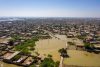
    Photo credit: Aerial view of a flooded urban residential area of Dera Allah yar city in Jaffarabad District, Baluchistan Province, Pakistan. Credit: Gavi/2022/Asad Zaidi