Tag: visual storytelling

  • Semaine mondiale de la vaccination: Que voyez-vous?

    Semaine mondiale de la vaccination: Que voyez-vous?

    English version | Version française

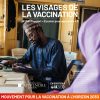
    Ceci est la préface de la nouvelle publication Les visages de la vaccination. En savoir plusTélécharger la collection

    Chaque jour, des milliers d’agents de santé, de l’Afghanistan au Zimbabwe, se lèvent et se rendent au travail avec un seul objectif en tête : faire en sorte que les vaccins parviennent à ceux qui en ont besoin.

    À l’occasion de la Semaine mondiale de la vaccination du 24 au 30 avril 2023 et du lancement de la campagne « Big Catch Up », la Fondation Apprendre Genève (TGLF) a invité les membres du Mouvement pour la vaccination à l’horizon 2030 (IA2030) à partager des photographies d’eux-mêmes et de leur travail quotidien.

    Plus de 1 000 témoignages visuels ont été partagés.

    Il ne s’agit pas de clichés soigneusement composés et techniquement élaborés par des photographes professionnels, mais plutôt d’une vue authentique sur ce que signifie la vaccination dans la pratique. Les difficultés de transport. Les mères concernées et aimantes. Les curieux. Le dialogue entre les praticiens et les membres de la communauté. Les écoliers brandissant leur carte de vaccination. Les cahiers contenant les données.

    Voici donc notre deuxième galerie annuelle de photographies partagées par les membres du Mouvement. Une fois encore, elle célèbre la diversité de leurs rôles et des défis auxquels ils sont confrontés dans leur vie quotidienne, ainsi que leur engagement en faveur du Programme pour la vaccination à l’horizon 2030 (IA2030), qui vise à ce que chaque enfant, chaque famille, soit protégés contre les maladies évitables par la vaccination.

    Si nous avons réitéré cette opération, c’est parce que nous avons observé que la narration visuelle avait un effet profond sur l’ensemble du Mouvement. Cet effet peut être difficile à quantifier. En soi, il n’améliore certainement pas la couverture vaccinale. Il a tout à voir avec la façon dont les agents de santé se perçoivent eux-mêmes, perçoivent la valeur de leur propre travail. En effet, le fait non seulement de savoir, mais aussi de voir qu’il y a des collègues dans le monde entier qui font le même travail, quel que soit le contexte, est réconfortant et inspirant. Cela peut contribuer à renforcer ou à renouveler la détermination et l’engagement. Cela peut aider à faire la différence – et à la maintenir dans le temps.

    Certains professionnels de la santé travaillent dans des centres de santé offrant des services de vaccination et d’autres formes de soins de santé primaires. D’autres prennent part à des stratégies avancées, allant à la rencontre de la population. Ils peuvent également être basés dans des bureaux de district ou régionaux, où ils assurent la supervision et des conseils pour permettre aux praticiens de mieux faire leur travail.

    Pour ceux qui contribuent aux activités de sensibilisation, ils peuvent être confrontés à de multiples défis. Ils peuvent avoir à surmonter des obstacles géographiques : rivières, inondations, routes en mauvais état, ou simplement de longues distances. Ils peuvent être amenés à s’aventurer dans des zones d’instabilité politique ou de conflit. Ils peuvent être amenés à entrer en contact avec des populations mobiles dont la localisation précise peut être incertaine. Enfin, ils peuvent être amenés à pénétrer dans des zones urbaines informelles en perpétuel changement.

    Une fois arrivés à destination, ils constatent parfois que les personnes qu’ils contactent ne sont pas forcément réceptives à la vaccination. Ils devront alors passer du temps avec les gens pour les aider à comprendre les bénéfices et la sécurité de la vaccination.

    Bien entendu, la vaccination proprement dite n’est pas la seule tâche à accomplir. Les programmes de vaccination s’appuient sur un réseaux de personnes ayant des rôles divers, tels que l’entretien des équipements essentiels de la chaîne du froid, la gestion des données et la collaboration avec les communautés pour obtenir leur soutien en faveur de la vaccination. Les volontaires issus de la communauté constituent un lien vital entre les programmes de vaccination et les communautés locales. Un travail d’équipe efficace est essentiel.

    À la fin d’une longue journée, chaque praticien de la vaccination peut rentrer chez lui en sachant qu’il a contribué à rendre le monde plus sain et qu’il a peut-être sauvé une vie. Ce sont les véritables héros de la vaccination, et nous les saluons. 

    Charlotte Mbuh et Reda Sadki
    La Fondation Apprendre Genève (TGLF)

  • World Immunization Week: What do you see?

    World Immunization Week: What do you see?

    English version | Version française

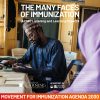
    This is the preface of the new publication The many faces of immunization. Learn more… Download the collection

    Every day, thousands of health workers, from Afghanistan to Zimbabwe, get up and go to work with a single goal in mind ­ to ensure that vaccines reach those who need them.

    To mark World Immunization Week 2023 (24­–30 April 2023) and the launch of the “Big Catch Up” campaign, the Geneva Learning Foundation (TGLF) invited members of the Movement for Immunization Agenda 2030 (IA2030) to share photographs of themselves and their daily work.

    More than 1,000 visual stories were shared.

    These are not the carefully composed and technically accomplished shots of the professional photographer: rather, they capture a raw and authentic view of what immunization means in practice.

    The transport challenges.

    The concerned and loving mothers.

    The curious onlookers.

    The dialogue between practitioners and community members.

    The schoolchildren waving their vaccination cards.

    The reams of paper-based data.

    This is our second annual gallery of photographs shared by members of the Movement. Get the 2022 World Immunization Week photo book It takes people to make #vaccineswork

    Once again, it celebrates their diversity of roles and challenges faced in their daily lives, and their commitment to the IA2030 goal of ensuring that every child, every family, is protected from vaccine-preventable diseases.

    If we did it again, it is because we observed that visual storytelling had a profound effect across the Movement.

    This effect may be hard to quantify.

    On its own, it certainly does not improve vaccination coverage.

    And yet, it has everything to do with how health workers perceive themselves, perceive the value of their own work.

    Not just knowing but seeing that there are colleagues across the world who are doing the same work, whatever the contexts, is heartening and inspiring.

    It can help strengthen or renew resolve and commitment.

    It can help make a difference – and sustain it over time.

    To achieve their goals, they may be working in health facilities offering immunization services and other forms of primary health care.

    Or they may be taking part in outreach or stratégies avancées, delivering vaccines out in the communities where people live.

    Alternatively, they may be based in district or regional offices, providing oversight and offering “supportive supervision” ­ constructive feedback and advice to ensure practitioners can do their jobs better.

    If they are among the many practitioners engaged in outreach activities, they may face multiple challenges.

    They may have to overcome geographical obstacles ­ rivers, flooding, poor roads, or just long distances.

    They may have to venture into areas of political instability or conflict.

    They may have to make contact with mobile populations whose precise location may be uncertain.

    And they may have to enter informal urban settings in a state of permanent flux.

    Then, when they reach their destination, they may find that those they engage are not receptive to vaccination.

    They may have to spend time with people to help them understand the benefits and safety of vaccines.

    Of course, actually vaccinating people is not the only task that needs to be undertaken.

    Vaccination programmes rely on a collective of people with a diverse range of roles, such as maintaining essential cold chain equipment, managing data, and working with communities to build support for vaccination.

    Community-based volunteers provide a vital link between immunization programmes and local communities.

    Effective teamwork is essential.

    At the end of a long day, every vaccination practitioner can return home knowing that they have done their bit to make the world a healthier place, and just might have saved a life.

    Charlotte Mbuh and Reda Sadki
    The Geneva Learning Foundation (TGLF)

    Jones, I., Sadki, R., & Mbuh, C. (2024). The many faces of immunization (IA2030 Listening and Learning Report 5) (1.0). Special Event: World Immunization Week. The Geneva Learning Foundation. https://doi.org/10.5281/zenodo.8166653

  • Making the invisible visible: storytelling the health impacts of climate change

    Making the invisible visible: storytelling the health impacts of climate change

    On March 18, 2024, the Geneva Learning Foundation (TGLF) hosted a workshop bringing together 553 health workers from 55 countries with TGLF’s First Fellow of Photography and award-winning photographer Chris de Bode. Watch the workshop in English and in French. Poor connectivity? Get the audio-only podcast.

    The dialogue focused on exploring the power of health workers who are there every day to communicate the impacts of climate change on the health of those they serve. Learn more

    The Geneva Learning Foundation’s exploration of visual storytelling began, two years ago, with a simple yet powerful call to action for World Immunization Week: “Would you like to share a photo of your daily work, the work that you do every day?” Over 1,000 photos were shared within two weeks. “We repeated this in 2023, to show that it is people who make #VaccinesWork”, explains Charlotte Mbuh, the Foundation’s deputy director. Watch the 2022 and 2023 events, as well as the inauguration of the First International Photography Exhibition of the Movement for Immunization Agenda 2030 (IA2030).

    In July 2023, over 4,700 health professionals – primarily government workers from 68 low and middle-income countries – responded to the call to share their firsthand observations of the impacts of climate change on health. Watch the special event “From community to planet: Health professionals on the frontlines of climate change“… Get the insights report

    That is when Chris de Bode, who has spent decades documenting global health stories, expressed his excitement to flip the script:

    “Over the last two years, we received so many pictures about your daily work. By asking you a new question, a different angle on what you work on, we can go a little bit deeper in what you actually do. Since you are on the front line everywhere in the world, it’s super interesting to create a collection of images to show the world and also show each other within the community.”

    What would Taphurother Mutange, a community health worker from Kenya, want to show in the photos she will take?

    “What I want to show to people is the floods. In my community where I work, the floods were too much. Water went into a house where there was a 12-year-old girl sleeping. The water carried the girl out, and up to date, as I’m talking, she has never been seen.”

    She linked this devastation directly to health, adding, “So climate change goes together with health, because after the rains, the children, pregnant mothers, and even older people get sick, and you might see there’s not enough drugs in the facility. So we might even go on losing some lives.”

    Brigitte Meugang, a health professional from Yaoundé, Cameroon, captured the essence of why visual storytelling matters:

    “I’m attending this event because I believe that with a picture, you can say a thousand words.

    And with a beautiful picture, you can learn a lot.

    You can understand a lot.

    And you can understand really the story just by looking at a picture, usually.”

    Chris guided participants on the psychology and ethics of photography, the power of light, and how to create compelling visual narratives.

    He challenged the idea that photos must be candid to be authentic.

    “A picture is always subjective.

    It’s your position as a photographer who decides which picture you take and what you want to tell with the image.

    When I take portraits of people, I stage, and I always stage.”

    Participants grappled with this in the context of their health work.

    Emmanuel Musa, from Nigeria, highlighted the tension:

    “Professionally, we’ve been asked to take pictures, action pictures, but not to have a kind of arranged, organized setting…

    Because normally we look at pictures that are actionable, that probably funders can see, probably supervisors can see what’s happening in the field, instead of organizing a group picture, you set as if we’re in a studio.”

    Aimée N’genda, a health worker from the Democratic Republic of Congo (DRC), also emphasized the importance of consent and the risk of exploitation, especially in urban settings.

    “Based on our experience, you need to ask for a written consent that you should keep, because you’ve got some people that will take advantage of it and think that when you take pictures of their children, they think you make money out of this, without paying them any fees.”

    Despite the challenges, Chris affirmed the unique power health workers have as visual storytellers.

    “You guys and ladies, you are there on the spot.

    You’re there every day.

    You have a large, large advantage on us, professional photographers who have to go there.”

    Participants left energized to apply what they learned.

    François Desiré, for example, declared, “I’m going to share pictures of mobile clinics that integrate immunization and nutrition.”

    The dialogue equipped health workers to harness visual storytelling to communicate vital stories of how climate change impacts health in their communities, sparking change through the power of a single image.

    The Geneva Learning Foundation (TGLF) is actively seeking a donor or sponsor to support visual storytelling by health professionals.

    Version française: Raconter la santé en image: un atelier photo avec Chris de Bode pour Teach to Reach 10

    This story was written by generative AI, based on a word-for-word transcript of the workshop.

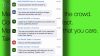
    Image: Screen shot of the chat during the workshop “Visual storytelling for health” on 18 March 2024.